2026 Barrel Leg Pants Trend: Decode Viral Signals
Expert reviewed

Barrel leg pants became a breakout search in March 2026, and that makes them useful for more than fashion commentary. They are a clean case study in how fashion trend algorithms, viral aesthetic signals, and AI trend prediction work together. This article breaks down what made Barrel Leg Pants explode, how platforms recognized the pattern early, and what website operators can copy from that signal flow to improve SEO and AI-era discoverability.
You will get four practical things here: a quick definition of the Barrel Leg Pants trend, a map of the viral signals behind it, a framework for reverse-engineering trend detection models, and a set of actions for independent websites, brand sites, and cross-border teams. The point is not to chase denim. The point is to understand how algorithms decide that one topic deserves more visibility than another.
Why Barrel Leg Pants Became a Perfect Barrel Leg Pants Signal Case
Barrel Leg Pants are defined quite consistently across fashion sources: fitted at the waist and upper hip, curved outward through the thigh, then tapered back toward the ankle. That shape matters because it is visually distinct. Recommendation systems do not need a runway education to notice it. They need repeated patterns they can classify.
According to the research report, Barrel Leg Pants saw roughly 99x+ search growth in March 2026. Editorial coverage, creator styling videos, Pinterest saves, and rising search demand all moved at the same time. That kind of synchronized movement is exactly what trend systems reward first and what slower websites usually miss.
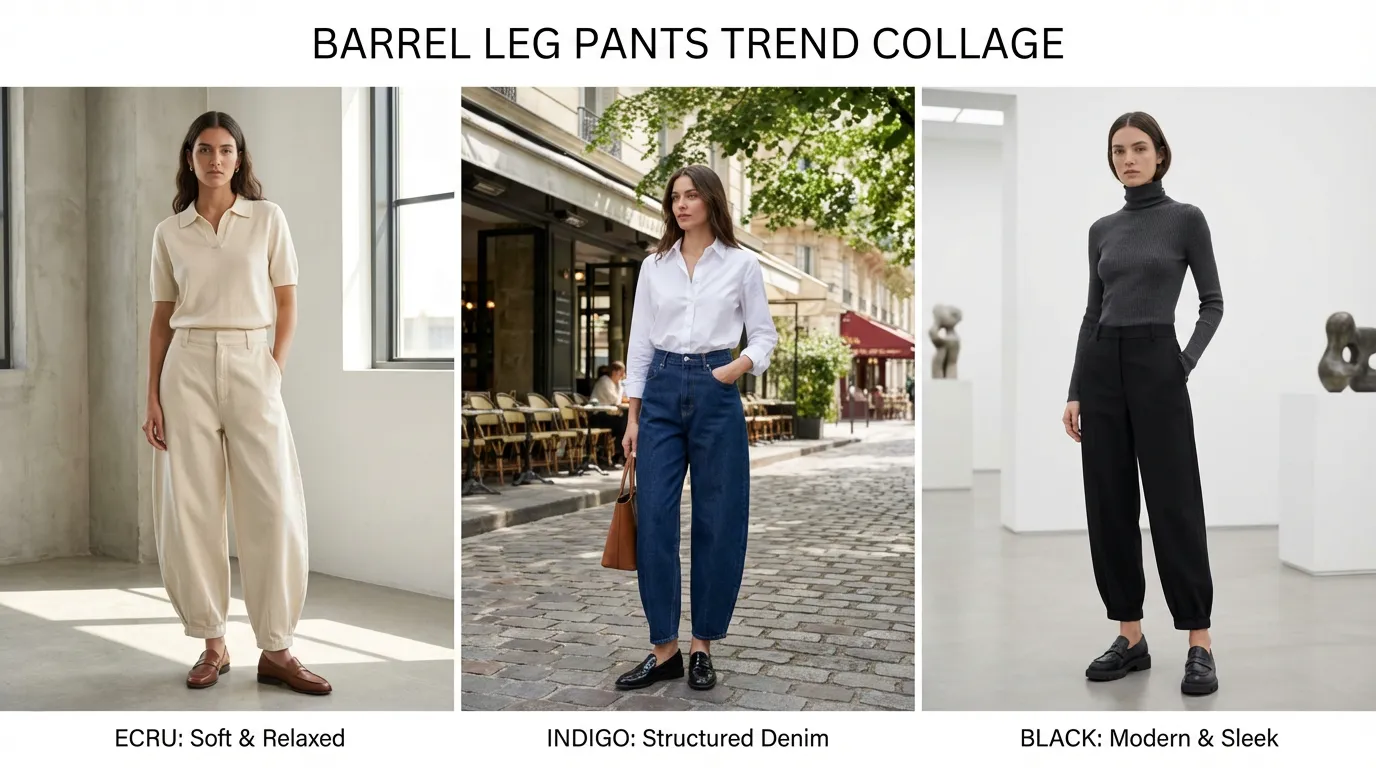
One reason Barrel Leg Pants traveled so fast is that they solved a real styling tension. Shoppers were tired of skinny silhouettes, but not every buyer wanted shapeless wide-leg denim. Barrel Leg Pants sat in the middle: more directional than straight jeans, less extreme than balloon fits, and easier to wear in office-to-weekend settings.
That gave platforms a strong combination of visual novelty and practical utility. Users were not just watching clips because the silhouette looked unusual. They were searching follow-up queries like "how to style barrel leg pants" and "barrel leg jeans vs wide leg". That shift from curiosity to evaluation is where trend interest starts turning into durable search demand.
A simple way to view the breakout is below.
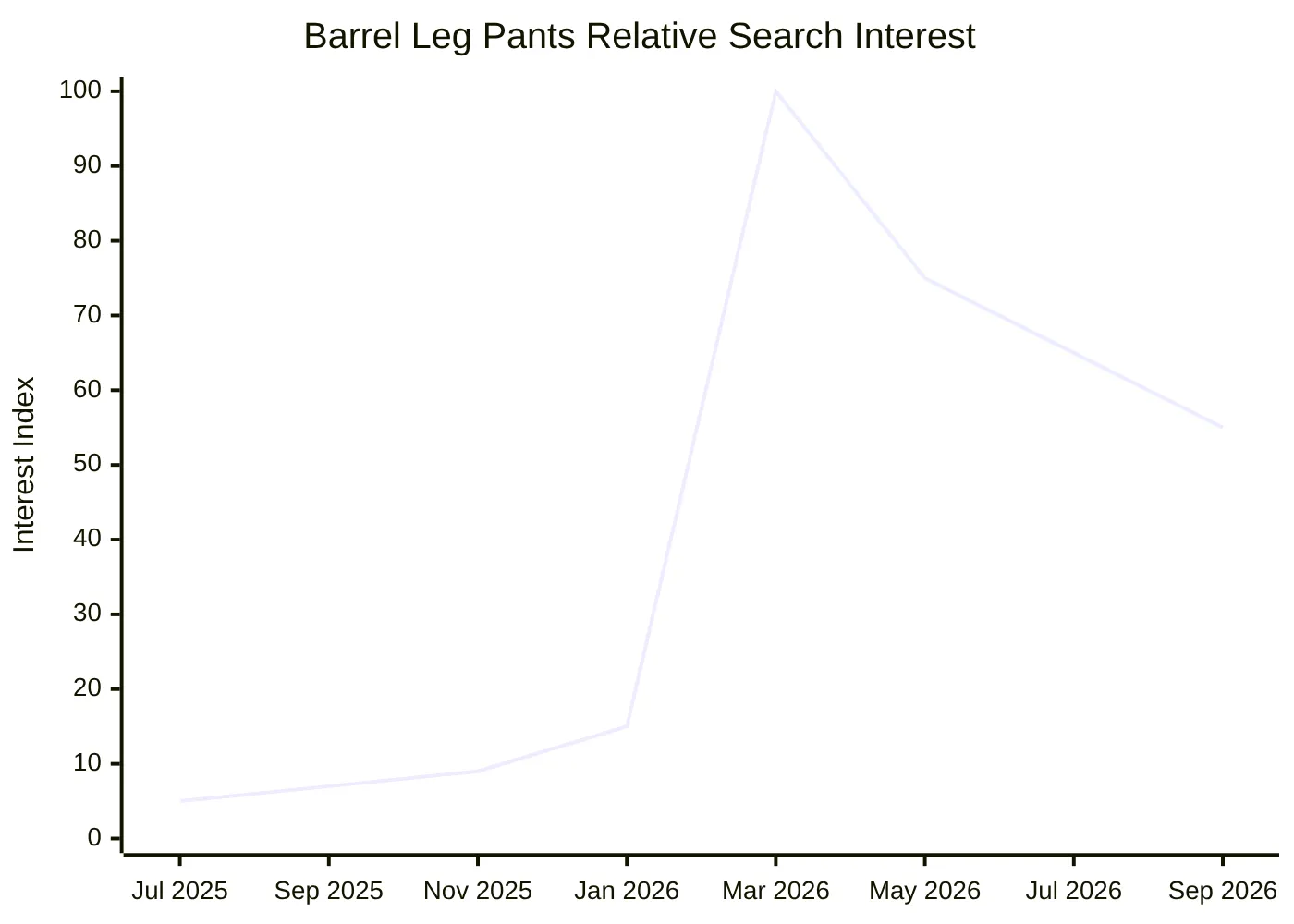
For marketers, the lesson is straightforward. By the time a trend looks obvious in mainstream coverage, early winners often already have indexable pages, internal links, images, and supporting content live. If your team still waits for complete certainty, you usually arrive after the useful part of the curve.
How Fashion Trend Algorithms Read Barrel Leg Pants and Viral Aesthetic Signals
Fashion trend algorithms do not promote aesthetics in the abstract. They promote patterns that repeatedly produce strong behavior. In the Barrel Leg Pants case, the recurring aesthetic package was very clear: ankle or cropped length, visible shoes, a defined waist, fitted tops, and neutral styling that made the curved leg line easy to notice.
That is what makes viral aesthetic signals useful as a concept. They are not just "things that look nice". They are repeated visual and textual features that machines can cluster and users keep rewarding with saves, replays, clicks, and shares.
The table below shows how that likely looked in practice.
| Signal type | Barrel Leg Pants example | Why algorithms care |
|---|---|---|
| Visual signal | Curved thigh, tapered ankle, visible footwear | Easy to classify in images and short video |
| Text signal | "Barrel leg pants", "barrel jeans", "curved leg denim" | Helps systems connect posts, products, and searches |
| Behavior signal | Saves, replays, outfit clicks, add-to-cart activity | Confirms real user interest rather than novelty alone |
| Commercial signal | New category pages, product tags, editorial mentions | Shows the topic is moving beyond niche chatter |
TikTok and similar short-form systems are especially good at amplifying a silhouette like this because the shape is legible in seconds. A three-outfit try-on can show contrast, movement, and shoe pairing almost instantly. TikTok's own recommendation documentation explains that interactions and content information heavily influence distribution, which supports the logic in this trend case. You can review that directly in TikTok's explanation of how recommendations work.
Pinterest added another layer. Once enough users saved visually similar outfit images, the platform had more than keywords. It had image-level similarity data around the silhouette itself. Search engines then picked up the text-side demand as queries broadened from "what are barrel jeans" into outfit, fit, and buying terms.
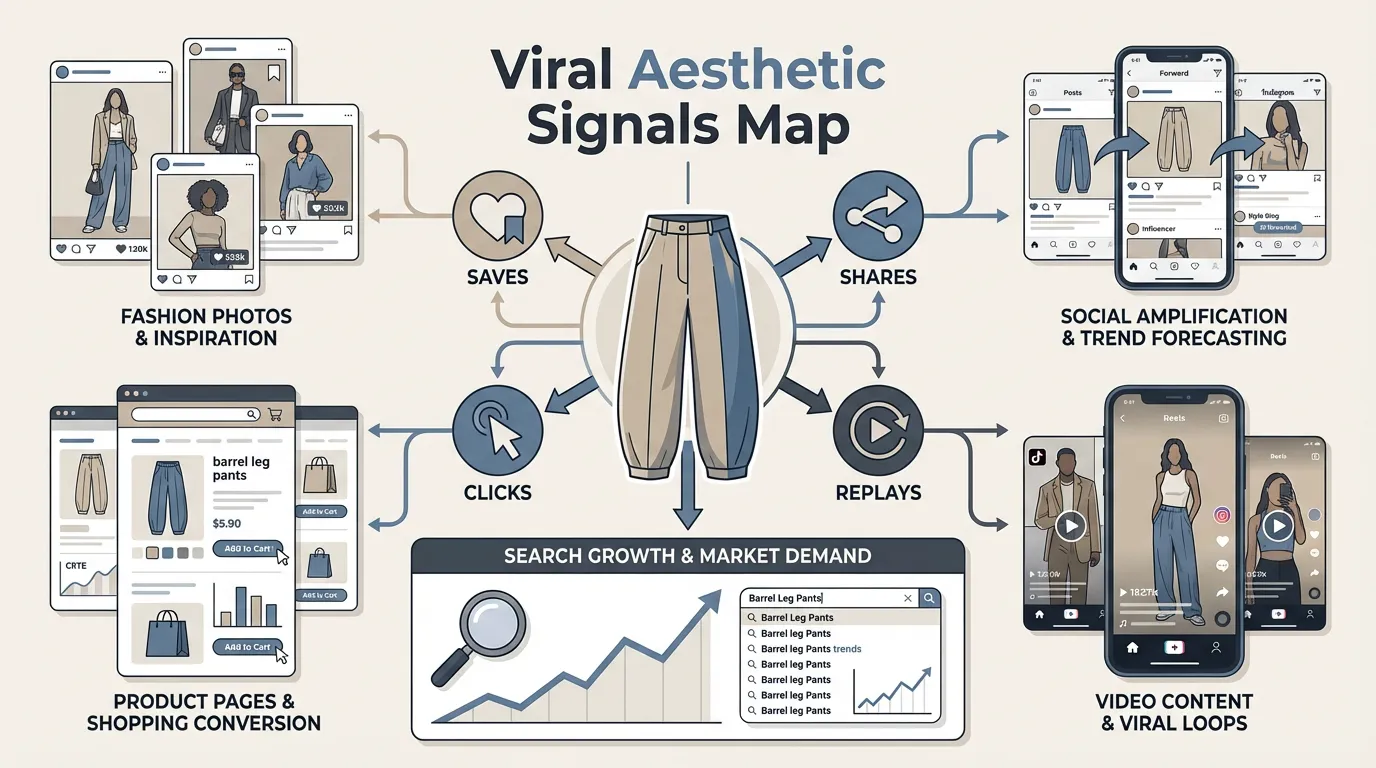
This is where fashion trend algorithms start to look very similar to visibility systems in search. The systems are different, but the logic rhymes: repeated signals, consistent labeling, good engagement, and a format that machines can interpret without guessing.
If you want a related view on how structure and engagement affect website performance, SeekLab.io has already covered this from the site side in High-Quality Blog Content Optimization Tips. That matters because trend capture is rarely just a keyword problem. It is often a content structure problem.
How Barrel Leg Pants Show AI Trend Prediction in Action
AI trend prediction tools typically do not wait for a topic to become mainstream. They look for acceleration, consistency, and spread. In the Barrel Leg Pants example, the signals were likely visible before March 2026 as a combination of modest but rising search interest, increasing social content density, and expanding query variations.
That long-tail bloom is one of the clearest signs of real momentum. When a topic starts generating versions like "barrel leg pants petite", "barrel leg pants outfit", and "barrel leg trousers workwear", it suggests that demand is moving from vague awareness into segmented intent.
The original research report cites Exploding Topics' trending topics coverage as a relevant source direction for this type of breakout. That is useful because it frames Barrel Leg Pants not as a one-off style article, but as a recognizable pattern in trend detection: low baseline, sharp inflection, then a higher plateau.
For operators, the practical question is not whether you can reproduce the exact scoring formula behind AI trend prediction. You do not need to. What you need is a working decision model that tells you whether a rising phrase is noise, a short-lived micro spike, or a commercially usable content opportunity.
A simple qualification model looks like this:
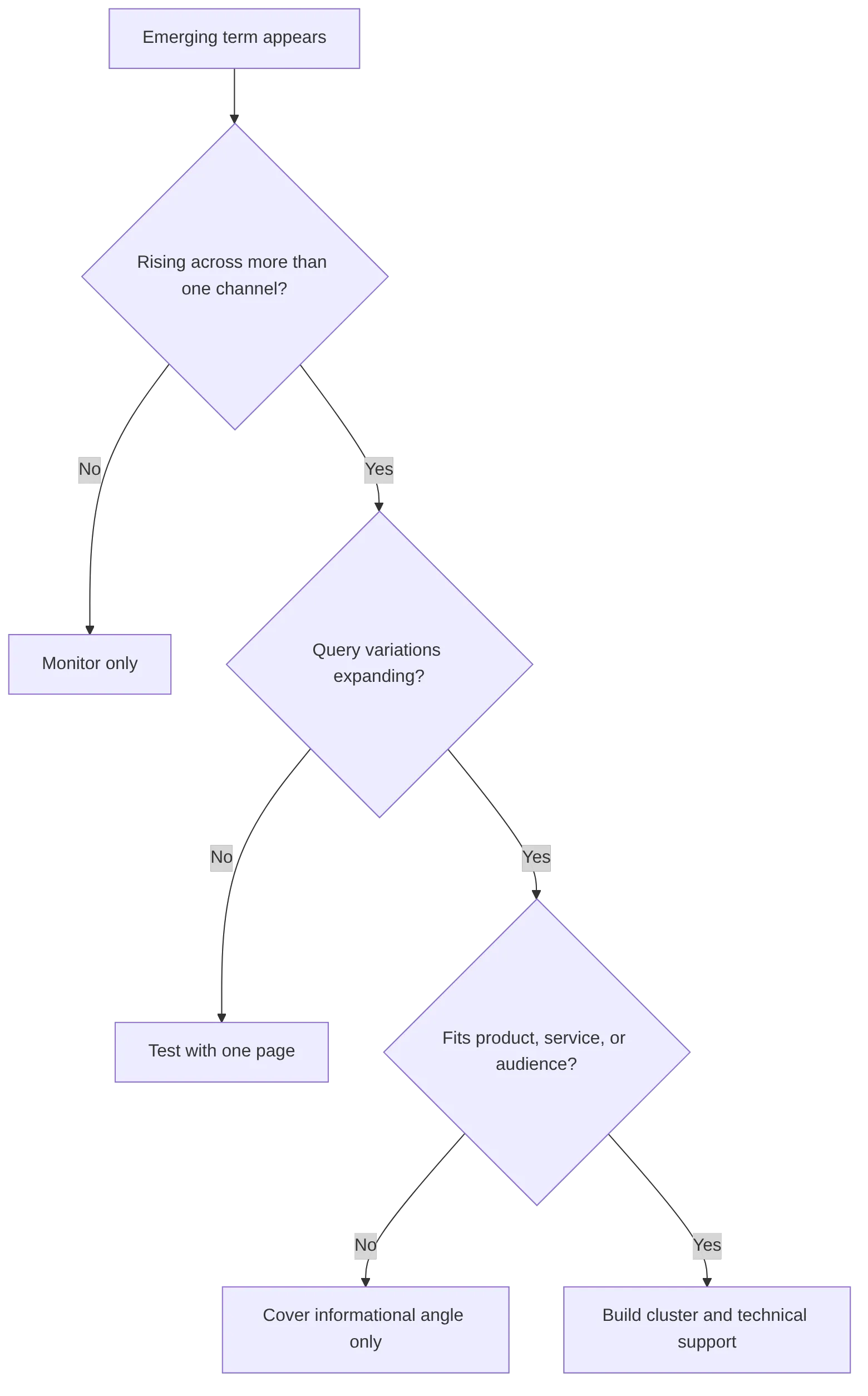
This is where many teams go wrong. They either ignore the signal because volume still looks small, or they overreact and publish thin pages with no architecture behind them. The better move is usually in between: qualify the trend, map intent, then build a cluster strong enough for machines to understand.
That is also the point where technical readiness matters. If your new pages are buried, slow, badly rendered, or disconnected internally, even strong topic timing can be wasted. SeekLab.io's approach on that side is visible in pieces like Technical JavaScript SEO & Indexing Solutions and Technical SEO Roadmap For Early-Stage Growth. Those pages matter here because trend visibility depends on pages being seen and interpreted correctly, not just published quickly.
What Barrel Leg Pants Teach Us About SEO, EEAT, and AI-Era Content Structure
The strongest takeaway from Barrel Leg Pants is that algorithms reward clarity earlier than they reward comprehensiveness. Once a new topic starts moving, systems look for pages and content objects that explain it clearly, connect it to related intents, and satisfy user behavior fast enough to keep earning distribution.
That is very close to how good SEO content clusters work. A strong site does not treat a rising topic as one isolated post. It creates a small but coherent entity set around it: definition page, comparison page, fit guide, category page, FAQ, and internal links that make the hierarchy obvious.

Here is the key mapping.
| Fashion trend behavior | Website visibility equivalent |
|---|---|
| Repeated silhouette gets recognized | Repeated topic framing and terminology gets recognized |
| Saves and shares reinforce the trend | Dwell time, clicks, and satisfaction reinforce the page |
| Creators define the narrative early | Early publishers define the language and FAQs |
| Platforms cluster similar looks | Search and AI systems cluster semantically related pages |
For independent websites, this means trend responsiveness should involve both content and page architecture. If you only publish one reaction post, you often miss the broader demand curve. If you only create product pages without explanatory content, you miss earlier informational intent. If you only create editorial content without clear commercial pathways, traffic may arrive but conversion quality stays weak.
A more balanced playbook for a trend like Barrel Leg Pants would include:
- A definition or explainer page.
- A comparison page against adjacent terms.
- A style, use-case, or application guide.
- A category or service page if the trend fits your business.
- Internal links that consolidate authority instead of fragmenting it.
This same logic works well outside fashion. A B2B exporter, SaaS brand, or independent ecommerce site can apply the same model to emerging buyer phrases, product formats, or niche problem statements. The category changes, but the signal interpretation process stays remarkably similar.
If your site already has fragmented content, weak internal links, or multiple thin posts competing with each other, it is worth reviewing Is Your Website Underperforming? A Technical SEO Audit Can Fix It before adding more pages. A trend is not helpful if your site structure turns every new opportunity into cannibalization.
How to Use Barrel Leg Pants as a Framework for fashion trend algorithms, viral aesthetic signals, and AI trend prediction
The practical value of the Barrel Leg Pants story is that it gives SEO teams a repeatable framework. You can use it whenever a rising term starts showing up in search suggestions, social conversations, sales language, or buyer requests.
Start with signal discovery. Watch for unusual terms that are still small but suddenly show multiple kinds of movement. Search growth alone is not enough. The better pattern is search plus creator usage plus on-site commercial expression.
Then qualify the opportunity. Not every interesting term deserves a full buildout. Ask four questions:
- Is the growth persistent enough to matter?
- Are intent variations expanding?
- Does the topic fit your real business?
- Can you support it with credible content and usable pages?
After that, map the query lifecycle. Barrel Leg Pants moved from definition to fit questions to outfit ideas to product queries. Most real trends follow a similar path. Your content plan should reflect that movement instead of forcing every user into one page.
Finally, make the site technically legible. This is the boring part that ruins a lot of timely content. Trend pages should be crawlable, linked, properly labeled, and fast on mobile. Images should clarify the topic rather than decorate the page. Structured content matters because AI systems and search engines both benefit when they do not have to guess what the page is about.
For teams that need outside judgment before investing, SeekLab.io helps brands build search visibility and AI-era discoverability through high-quality content production and technical optimization. The value is not in trying to fix everything. It is in identifying what truly affects growth, what can wait, and what direction is worth committing to before time and budget are wasted.
If your team keeps spotting trends too late, the problem may not be creativity. It may be decision speed, topic qualification, or site readiness. That is exactly where a focused review helps. You can contact SeekLab.io or get a free audit report to understand where your current structure is helping, where it is blocking growth, and what should be prioritized next.