B2B SEO Guide: Mastering Digital PR for SEO
Expert reviewed

B2B teams rarely struggle because they lack content. They struggle because the market does not trust them yet. That is exactly where digital pr for seo becomes a practical growth lever: it earns credible, third-party validation (coverage, links, and mentions) that improves organic visibility and supports pipeline over long buying cycles.

Why digital PR matters for B2B SEO today
Search engines increasingly reward authority signals that are hard to fake: reputable references, strong topical coverage, and recognizable entities. Digital PR is built to generate those signals in a measurable way, unlike traditional PR that often stops at impressions and awareness.
The data supports why this matters for rankings:
- Reboot Online summarizes research showing the average #1 result has about 3.8x more backlinks than results in positions 2 to 10, and 95% of top-performing pages have at least one backlink.
- Many practitioners observe a delay of roughly 2 to 6 weeks between earning quality links and seeing ranking movement.
In B2B SEO, this compounds. A handful of editorial links from the right industry sources can lift an entire topic cluster, not just one page, which is why digital PR pairs naturally with a disciplined b2b content strategy and b2b lead gen seo model.
What digital PR for SEO is (and what it is not)
Digital PR for SEO uses online-first PR tactics (research, expert commentary, partnerships, contributed articles, podcasts/webinars) to earn:
- Editorial backlinks to strategic pages.
- Brand mentions that reinforce entity credibility.
- Referral traffic from niche audiences who actually influence deals.
How it differs:
- Traditional PR: broader awareness, often offline or general news, weaker tie to SEO outcomes.
- Classic link building: often measured by link quantity; if done poorly (irrelevant placements, paid schemes), it introduces risk and low durability.
- Digital PR: earns links by publishing something worth citing, then pitching it well. In practice, it is the safest modern way to build authority because editors link when it improves their story, not because you asked for a favor.
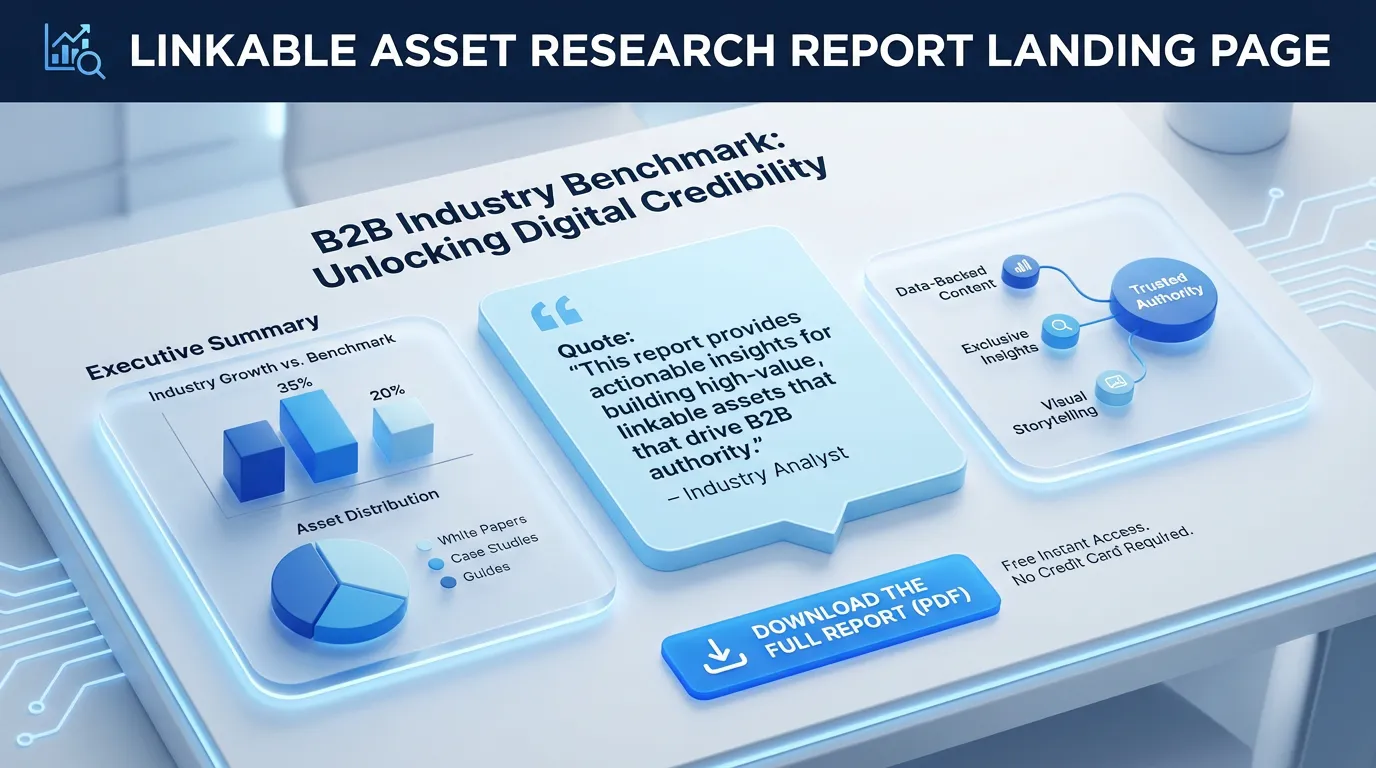
For B2B SEO specifically, digital PR works best when the story is problem-led (benchmarks, operational risk, compliance changes, cost drivers) rather than product-led.
How digital PR strengthens rankings, EEAT, and lead generation
Digital PR helps SEO through three reinforcing mechanisms:
- Backlinks that transfer authority and improve competitive rankings.
- Brand mentions (linked or unlinked) that strengthen entity recognition and trust signals.
- Reputation signals aligned with Google's quality and EEAT framing (Google EEAT guidance).
The practical B2B takeaway: digital PR is not just about links. It is about earning proof that your company is a credible voice in a narrow, high-value problem space.

A B2B playbook: tactics plus the technical foundation that makes PR "count"
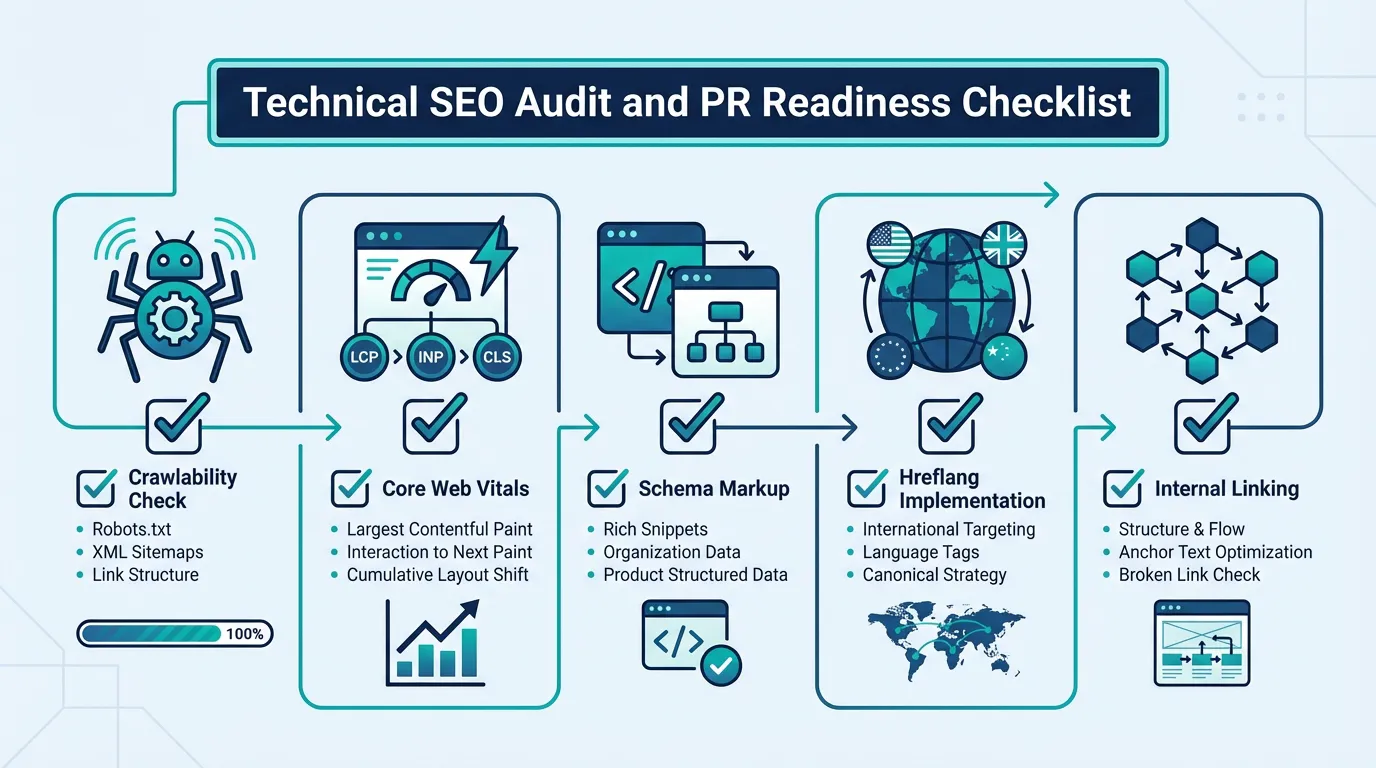
Digital PR is most effective when your site can capture and distribute the authority you earn. If key pages are slow, blocked, or poorly structured, PR attention leaks. Core foundations include crawlability, indexability, internal linking, schema, and performance (Core Web Vitals) as emphasized in Google's Web Vitals documentation.
A simple planning table for B2B teams:
| Digital PR tactic | What you publish or pitch | SEO benefit | Lead-gen role |
|---|---|---|---|
| Data-driven report | Benchmark study, industry index, annual trends | Highly citeable links and long-tail rankings | Gated download, webinar follow-up |
| Thought leadership | Expert POV on regulation or operational risk | Repeated entity association in niche media | Builds trust for deal committees |
| Guest contribution | High-value how-to on an industry site | Contextual links to a pillar page | Referral traffic with intent |
| Podcasts/webinars | Talk + show notes + transcript | Mentions and links from event pages | Mid-funnel nurturing asset |
| Co-marketing | Joint report or roundtable | Partner links + wider coverage | Shared audience, faster credibility |
| Case study as news | Quantified results framed as a story | Links to proof pages that convert | Sales enablement and bottom-funnel reassurance |
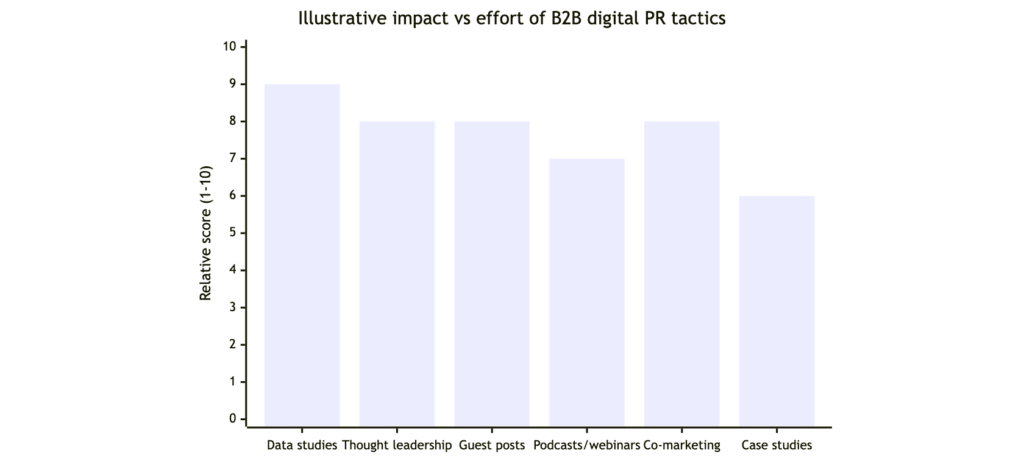
To prioritize, use an impact vs effort lens:
Measurement, timelines, and avoiding the traps that waste budget
Treat digital PR as an SEO program, not a one-off campaign. Track leading and lagging indicators:
- Leading (weeks): coverage quality, referring domains, share of mentions in target topics, brand search lift.
- Lagging (months): rankings across your clusters, organic conversions, and pipeline influence.
Timeline expectations should be realistic: ranking shifts often appear after a 2 to 6 week lag from quality links, while compounding gains commonly require multiple months of consistency.
Common mistakes to avoid:
- Vanity PR without an SEO landing zone (coverage that links nowhere useful).
- Risky link schemes that prioritize volume over relevance and editorial standards.
- Ignoring technical SEO, which can blunt the effect of earned authority and hurt conversion rates.
This is where SeekLab.io fits operationally: not by trying to "fix everything," but by identifying what truly impacts growth, what can be deprioritized, and what actions will make digital PR outcomes translate into SEO and qualified leads. If you want to pressure-test your current foundation before investing heavily in outreach, the next step is straightforward: get a free audit report, contact us, and leave your website domain.