Boost SEO Authority: Digital PR & Mentions
Expert reviewed


Digital PR for SEO is no longer just a nice extra for brand awareness. For competitive B2B websites, exporters, and international companies, it has become a practical way to build authority signals that search engines and AI-driven answer systems can recognize.
When other credible websites cite your research, quote your experts, or reference your brand in relevant industry coverage, those signals can strengthen rankings, reinforce entity understanding, and improve how trustworthy your company appears across the web. But there is an important condition: PR works best when your SEO foundation is already sound.
That is why the smartest approach is not to chase coverage first. It is to make the right strategic decisions first, fix what truly blocks growth, and then use digital PR to amplify the pages and topics that matter most. This is also where SeekLab.io's model stands out: not limited to technical issue detection, but also covering content strategy, topic selection, visual assets, and actionable guidance so authority can translate into leads.
What digital PR for SEO actually does
At its core, digital PR for SEO means creating online-first stories or assets that journalists, editors, bloggers, and industry publishers genuinely want to reference. The goal is not press for vanity metrics alone. The goal is to earn editorial backlinks, brand mentions, and trusted citations that improve visibility and business outcomes.
Compared with traditional PR and older link acquisition methods, digital PR is far more aligned with search performance.
| Approach | Main goal | Typical output | SEO value | Risk level |
|---|---|---|---|---|
| Traditional PR | Reach and awareness | Press mentions, interviews, offline coverage | Often indirect | Low |
| Classic link building | Link volume | Guest posts, directories, placements | Mixed, often inconsistent | Medium to high |
| Digital PR for SEO | Authority and measurable growth | Editorial links, expert quotes, branded coverage | High when well aligned | Lower when earned editorially |
Several sources in the research report point in the same direction. High-quality backlinks still correlate strongly with rankings, while search engines increasingly use entity relationships and topical context to understand which brands deserve visibility. That means linked coverage is valuable, but unlinked brand references can also support trust and recognition when they appear on relevant, authoritative websites.
This is especially important for companies in long sales-cycle sectors. A trade publication mention may not send huge traffic, but it can influence decision-makers, improve branded search behavior, and reinforce your authority in a niche topic cluster.
If you want a more B2B-focused view of this topic, SeekLab.io already covers it in its guide to mastering digital PR for SEO.
Why brand mentions and journalist outreach matter more now
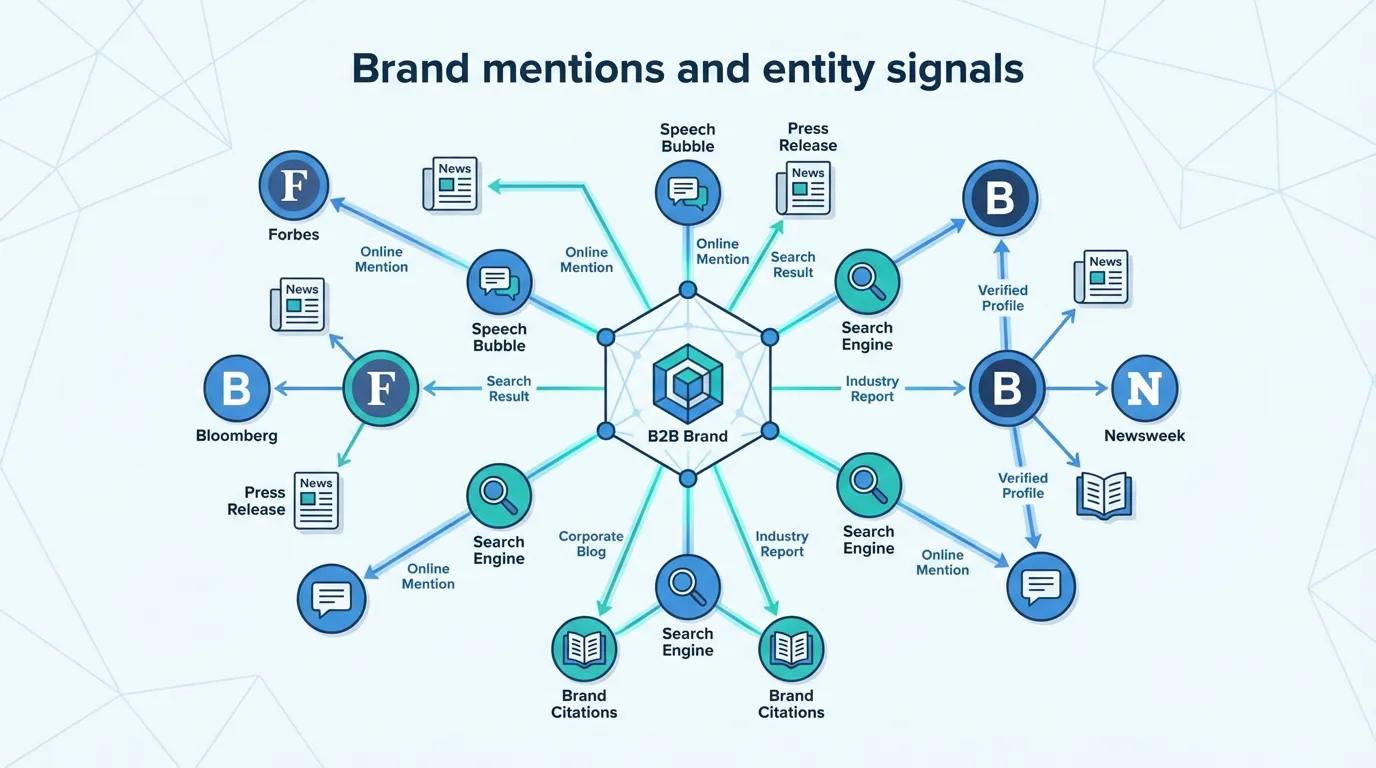
A strong digital PR strategy creates two outcomes at the same time: links and mentions. Both matter, but they do different jobs.
- Links help transfer authority and often support crawling and ranking.
- Brand mentions help reinforce entity recognition and topical association.
- Repeated mentions across trusted sources can influence how search systems evaluate consensus and credibility.
- Journalist outreach turns your data, insights, and commentary into third-party validation.
For modern SEO, that combination is powerful.
A good example is a company publishing original industry findings. If journalists cite the study in articles, newsletters, and commentary pieces, the brand starts appearing in the same context as important sector topics. Over time, that creates a stronger semantic footprint. For B2B brands, this can be more valuable than raw traffic because it improves the quality of visibility.
The research report also highlights a growing role for AI-driven answer systems. These systems often rely on trusted sources, repeated references, and broad agreement across the web. In practice, that means a company that is consistently mentioned by reputable publications may have a better chance of appearing in AI-generated summaries, even when every mention is not linked.
Here is a simple view of how primary digital PR tactics are commonly distributed:
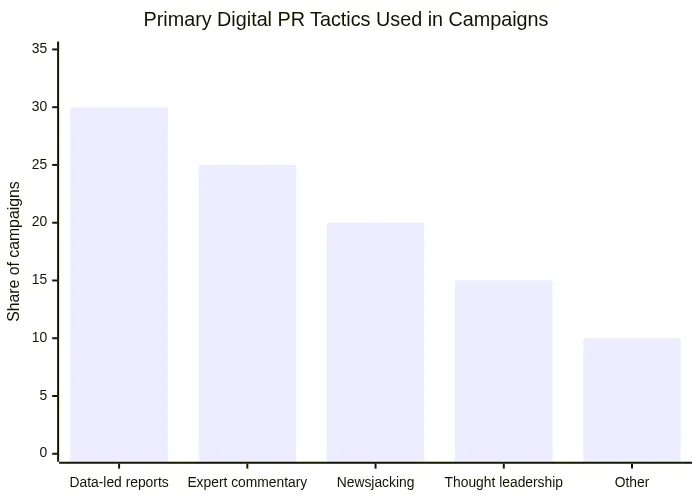
For many companies, journalist outreach fails because the pitch starts too late. They try to contact media before they have a useful asset, a clear angle, or a landing page worth linking to. SeekLab.io's approach is stronger because it starts earlier with topic selection, content structure, and technical readiness, which helps prevent wasted outreach.
Related planning also connects naturally with broader content strategy. For example, a business improving search intent SEO is in a much better position to turn media attention into qualified inquiries instead of just temporary traffic spikes.
The workflow that makes digital PR worth the investment
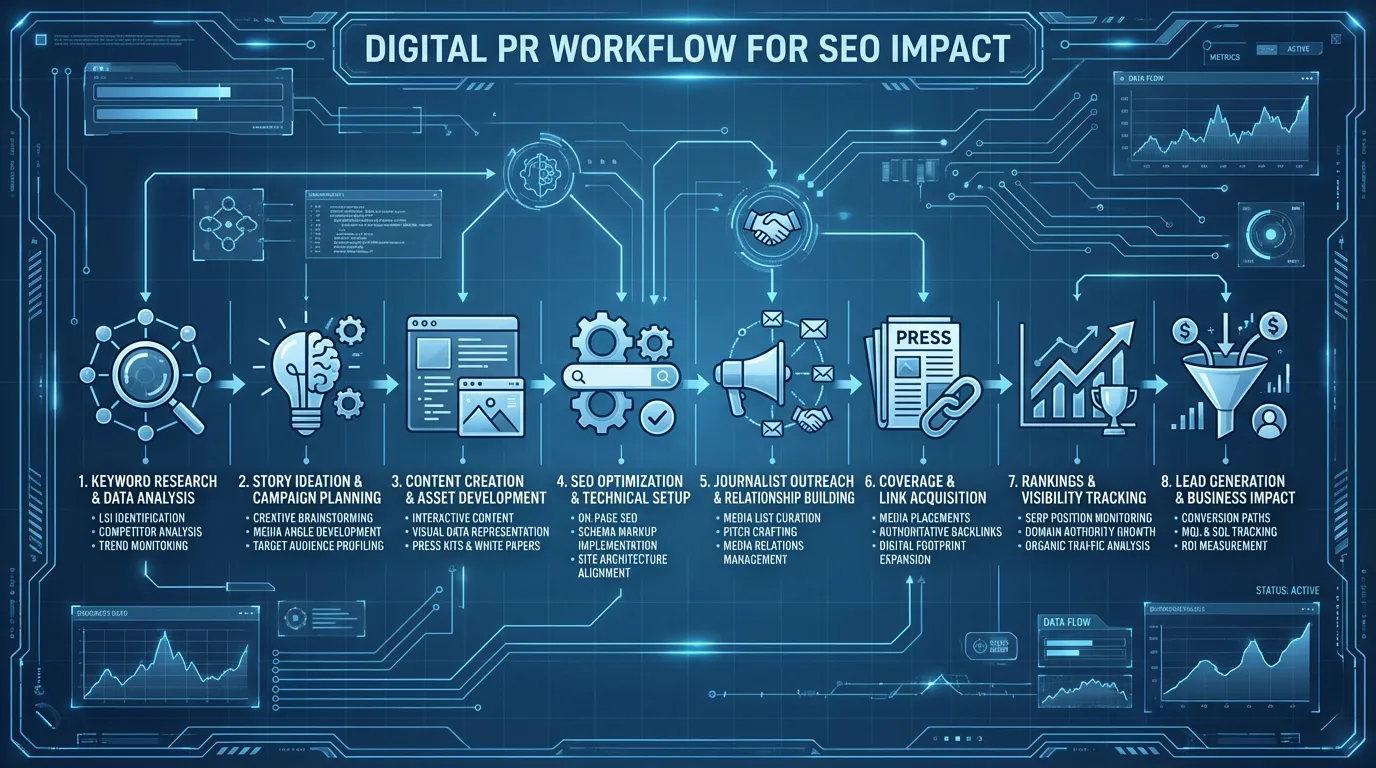
Digital PR is most effective when it works as part of a larger SEO system. That means choosing the right topics, building the right assets, and making sure your site can capture and distribute authority after coverage goes live.
A practical workflow looks like this:
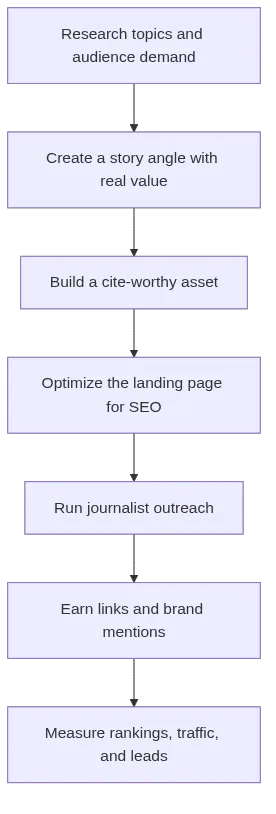
1. Choose topics that can move more than one page
Do not start with "What can we pitch?" Start with "What topic cluster do we want to strengthen?"
A smart campaign can support:
- A commercial service page.
- A supporting guide.
- A related case study or resource.
- Brand-level authority in a niche category.
This is why topic selection matters so much. SeekLab.io's work on trending topic discovery, user-intent-led keyword selection, and SERP structure analysis helps teams avoid heading in the wrong direction before outreach even begins.
2. Create assets journalists actually want to cite
The best digital PR assets usually include one of these:
- Original data studies.
- Regional benchmark reports.
- Expert commentary tied to current events.
- Clear visual assets.
- Case-study-driven insights with measurable outcomes.
For exporters and international companies, localized data is especially useful. A US editor may care about domestic market changes, while APAC media may want regional comparisons. If your website already has multilingual structure and proper targeting, those mentions can reinforce visibility in the right market.
3. Optimize the destination page before outreach
This is the step many teams skip, and it is often why PR underperforms.
Before journalist outreach begins, make sure the target page has:
- Strong on-page structure.
- Clear headings aligned with search intent.
- Useful internal links.
- Relevant schema markup.
- Fast loading performance.
- A clear conversion path.
If a journalist links to a weak page, you may still gain some authority, but you are wasting part of the opportunity. SeekLab.io is especially relevant here because it combines full-site crawling, Core Web Vitals diagnostics, indexing checks, internal linking analysis, sitemap.xml and robots.txt validation, and technical guidance. In other words, it helps ensure your site is PR-ready before budget is spent.
For international sites, this is even more critical. Companies expanding across languages should align digital PR with localization strategy and technical structure. SeekLab.io's perspective on this is also reflected in its guide to multilingual SEO strategy.
4. Measure what matters
Digital PR should not be judged only by coverage volume. The better framework is to separate leading and lagging indicators.
| Metric type | What to track | Typical timing |
|---|---|---|
| Leading indicators | Coverage quality, referring domains, share of topical mentions, referral traffic | First days to weeks |
| Mid-term indicators | Ranking movement, brand search lift, improved indexing and crawl discovery | 2 to 6 weeks and beyond |
| Business indicators | Qualified inquiries, assisted conversions, pipeline impact | 1 to 6 months |
This matches the research report's view that many campaigns show early SEO effects within a few months, while larger gains compound over time.
Digital PR for international B2B sites: where many brands miss the opportunity
One of the strongest gaps in the current search results is the lack of practical advice for exporters, multilingual websites, and international B2B brands. Yet these are exactly the businesses that often benefit most from digital PR.
Why? Because they face three challenges at once:
- They sell into multiple regions with different media ecosystems.
- They need trust signals, not just traffic.
- Their buying journeys are complex and often involve multiple stakeholders.
For these companies, digital PR should be localized and strategically selective.
A useful model is:
| Region | Best outreach focus | Key SEO consideration |
|---|---|---|
| US | Industry publications, business press, niche B2B commentary | Strong landing pages and conversion design |
| Europe | Trade media, compliance and regulation angles | Country targeting and language relevance |
| APAC | Regional portals, local-language business media, market trend stories | Multilingual architecture and hreflang alignment |
This is where SeekLab.io can offer more than generic advice. With teams and legal entities in Singapore and Shanghai, plus business development in Dubai, the company is positioned around the practical realities of APAC, US, and European growth. That matters when planning region-specific story angles, content structures, and technical deployment.
Just as important, SeekLab.io does not aim to fix everything. The point is to identify what truly impacts growth, what can be deprioritized, and which improvements will make authority gains translate into rankings and inquiries.
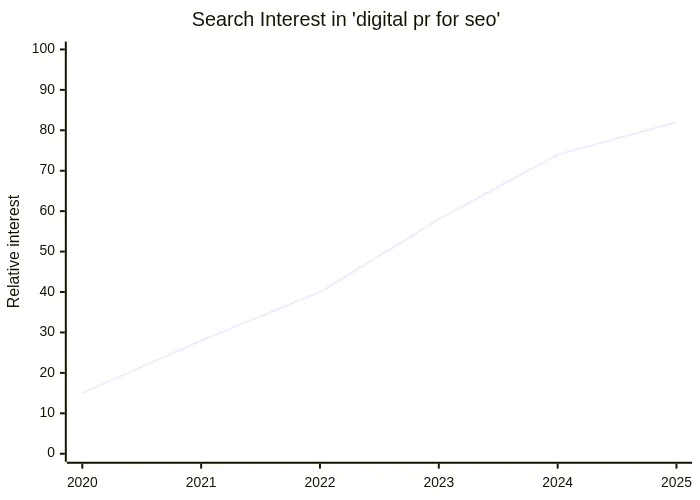
To illustrate why interest is growing, here is a simple trend view from the research report:
What to avoid and how SeekLab.io helps make PR count
The biggest mistake is assuming digital PR can compensate for weak SEO foundations. It cannot. If your site has crawling problems, poor internal linking, weak page experience, or unclear conversion paths, even strong coverage will underdeliver.
The second mistake is using tactics that look scalable but damage long-term outcomes:
- Paid placements on irrelevant sites.
- Mass guest posting for link volume.
- Generic AI-generated outreach that journalists ignore.
- Press release syndication used mainly as a link tactic.
- Sending coverage to the homepage instead of a strategic page.
A better approach is slower, but safer and more profitable:
- Start with a technical and strategic review.
- Prioritize the pages and topics that matter most.
- Build assets with editorial value.
- Run focused journalist outreach.
- Track SEO and lead impact together.
That is exactly where SeekLab.io fits. The value is not only in audits or only in content. It is in connecting technical diagnostics, topic selection, high-quality blog creation, visual assets, structured optimization, and implementation guidance into one growth workflow. Some simple technical issues can even be resolved free of charge for clients, and the process is backed by transparent monthly data review and performance reporting. If minimum expected results are not achieved, there is no charge.
For companies considering digital PR, the best next step is usually not "launch a campaign tomorrow." It is to first validate whether the site is ready to benefit from one. If you want a practical starting point, get a free audit report, contact SeekLab.io, and leave your website domain.
In short, digital PR for SEO works best when it amplifies an already intelligent SEO strategy. Earned coverage can build authority, reinforce entity signals, strengthen rankings, and improve conversion quality, but only when the underlying structure is ready. Make the right strategic decisions first, then let outreach multiply the results.