Competitor SEO Analysis for Better Rankings
Expert reviewed

If you want better rankings, do not start by copying what competitors publish. Start by understanding why they win.
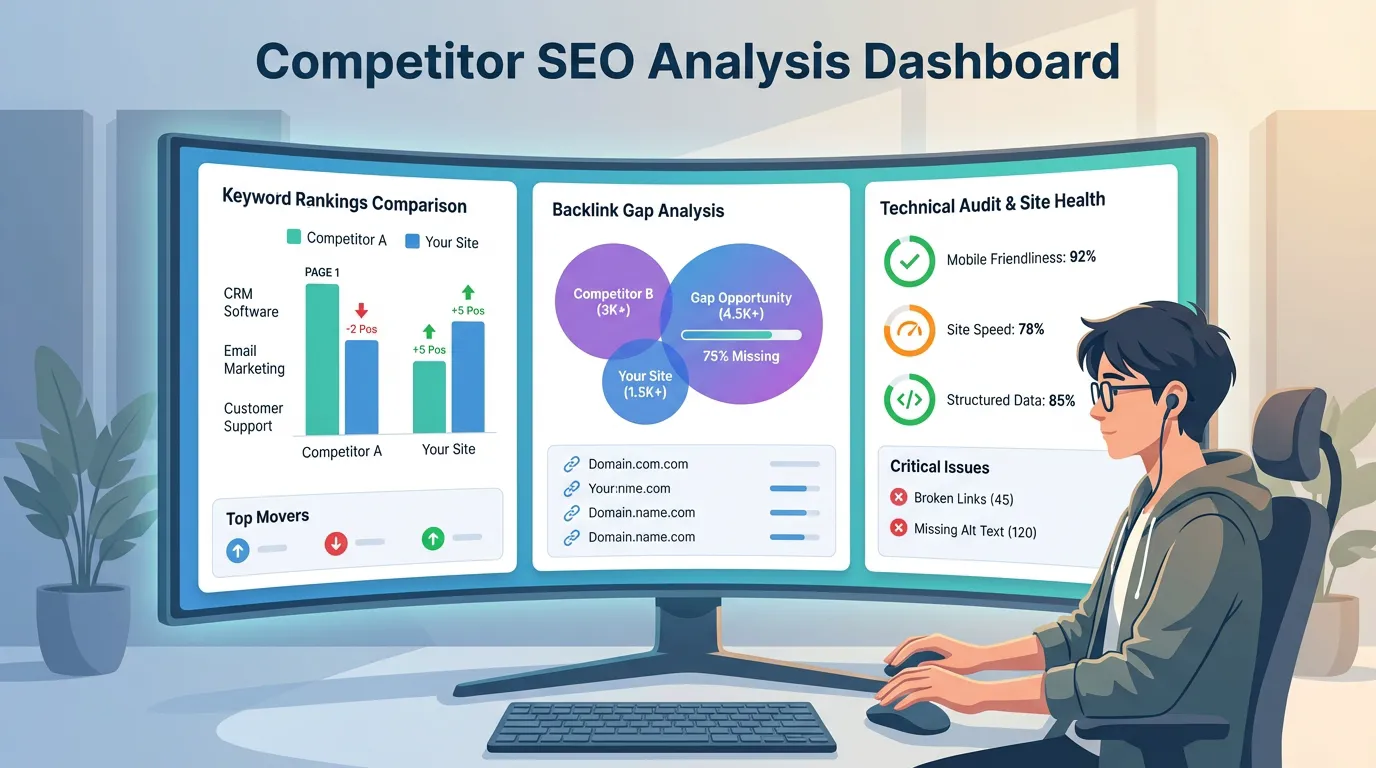
Competitor SEO analysis helps you break down how other sites earn visibility, what topics they cover, where their authority comes from, and whether their technical setup gives them an edge. For marketing managers, site owners, and developers, this is often the fastest way to replace guesswork with a clear plan.
The value is not in finding every possible issue. It is in identifying what truly affects growth, what can wait, and what should be ignored. That is where SeekLab.io stands out. Beyond diagnostics, SeekLab.io provides actionable solutions, technical guidance, and high-quality content support designed for real business outcomes, not just rankings.
In practical terms, competitor SEO analysis usually combines four areas:
| Area | What you compare | Why it matters |
|---|---|---|
| Keywords | Terms competitors rank for and you do not | Reveals content and page opportunities |
| Backlinks | Referring domains linking to competitors but not to you | Shows authority gaps and outreach targets |
| Technical SEO | Crawlability, speed, rendering, schema, internal linking | Explains why similar content performs differently |
| Content quality | Depth, structure, visuals, conversion paths | Helps turn traffic into leads, not just visits |
For businesses operating across APAC, the US, and Europe, this gets even more important. SERP competitors change by market, search behavior differs by language, and weak site architecture can undermine every content investment. That is why competitor SEO analysis works best when paired with a real technical review and a focused SEO content strategy.
What competitor SEO analysis actually includes
A strong competitor SEO analysis is more than a keyword spreadsheet. It should cover the full path from visibility to conversion.
First, map your true search competitors. These are not always the same as your business competitors. A company you compete with commercially may be weak in search, while an informational publisher or niche specialist may dominate the SERP for your priority topics.
Second, review the main opportunity layers:
- Competitor keyword gap
- Backlink gap
- Technical SEO comparison
- Content depth and topical authority
- International SEO setup where relevant
This broader view matters because rankings are rarely won by a single factor. A competitor may outrank you because they have stronger internal linking, better Core Web Vitals, more complete schema, or more focused topic clusters, not just more pages.
SeekLab.io approaches this as a prioritization exercise. Before you start writing content or fixing technical issues, make the right strategic decisions first.
5 steps to run a smarter analysis
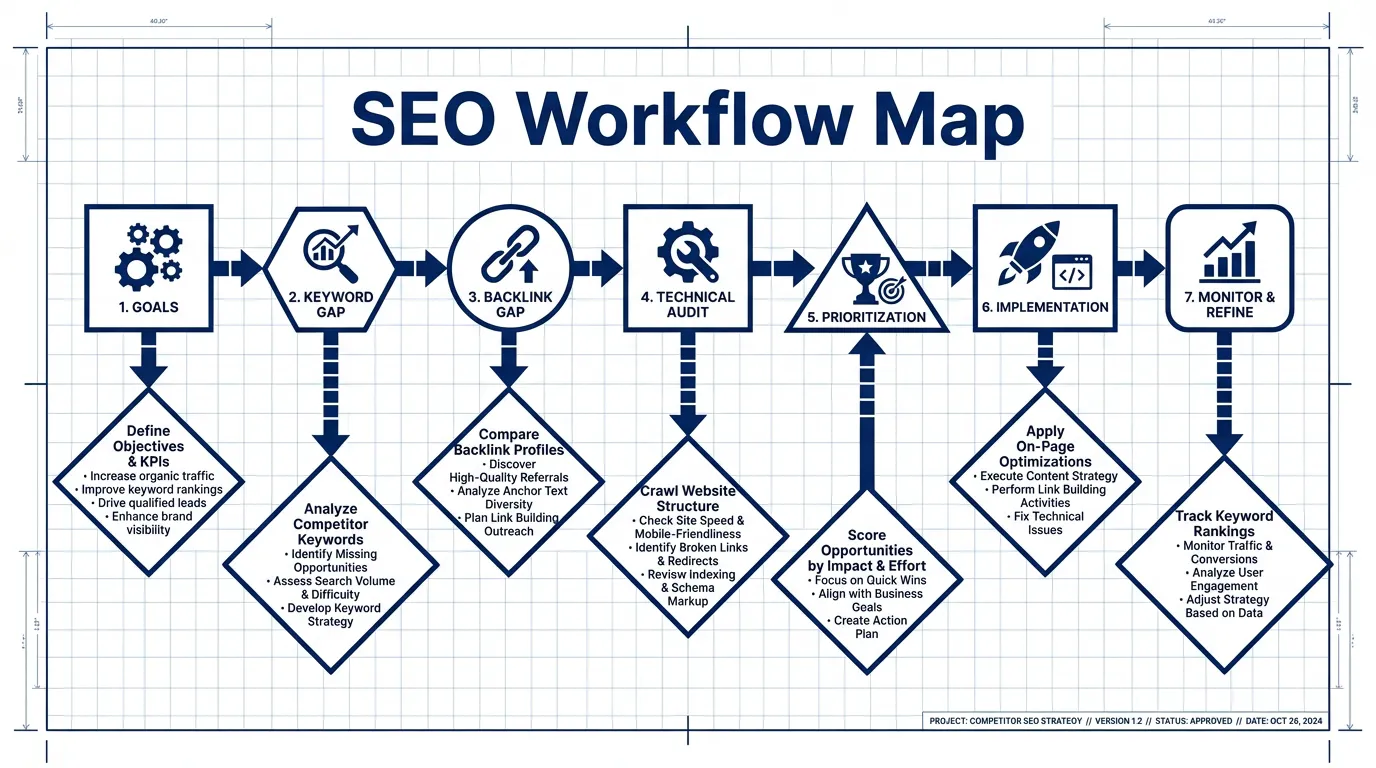
Here is a practical framework based on the research and aligned with how informational SERPs for this topic are structured.
1. Identify the right competitors
Choose three to five domains that consistently rank for your most important queries. Focus on SERP competitors, not just familiar brands.
When selecting comparison sites, check whether they:
- Rank on page 1 or 2 for multiple relevant keywords
- Target the same buyer stage
- Compete in the same geography or language
- Have similar business models
2. Find your competitor keyword gap
A competitor keyword gap shows where competitors rank and your site has little or no presence. This is one of the quickest ways to build a content roadmap grounded in demand.
For a B2B exporter or manufacturer, this often means comparing:
- Product keywords
- Solution and treatment keywords
- Informational guide topics
- Buyer-stage keywords close to RFQ or lead generation
A simple prioritization model looks like this:
| Gap type | What it means | Recommended action |
|---|---|---|
| Missing gap | Competitor ranks, you do not | Create new page or article |
| Weak gap | Competitor ranks top 5, you rank 11-30 | Improve on-page SEO and internal links |
| Shared keyword | Both rank | Strengthen content quality and conversion path |
The research report notes that many sites stop at exporting lists of keywords. That is not enough. The real value comes from grouping terms by search intent, business relevance, and page type.
If your team needs stronger foundations before content expansion, it helps to review a technical SEO audit approach at the same time. New pages perform better when they sit on a site that is crawlable, indexable, and structurally sound.
3. Analyze the backlink gap
A backlink gap identifies referring domains that link to one or more competitors but not to you. This matters because authority still influences rankings, especially in competitive B2B and exporter markets.
For a site like Nubway, likely link opportunities may include:
- Trade show listings
- Industry media coverage
- Distributor pages
- B2B directories
- Technology or treatment resources
Instead of chasing volume, focus on relevant domains that support trust and market visibility.
| Link source type | Typical value | Priority level |
|---|---|---|
| Industry media | High authority and topical relevance | High |
| Trade associations and events | Strong trust signals | High |
| Quality B2B directories | Useful for discovery and legitimacy | Medium |
| Low-quality generic directories | Little ranking value, possible risk | Low |
This is where SeekLab.io's balanced approach matters. The goal is not to "fix everything" or build links everywhere. It is to identify the few authority gaps that can improve rankings and lead quality.
4. Compare technical SEO and site architecture
This is the gap many competitor analysis articles barely cover, even though it often explains why similar sites get very different results.
Review these areas side by side:
- Crawlability and indexation
- Core Web Vitals and page performance
- JavaScript rendering
- Internal linking and semantic structure
- Schema markup
- Sitemap.xml and robots.txt quality
- International architecture and hreflang SEO
The research report highlights that SeekLab.io can differentiate here because it combines full-site crawling, structured analysis, rendering checks, internal link equity analysis, and schema evaluation. That matters for companies that know rankings are slipping but do not know whether the problem is content, templates, or technical SEO debt.
For global sites, international structure is another common blind spot. If you are targeting multiple markets, multilingual SEO strategy and proper regional architecture can dramatically affect how well competitor insights translate into results.
5. Turn findings into a 90-day plan
The final step is where many teams fail. They gather data, then create a long backlog with no prioritization.
A better approach is to score initiatives by impact, effort, and confidence.
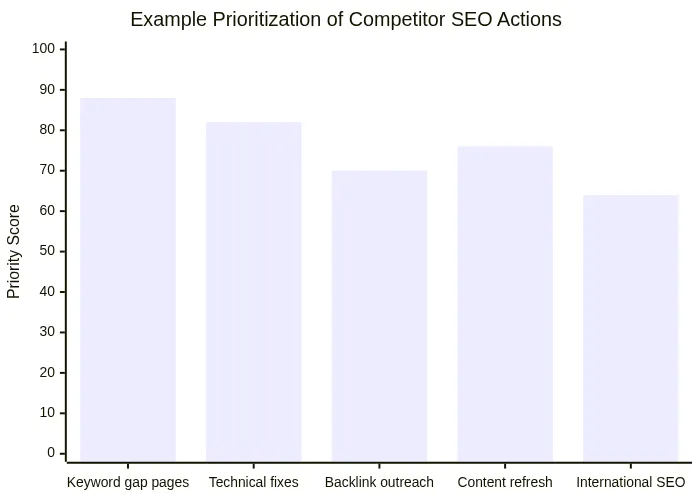
A realistic 90-day plan might include:
- Three to five pages targeting the most valuable keyword gaps
- A shortlist of high-quality domains for backlink outreach
- Three to seven technical fixes with the highest impact
- Monthly reporting tied to rankings, leads, and conversions
This is also where SeekLab.io adds practical value. What clients need is not just a list of problems. They need guidance on what to do first, what can be deprioritized, and how to avoid heading in the wrong direction.
What the SERPs reveal and where the opportunity is

Most pages ranking for competitor SEO analysis, competitor keyword gap, and backlink gap are practical guides. That is useful, but the research also found several recurring weaknesses:
- Weak connection between technical SEO and content strategy
- Little discussion of multilingual or exporter-focused SEO
- Minimal focus on lead quality and conversions
- Too many checklists without prioritization
That creates a clear opening for SeekLab.io.
SeekLab.io can position competitor SEO analysis as the bridge between technical SEO audits, content strategy, and international growth. That is especially relevant for independent sites and company websites that have already invested in SEO but still feel uncertain about results.
If you operate in export-heavy or multilingual environments, you may also want to connect competitor findings with technical SEO for exporters. Regional architecture, language targeting, and crawl efficiency often decide whether your content investments scale across markets.
A practical checklist you can use today
Use this checklist before your next planning cycle:
| Checklist item | Done? |
|---|---|
| Define lead and conversion goals | |
| Identify 3-5 SERP competitors | |
| Export ranking keywords by domain | |
| Tag keywords by intent and business value | |
| Find missing and weak keyword gaps | |
| Review backlink gap opportunities | |
| Compare site structure and technical signals | |
| Prioritize fixes by impact vs. effort | |
| Build a 90-day implementation plan | |
| Measure rankings, traffic, and leads monthly |
This is the kind of process that helps teams avoid wasting months on low-value changes. It also supports better communication between marketing and development, because every recommendation can be tied to expected business impact.
Conclusion: better rankings start with better decisions
Competitor SEO analysis is useful because it shows what is already working in your market. But copying competitors is not the goal. The goal is to make better decisions, faster.
That means understanding your competitor keyword gap, evaluating your backlink gap, comparing technical SEO foundations, and then focusing on the few actions most likely to improve rankings and conversions.
SeekLab.io is built for exactly this kind of work: combining diagnostics, content planning, technical guidance, and clear prioritization. Not limited to technical issue detection, it also covers the non-technical decisions that shape whether your SEO investment leads to growth.
If you want a second opinion before you invest more time in content or redevelopment, get a free audit report, contact us, and leave your website domain.