Entity SEO & Schema: A 2026 Technical Roadmap
Expert reviewed

Why entity SEO matters more in 2026 (and why "schema" is no longer optional)
Entity SEO is the practice of helping search engines understand "things" (your company, products, people, locations, and concepts) and how they relate, instead of relying only on matching keyword strings. Search engines use knowledge graphs to disambiguate meaning and connect facts across the web, moving "from strings to things" as Google described when introducing the Knowledge Graph concept.
In 2024 to 2026, this shift accelerated because AI-powered experiences need reliable entity data to summarize, recommend, and cite sources. Multiple industry analyses now treat schema markup (especially JSON-LD) as a strategic data layer that feeds knowledge-graph-like systems, not just a way to win rich results.

Core model: brand entity, knowledge graph, and schema (in plain English)
To execute entity SEO well, you need three pieces working together:
- Brand entity: your company as a uniquely identifiable "thing" with consistent name, description, logo, and identifiers across your site and external profiles. (Consistency is critical for machine confidence.)
- Knowledge graph: a network of entities and relationships (example: "Brand A - manufactures - Product B"). Search engines use this structure to interpret meaning at scale.
- Schema: structured data that expresses entities and relationships in a machine-readable format. Google recommends JSON-LD and emphasizes that markup must match visible, accurate on-page content. More information about this: Google intro to structured data and structured data policies
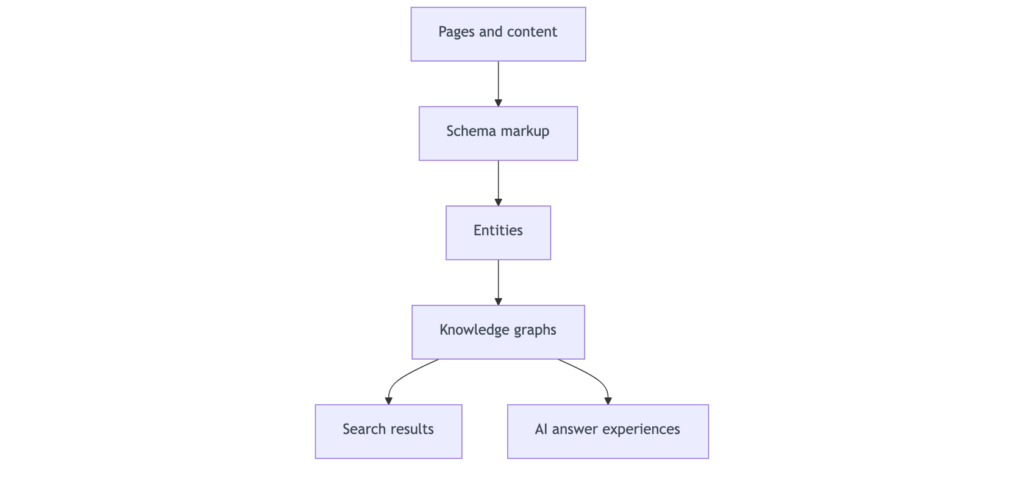
A helpful way to think about it: your content explains; schema translates; knowledge graphs connect.
Implementation tutorial: a practical entity SEO + schema build (what to do first, second, third)
This is a technical roadmap you can apply to B2B, ecommerce/exporter, and multi-location websites without trying to "fix everything at once." The goal is to prioritize what impacts growth, while deprioritizing low-impact noise.
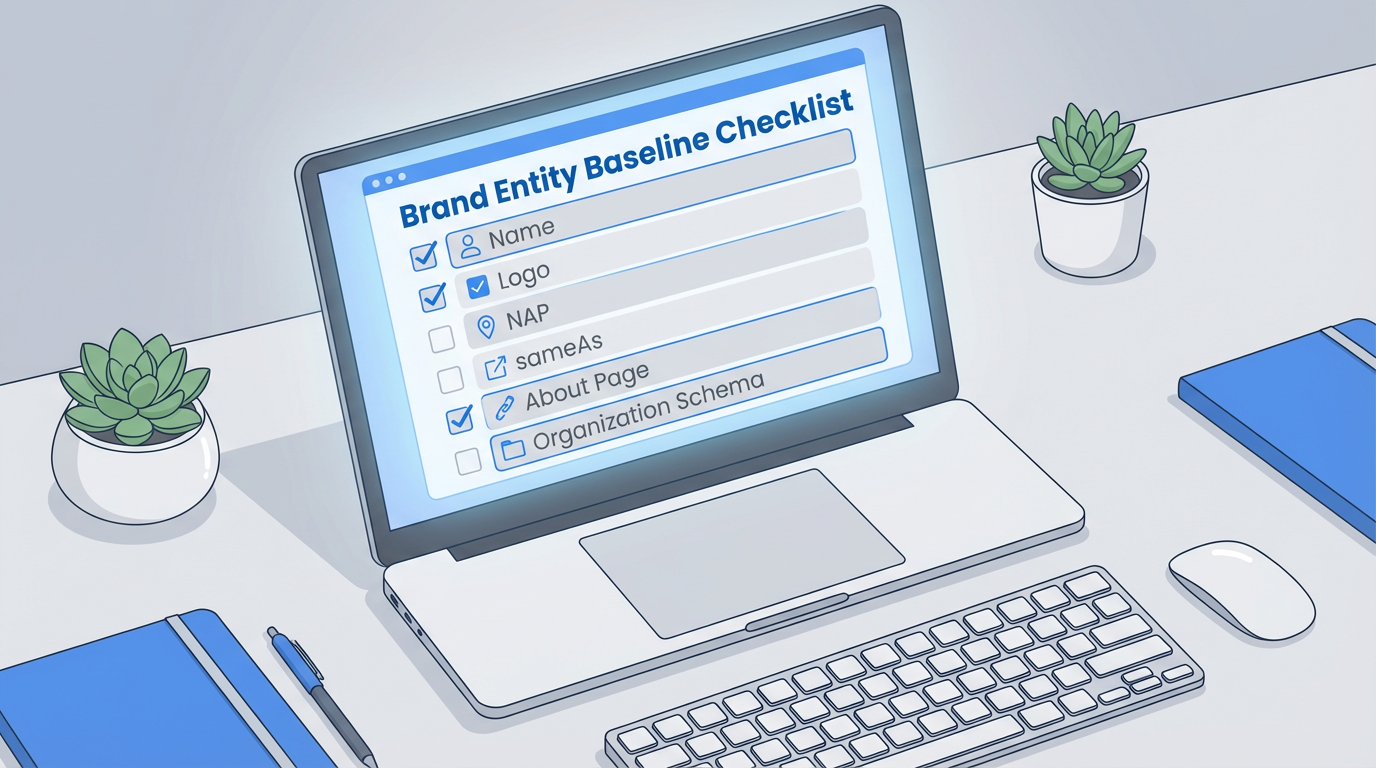
Step 1: Define your brand entity baseline (your "single source of truth")
Create a short master description and reuse it consistently across:
- Homepage/About page (your "entity home")
- Organization schema
- Social profiles and major directory listings (where applicable)
Minimum baseline fields to standardize:
- Official brand name (and legal name if relevant)
- Primary URL
- Logo (one canonical version)
- Locations and contact info (consistent NAP where applicable)
- What you do and who you serve (clear categories and industries)
Why this matters: inconsistent naming and profiles can split entity understanding, lowering confidence in both search and AI systems.
Step 2: Design your schema architecture around relationships (not isolated pages)
Instead of adding random schema snippets, design a site-wide schema system with stable identifiers and links between entities.
Use:
- A stable Organization
@id(example pattern:/#organization) - Person entities for real authors and reviewers (where applicable)
- Product and Service entities that reference the Organization (brand/manufacturer/provider relationships)
- Article entities that reference the author (Person) and publisher (Organization)
Google is explicit: markup must be accurate, visible, and policy-compliant.
Step 3: Align internal linking with entity structure (so the site "explains itself")
Schema is not enough on its own. Your site architecture should reinforce entities with:
- One clear "entity home" URL per core entity (service, product line, location, or concept)
- Supporting content that links back to the entity home using descriptive anchors
- Reduced cannibalization (avoid multiple URLs competing for the same entity)
This is where entity SEO extends traditional keyword targeting rather than replacing it.
Step 4: Make it renderable and crawlable (especially on JavaScript-heavy sites)
If structured data is injected late (client-side) or pages render slowly, crawlers may delay or miss important entity signals. Google provides specific guidance on JavaScript SEO and indexing behavior.
Practical checks:
- Ensure JSON-LD is present in the initial HTML where feasible
- Validate templates at scale (not just one page)
- Monitor Search Console enhancements and structured data reports
What schema types to prioritize (by site type) + where they belong
Use the most specific schema types you can support and keep everything truthful to on-page content.
| Business scenario | Highest priority schema types | Typical pages to implement on | Primary relationship to model |
|---|---|---|---|
| B2B services | Organization, Service, Article/BlogPosting, FAQPage | Homepage/About, service pages, blog posts, FAQ sections | Service provider points to Organization |
| Ecommerce/exporters | Organization, Product + Offer, ImageObject, FAQPage | Product pages, category templates, shipping/help pages | Product brand/manufacturer ties back to Organization |
| Multi-location | Organization + LocalBusiness, PostalAddress, GeoCoordinates | Location landing pages | Locations branchOf the main Organization |
Google documents FAQPage requirements and limitations, which matter if you use FAQs for "answer-first" formatting.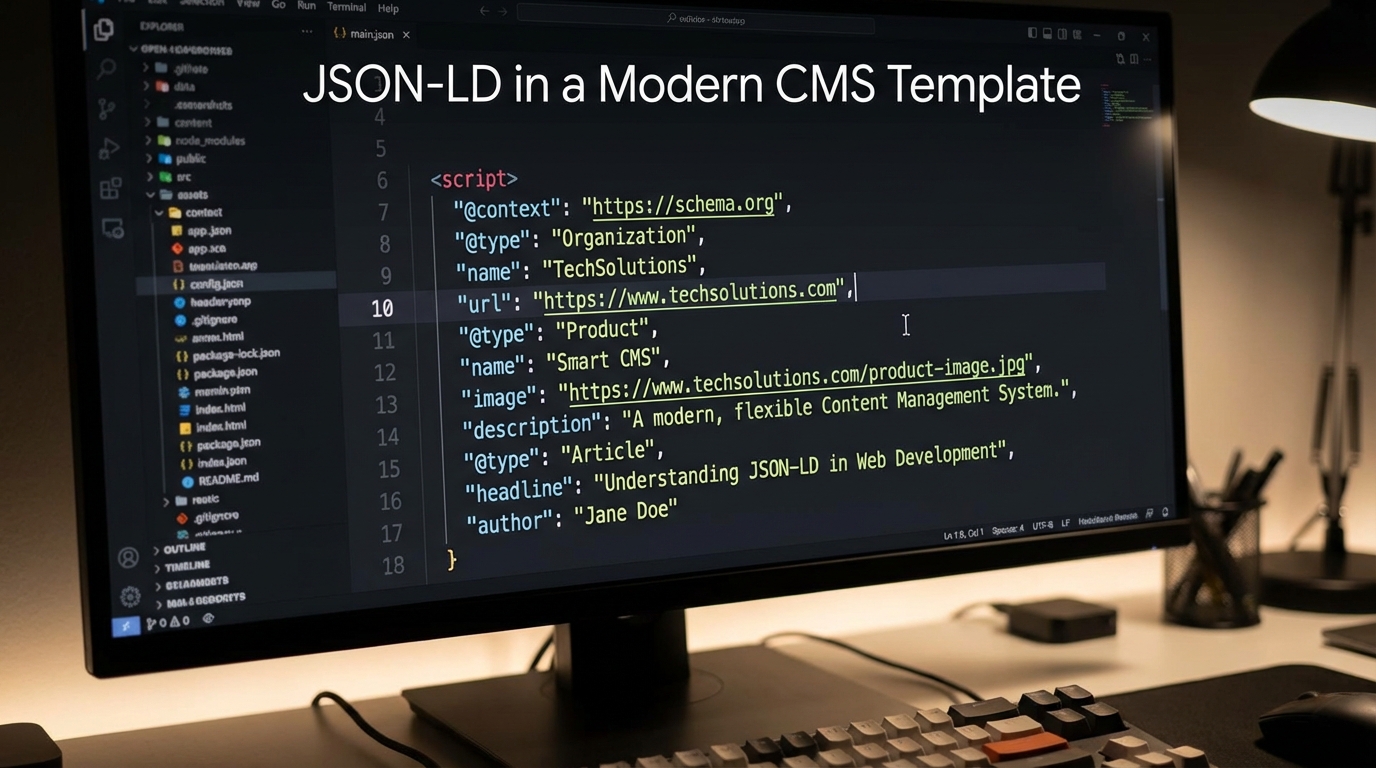
The 2026 roadmap: phased rollout that avoids wasted effort
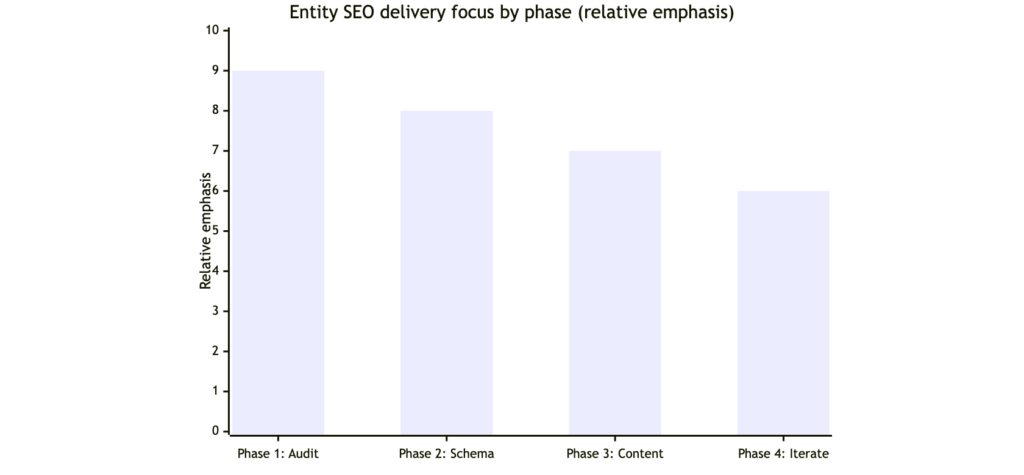
Entity SEO works best when you phase it. This keeps teams focused on what drives growth and reduces the risk of shipping shallow, checkbox schema.
Phase 1 (0 to 3 months): Audit and entity baseline
Deliverables:
- Full crawlability and indexation review
- Structured data inventory (types, coverage, errors)
- Brand entity consistency review (names, logos, locations, descriptions)
- Prioritized entity list: products, services, locations, and core concepts to focus on first
Phase 2 (3 to 6 months): Schema architecture + template implementation
Deliverables:
- Organization and key template schema (service/product/article/FAQPage)
@idand entity linking conventions- Validation workflow aligned with Google policies.
Phase 3 (6 to 12 months): Content and entity expansion (topical authority)
Deliverables:
- Entity-focused topic clusters (pillar pages + supporting articles)
- Author and publisher entity reinforcement (Person + Organization consistency)
- Internal linking updates that mirror entity priorities
Phase 4 (12+ months): AI-era optimization and iteration
Deliverables:
- Ongoing monitoring of structured data validity and coverage
- Refinement of entity relationships (deeper properties, clearer "about"/"mentions" patterns)
- Tracking visibility indicators tied to entities (not just raw rankings)
Common pitfalls (and how to prevent them)
These are the failure patterns that most often waste time or create risk:
- Misleading or non-visible markup
Marking up content that is not actually shown to users can lead to ignored markup or manual actions. - Shallow schema with no relationships
Minimal required fields may be enough for basic eligibility, but it does not build strong entity understanding for modern AI-driven retrieval. - Inconsistent brand entity data across regions and languages
If you run multilingual sites, keep hreflang correct and keep the Organization identity unified. Google documents hreflang implementation requirements. - Over-structuring low-quality content
Schema cannot compensate for thin, generic content. Entity SEO works best when content is genuinely useful and clearly authored.
Next step: turn this roadmap into a prioritized plan for your site
If you want to apply entity SEO without getting lost in theory, start with an audit that answers three practical questions:
- Which entities actually drive leads and revenue for your site?
- Where is your brand entity inconsistent or unclear?
- Which schema templates and internal link changes will have the biggest impact first?
Get a free audit report, contact us, and leave your website domain.