Search Intent SEO: Drive Leads with SeekLab.io
Expert reviewed

Search engines do not rank pages just because they contain the right words. They rank pages that best satisfy the purpose behind a query. That is why search intent SEO has become a practical way to turn organic visibility into qualified leads, especially for independent sites, B2B companies, and exporters where traffic alone does not pay the bills.
What search intent means in modern SEO
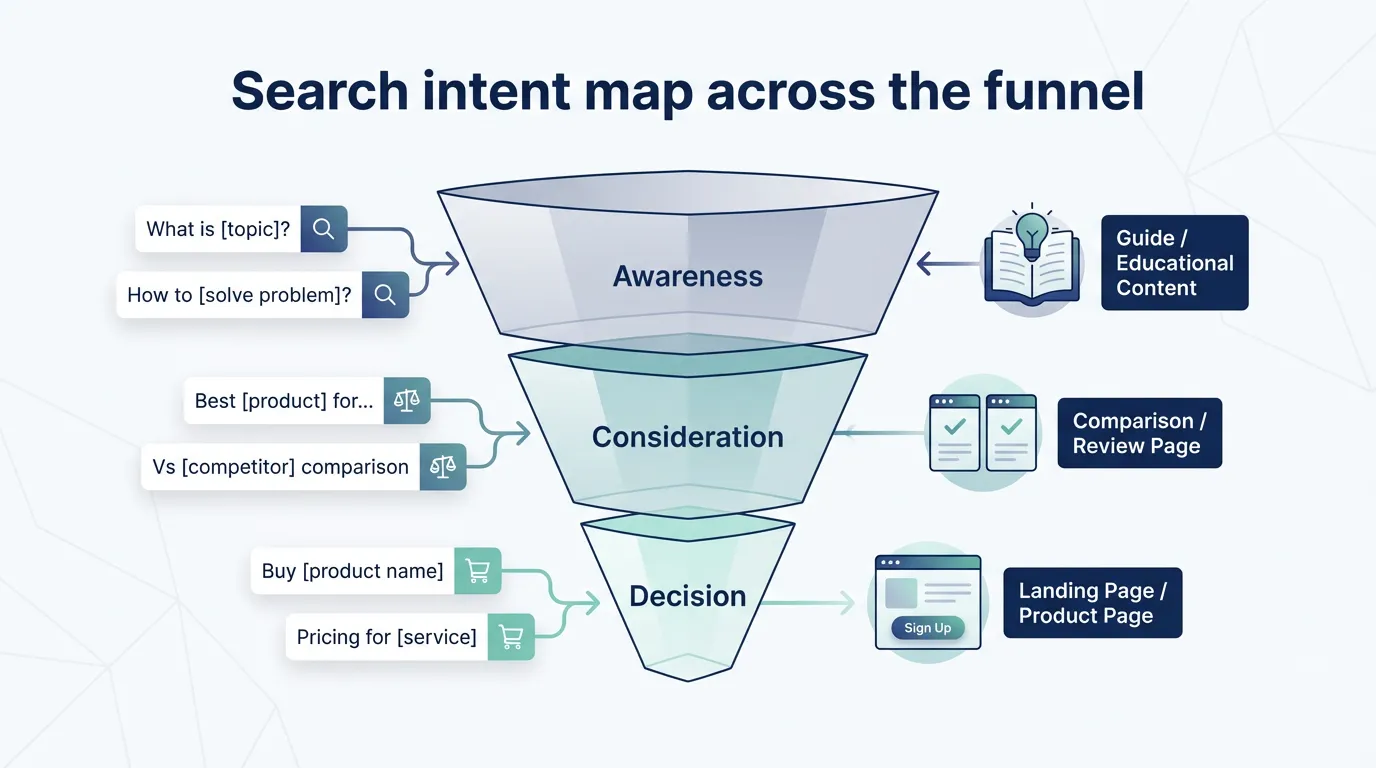
Search intent (also called user intent) is the underlying goal behind a search. Industry guides consistently describe it as the "why" behind the query, and emphasize that matching it is essential for performance in Google results (and increasingly in rich SERP features). See explanations from Semrush's intent overview and Search Engine Land's intent guide.
In practice, intent typically falls into a few buckets:
- Informational: The user wants to learn ("how to fix indexing issues").
- Commercial: The user wants to compare options ("best technical audit service for exporters").
- Transactional: The user wants to take an action ("request an audit", "book a consultation").
- Navigational: The user wants a specific site or page ("SeekLab.io contact").
- Local: The user wants nearby solutions ("SEO agency near me").
Why this matters for leads: even if you rank, you can still fail. A common mismatch is ranking an informational article for a term your business treats like a service keyword, but providing no clear next step. Another mismatch is when a transactional keyword lands on a slow, confusing page that creates friction.
Research and case evidence in the industry suggests intent alignment improves engagement and conversions. For example, a synthesis citing Backlinko's work reports significantly higher dwell time for thorough, intent-matched content. And aligning SEO with conversion optimization has been associated with 30 to 50 percent higher conversion rates from organic traffic in a consulting study. These are directional findings, not guarantees, but the strategy is consistent: intent first, then execution.
A practical framework to map intent to pages (and stop chasing the wrong traffic)
Intent mapping is how you turn a keyword list into a site plan that can actually convert. A simple approach is:
- Group queries by topic.
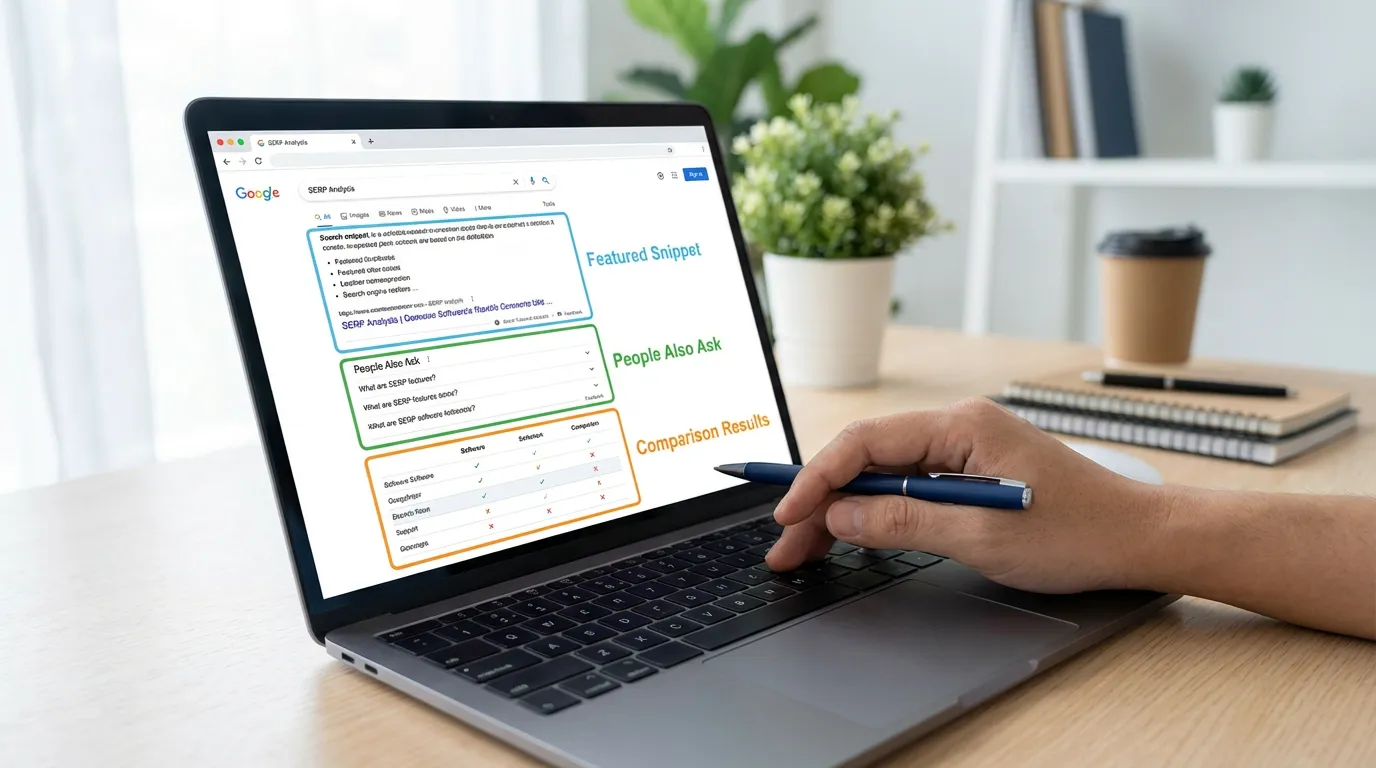
- Check the current SERP to see what Google rewards (format, content type, angle).
- Assign each query group to the right page archetype.
- Build internal paths from learning to decision.
The table below is a useful starting point for most B2B and exporter sites.
| Intent type | What the searcher expects | Best page type | On-page elements that help leads |
|---|---|---|---|
| Informational | Clear explanation, steps, examples | In-depth guide, checklist, FAQ | Above-the-fold summary, diagrams, soft CTA to assessment |
| Commercial | Comparisons, pros and cons, decision support | Buyer guide, comparison page, use-case page | Comparison table, trust proof, strong internal links to service pages |
| Transactional | Fast path to action | Landing page | Clear offer, short form, proof, performance-focused layout |
| Navigational | The "right" destination page | Brand or service hub page | Sitelink-ready structure, accurate metadata, direct contact path |
| Local | Location relevance | Local landing page | Region-specific proof, localized details, fast mobile UX |
A key principle: do not try to make every page do everything. Build a system where informational pages earn attention, and internal linking moves the right users to the right next step.
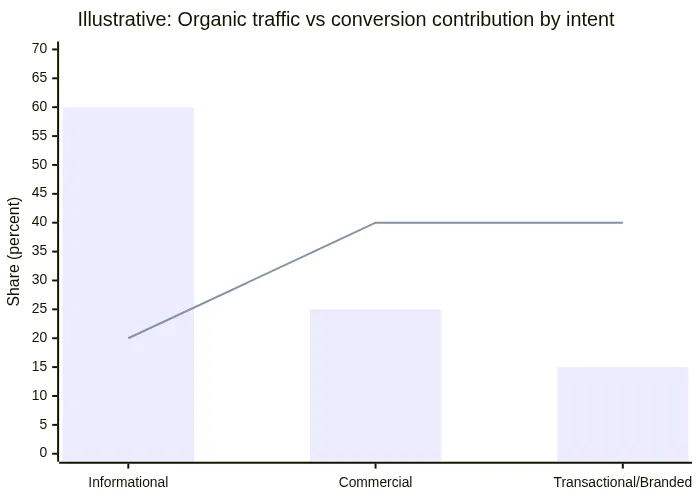
How to read this: many sites get most visits from informational queries, but a disproportionate share of leads comes from commercial and high-intent queries. This is why "more traffic" can still mean "no growth" if the site architecture does not guide users toward decision pages.
Technical SEO foundations that make intent work (especially for international sites)
Even the best intent strategy fails if search engines cannot reliably crawl, render, and understand your pages. Google highlights fundamentals like crawlability, internal linking, structured data, and page experience as core enablers in its documentation (Google SEO Starter Guide).
For lead-focused sites, technical priorities typically include:
- Crawling and indexing clarity: validate sitemap.xml and robots.txt, control duplicate content with canonical tags, and ensure the right pages are indexable.
- Site architecture and internal links: build a semantic hierarchy that matches how users explore problems and solutions, not just how your org chart is structured.
- Core Web Vitals and performance: reduce friction for both rankings and conversion, particularly on mobile and across regions (Core Web Vitals documentation).
- JavaScript rendering compatibility: make sure essential content and metadata are visible to crawlers, not hidden behind heavy client-side rendering (also covered in Google's fundamental guidance).
- Structured data: use schema to help search engines interpret content types and entities (structured data gallery).
- International targeting: for exporters across APAC, the US, and Europe, correct hreflang and localized URL structures determine whether the right country or language page ranks (localized versions guidance).
The goal is not "fix everything." The goal is to identify what truly impacts growth, prioritize changes that affect high-intent journeys, and deprioritize the rest so developers are not stuck in an endless backlog.

Build trust and conversions with brand signals
Intent does not exist in a vacuum. Brand signals shape click behavior and conversion confidence, especially when a user is already aware of you.
Two levers matter most:
- Branded queries: these are often navigational or high-intent commercial searches and can convert better because the user already recognizes the name. See the discussion in Search Engine Land's branded query article.
- Unlinked citations across the web: third-party references reinforce entity understanding and trust, even when they are not backlinks. A practical explanation and workflows are covered in Ahrefs' guide to unlinked citations.
To support these signals, align your site with quality expectations Google describes around experience, expertise, authoritativeness, and trust. That usually means clear business information, transparent service pages, credible authorship, and content that reflects real-world scenarios (not generic filler).
How SeekLab.io turns search intent into leads (without wasting effort)
SeekLab.io is built for teams that want results without vague promises: marketing and operations managers, independent developers, and international trade sites that need SEO to translate into inquiries.
SeekLab.io combines the parts that are often split across vendors:
- Full-site crawling and structured analysis
- Core Web Vitals and performance diagnostics
- Indexing, crawling, rendering, and JavaScript compatibility checks
- Internal link equity and semantic structure analysis
- Schema compliance and enhancement
- Sitemap.xml and robots.txt validation
- Multilingual architecture planning (including hreflang)
- Topic selection based on user intent and contextual scenarios
- High-quality blog creation with visually appealing images, plus on-page structure that supports conversion
- Actionable implementation guidance (and some simple technical issues can be resolved for clients free of charge)
- Monthly data review and performance reporting
- A risk-reduction promise: no charge if the minimum expected results are not achieved
Most importantly, the workflow starts with strategy: before writing content or fixing technical issues, make the right decisions first, so you avoid heading in the wrong direction.
If you want to see where your current pages are misaligned (ranking but not converting, or targeting the wrong intent entirely), use the CTA below to start with a baseline assessment.
Get a free audit report, contact us, and leave your website domain.