Local Citations Strategy: Boost Local Rankings

February 15, 2026 · 15 Min Read

Expert reviewed

Why citations still matter (and what they do not do anymore)

Local citations are online mentions of your business name, address, and phone number (NAP), often paired with details like hours, categories, and a website URL. They show up in directory listings and map products, but also inside local articles, partner pages, and association member lists. Moz's definition is a solid baseline: any online mention of NAP counts as a citation (see Moz's guide on local citations via Moz's local citation definition).

The key update for 2026 planning: citations are still foundational, but they are no longer the primary ranking lever.

Google's own documentation emphasizes three pillars for local rankings: relevance, distance, and prominence, and it points to your Business Profile and information "across the web" as supporting evidence (see Google's guide to improving local ranking). Industry surveys summarized by Whitespark and BrightLocal consistently place citation signals in the "important but mid-tier" range, behind on-page relevance, reviews, links, and profile optimization.

What citations are good for today:

  1. Entity validation: consistent NAP helps search engines trust that your on-site NAP and your profile data are correct.
  2. Extra lead channels: big directories often rank well themselves and can drive calls and form fills.
  3. Supportive authority: high-quality, relevant citations contribute to "prominence," especially when they stay indexed.

What citations cannot fix by themselves:

  • Weak or mismatched on-page content.
  • Poor mobile UX and slow pages (Core Web Vitals issues).
  • Crawlability/indexing problems, canonical mistakes, or JavaScript rendering gaps that hide your NAP from crawlers.
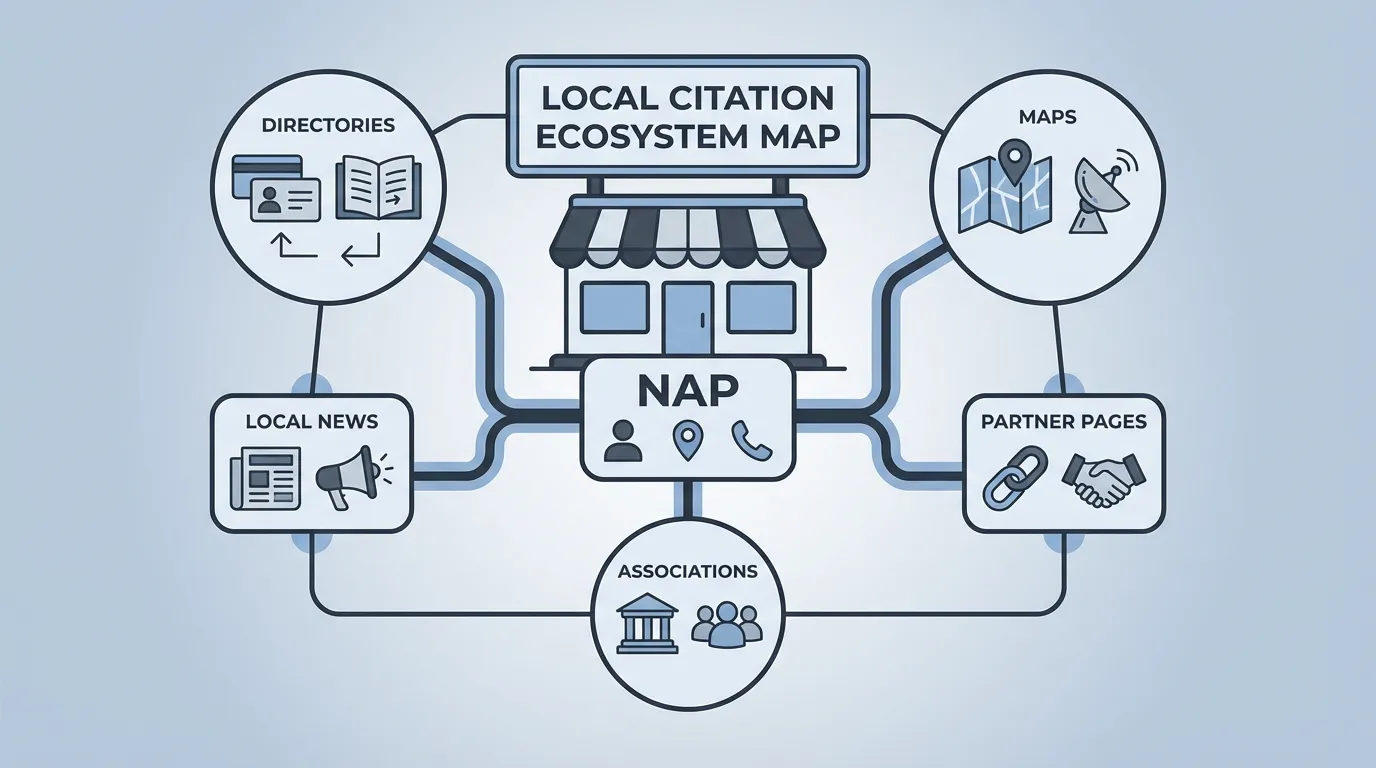
Local Citation Ecosystem Map

A reality-based view of where citations fit in local SEO

Most teams waste time by treating citations as a volume game. A frequently cited practitioner test showed that adding 50 citations at once produced no meaningful local pack lift, and most created URLs fell out of Google's index over time (see the case discussion in this citation test video). The practical takeaway aligns with what ranking-factor studies imply: quality, consistency, and maintenance beat raw quantity.

Here is an indicative view of relative importance (blended map + local organic), synthesized from Whitespark/BrightLocal commentary:
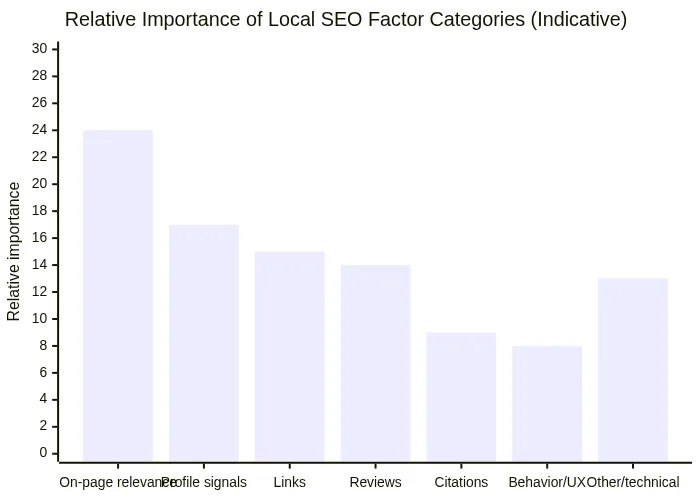
Relative Importance of Local SEO Factor Categories (Indicative)

Use this chart operationally:

  • If your location pages are not indexable, fast, and clear, citation cleanup will not "carry" the campaign.
  • If your profile categories/services/photos and review velocity are weak, citations will mostly act as background support.
  • If your NAP is inconsistent across high-visibility platforms, citations become a real constraint because they undermine trust and cause duplicates.
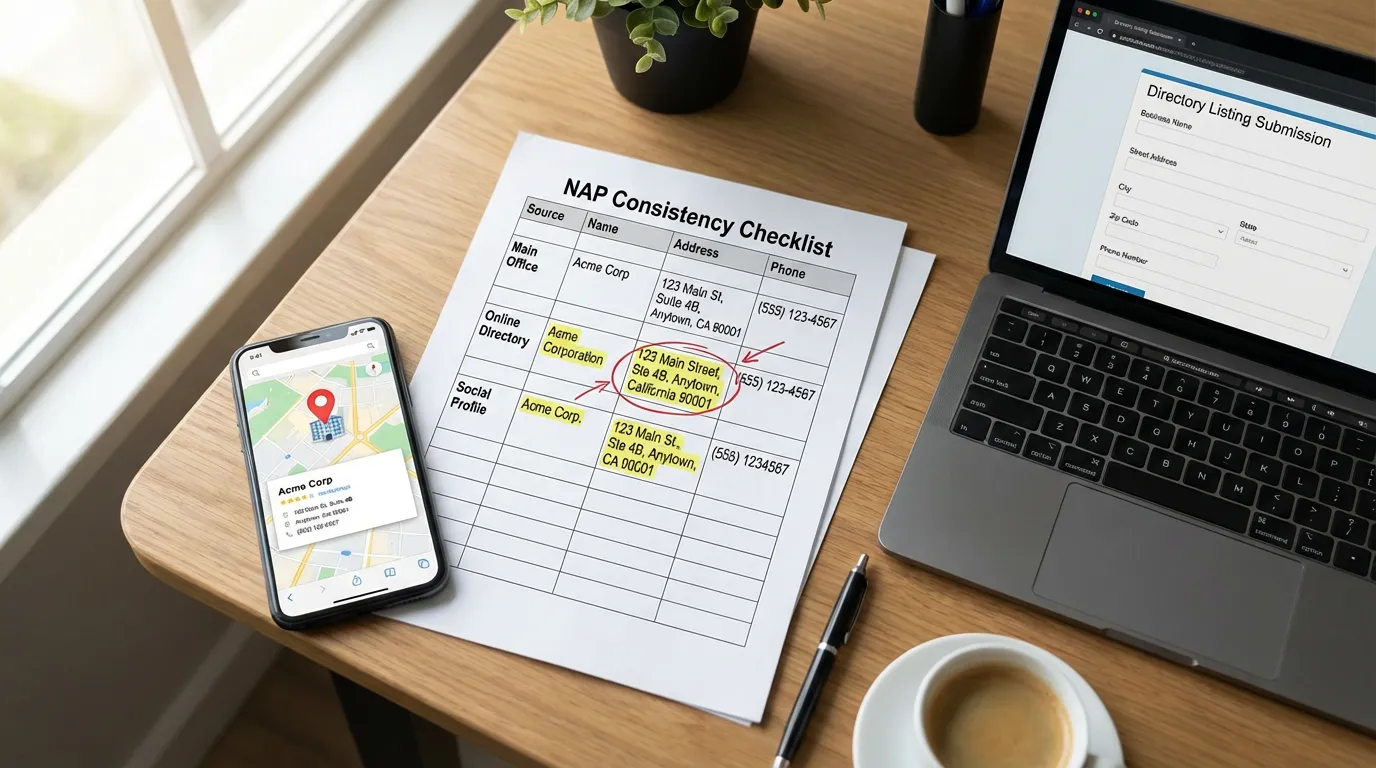
NAP Consistency Checklist on Desk

12-step local citations strategy (quality over quantity)

This is a listicle you can hand to a marketing/ops manager or a developer and execute without turning it into a never-ending directory submission project.

  1. Lock a single "source of truth" for NAP
    • Decide exact spelling, abbreviations, suite formatting, and primary phone.
    • Use the same format on your website and profile first, then push outward.
  2. Audit what already exists (including duplicates)
    • Search for brand + phone, brand + address, and old variants.
    • Capture mismatches: old domains, wrong pins, wrong categories, wrong hours.
  3. Fix the "core ecosystem" first
    • Prioritize map and identity hubs like Apple Maps and Bing, plus major directory/review platforms that appear in branded searches.
    • For Apple Maps listings, use Apple Business Connect.
    • For Bing, use Bing Places.
  4. Standardize categories and service descriptors
    • Your primary category choices tend to influence visibility more than having 200 extra citations.
    • Keep categories semantically consistent across major platforms (even if names differ slightly).
  5. Align listing URLs to the correct canonical page
    • If you have location pages, point listings to the right location URL (not an outdated campaign page).
    • Avoid splitting signals across multiple near-duplicate URLs.
  6. Upgrade media on the few listings that users actually see
    • Add real photos, logos, and accurate hours.
    • Consistency helps user trust and can improve conversion from directory traffic.
  7. Build a "minimal viable set" of high-impact citations
    • For many businesses, 10 to 30 well-maintained citations are enough to validate NAP and cover the platforms that matter.
    • Treat anything beyond that as optional unless it drives measurable leads.
  8. Add vertical/niche listings only when they match intent
    • A niche directory that your buyers trust can outperform ten generic directories.
    • For B2B and exporters, trade and industry portals can be more valuable than consumer-only directories.
  9. Pursue unstructured mentions that strengthen your entity
    • Sponsor pages, chamber/association member lists, partner "where to buy" pages, and local PR mentions can be durable signals.
    • Even without a link, consistent NAP in context supports entity confidence.
  10. Use schema to connect the dots
  • Implement LocalBusiness/Organization schema so crawlers can clearly parse NAP, geo, hours, and sameAs references.
  • Validate against the standard at Schema.org LocalBusiness.
  1. Plan maintenance triggers (so citations do not rot)
  • Any change to brand name, address, phone, hours, or legal entity should trigger an update cycle.
  • Schedule quarterly spot-checks of the top platforms and any lead-driving directories.
  1. Report on outcomes, not tasks completed
  • Track profile actions (calls, website clicks, directions), referral traffic from directories, and conversions on location pages.
  • Citations are "infrastructure": you measure stability and lead contribution, not just count.

Prioritization cheat sheet (use this to avoid busywork)

PriorityWhat to includeWhy it mattersWhat "done" looks like
P1Map ecosystems + major platforms users trust (Apple/Bing, major review/directory sites)Highest visibility, highest risk of duplicates, direct lead potentialNAP matches source of truth, correct categories, correct URL, no duplicates
P2Country-specific leaders (varies by US/EU/APAC)Regional prominence and brand validationIndexed, accurate, and periodically maintained
P3Long-tail directories with little trafficDiminishing returns, often deindexedOnly pursue if they rank for your brand or send leads

If you are unsure what belongs in P1 vs P2 for your markets, that is usually a sign you should start with an audit-first roadmap (more on that in the last section).

Regional playbooks: US vs Europe vs APAC (and multilingual pitfalls)

Citation ecosystems differ by geography, which is why "one global list of directories" often produces weak results.

US (high emphasis on reviews + big directories):

  • Yelp still matters as a discovery layer for many categories (see Yelp).
  • Trust and credibility platforms can influence buyer decisions even if ranking impact is indirect (see BBB and Trustpilot).

Europe (strong country incumbents, higher sensitivity to aggressive automation):

APAC (core maps plus local leaders):

For exporters and multi-region websites, the biggest failure modes are structural:

  • One global listing trying to represent multiple countries.
  • Distributors creating uncoordinated listings that conflict with your canonical NAP.
  • Multilingual setups where the wrong language/region page is treated as the "main" version.

If your site spans languages and regions, align citations with the right architecture early. SeekLab.io's multilingual blueprint is a useful reference point: multilingual SEO strategy guide.
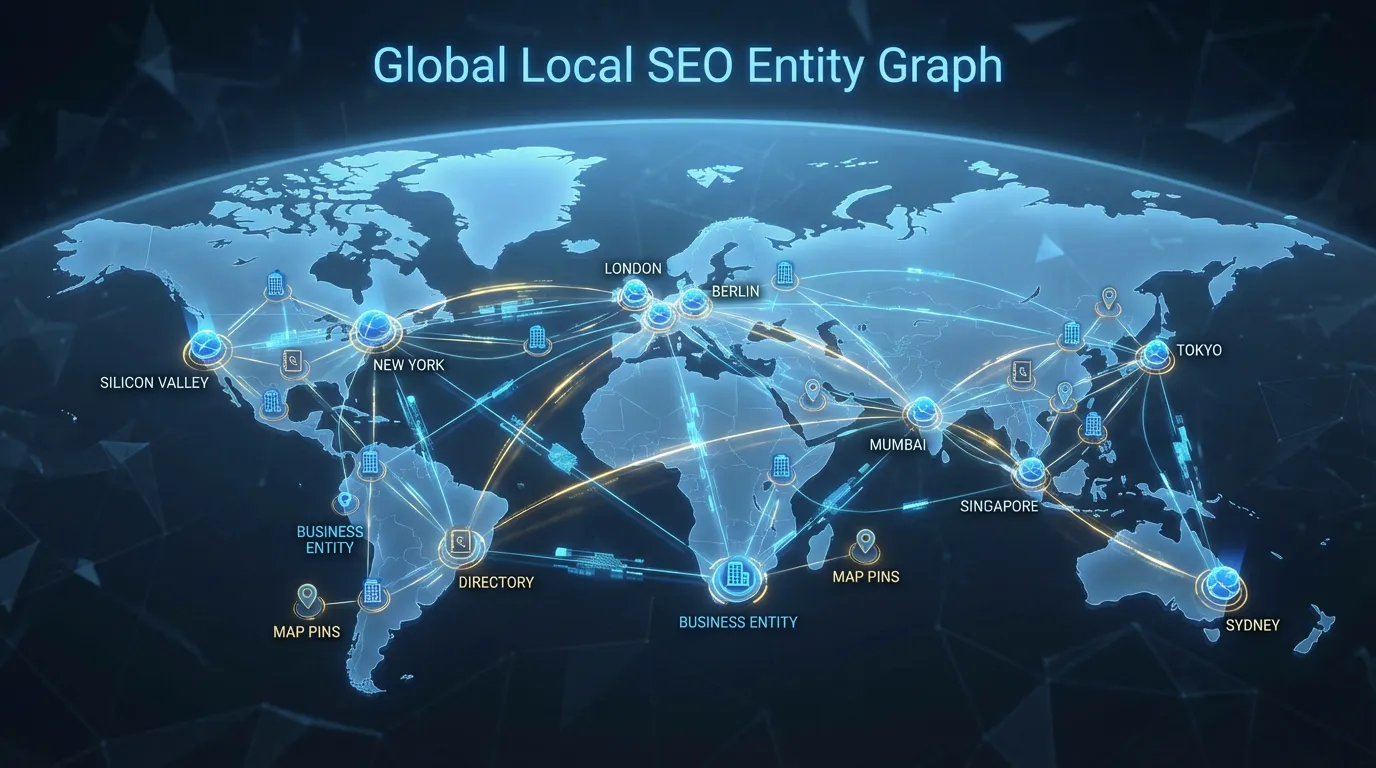
Global Local SEO Entity Graph

Measurement: how to prove citations helped (without overclaiming)

Citations rarely create a single dramatic ranking jump. A better approach is to measure in three layers:

  1. Visibility
    • Track local pack and localized organic rankings for your priority queries.
    • Monitor whether directory pages for your brand begin to occupy more branded SERP space (a real, often overlooked win).
  2. Profile actions
  3. Lead outcomes
    • Directory referral traffic and conversion rate on location pages.
    • Form submissions, quote requests, and qualified inquiries (not just sessions).

Set expectations in stakeholder reporting:

  • Short-term (weeks): fewer duplicates, cleaner NAP, fewer customer dead-ends.
  • Medium-term (1 to 3 months): stronger entity consistency supporting broader improvements (profile optimization, reviews, on-page).
  • Long-term (3 to 6 months): more stable prominence and compounding brand effects as citations, links, reviews, and content align.

When citation work should start with an audit (and how SeekLab.io approaches it)

If you are facing any of the below, start with an SEO audit before expanding citations:

  • Location pages are slow or fail Core Web Vitals on mobile.
  • Multiple location URLs compete because of canonicals, parameters, or inconsistent internal linking.
  • NAP is rendered in JavaScript or hidden in a way crawlers may miss.
  • You are expanding across the US, Europe, and APAC and need consistent entity rules by legal entity, language, and market.

SeekLab.io's philosophy is not "fix everything." It is to identify what truly impacts growth, deprioritize the rest, and give clear technical and content actions you can execute. Citations then become a focused workstream inside a broader roadmap: technical health, site architecture, on-page relevance, schema, and conversion-ready content.

If you want a realistic priority list (P1/P2/P3) for your citation cleanup and expansion, plus the technical checks that often block results:

  • Get a free audit report: share your website domain, and we will outline your highest-impact fixes first.
  • Contact us if you need an outcome-focused plan tied to rankings and qualified inquiries.

Local Citations Strategy: Boost Local Rankings

Why citations still matter (and what they do not do anymore)

Local citations are online mentions of your business name, address, and phone number (NAP), often paired with details like hours, categories, and a website URL. They show up in directory listings and map products, but also inside local articles, partner pages, and association member lists. Moz's definition is a solid baseline: any online mention of NAP counts as a citation (see Moz's guide on local citations via Moz's local citation definition).

The key update for 2026 planning: citations are still foundational, but they are no longer the primary ranking lever.

Google's own documentation emphasizes three pillars for local rankings: relevance, distance, and prominence, and it points to your Business Profile and information "across the web" as supporting evidence (see Google's guide to improving local ranking). Industry surveys summarized by Whitespark and BrightLocal consistently place citation signals in the "important but mid-tier" range, behind on-page relevance, reviews, links, and profile optimization.

What citations are good for today:

  1. Entity validation: consistent NAP helps search engines trust that your on-site NAP and your profile data are correct.
  2. Extra lead channels: big directories often rank well themselves and can drive calls and form fills.
  3. Supportive authority: high-quality, relevant citations contribute to "prominence," especially when they stay indexed.

What citations cannot fix by themselves:

  • Weak or mismatched on-page content.
  • Poor mobile UX and slow pages (Core Web Vitals issues).
  • Crawlability/indexing problems, canonical mistakes, or JavaScript rendering gaps that hide your NAP from crawlers.
Local Citation Ecosystem Map

A reality-based view of where citations fit in local SEO

Most teams waste time by treating citations as a volume game. A frequently cited practitioner test showed that adding 50 citations at once produced no meaningful local pack lift, and most created URLs fell out of Google's index over time (see the case discussion in this citation test video). The practical takeaway aligns with what ranking-factor studies imply: quality, consistency, and maintenance beat raw quantity.

Here is an indicative view of relative importance (blended map + local organic), synthesized from Whitespark/BrightLocal commentary:

Relative Importance of Local SEO Factor Categories (Indicative)

Use this chart operationally:

  • If your location pages are not indexable, fast, and clear, citation cleanup will not "carry" the campaign.
  • If your profile categories/services/photos and review velocity are weak, citations will mostly act as background support.
  • If your NAP is inconsistent across high-visibility platforms, citations become a real constraint because they undermine trust and cause duplicates.
NAP Consistency Checklist on Desk

12-step local citations strategy (quality over quantity)

This is a listicle you can hand to a marketing/ops manager or a developer and execute without turning it into a never-ending directory submission project.

  1. Lock a single "source of truth" for NAP
    • Decide exact spelling, abbreviations, suite formatting, and primary phone.
    • Use the same format on your website and profile first, then push outward.
  2. Audit what already exists (including duplicates)
    • Search for brand + phone, brand + address, and old variants.
    • Capture mismatches: old domains, wrong pins, wrong categories, wrong hours.
  3. Fix the "core ecosystem" first
    • Prioritize map and identity hubs like Apple Maps and Bing, plus major directory/review platforms that appear in branded searches.
    • For Apple Maps listings, use Apple Business Connect.
    • For Bing, use Bing Places.
  4. Standardize categories and service descriptors
    • Your primary category choices tend to influence visibility more than having 200 extra citations.
    • Keep categories semantically consistent across major platforms (even if names differ slightly).
  5. Align listing URLs to the correct canonical page
    • If you have location pages, point listings to the right location URL (not an outdated campaign page).
    • Avoid splitting signals across multiple near-duplicate URLs.
  6. Upgrade media on the few listings that users actually see
    • Add real photos, logos, and accurate hours.
    • Consistency helps user trust and can improve conversion from directory traffic.
  7. Build a "minimal viable set" of high-impact citations
    • For many businesses, 10 to 30 well-maintained citations are enough to validate NAP and cover the platforms that matter.
    • Treat anything beyond that as optional unless it drives measurable leads.
  8. Add vertical/niche listings only when they match intent
    • A niche directory that your buyers trust can outperform ten generic directories.
    • For B2B and exporters, trade and industry portals can be more valuable than consumer-only directories.
  9. Pursue unstructured mentions that strengthen your entity
    • Sponsor pages, chamber/association member lists, partner "where to buy" pages, and local PR mentions can be durable signals.
    • Even without a link, consistent NAP in context supports entity confidence.
  10. Use schema to connect the dots
  • Implement LocalBusiness/Organization schema so crawlers can clearly parse NAP, geo, hours, and sameAs references.
  • Validate against the standard at Schema.org LocalBusiness.
  1. Plan maintenance triggers (so citations do not rot)
  • Any change to brand name, address, phone, hours, or legal entity should trigger an update cycle.
  • Schedule quarterly spot-checks of the top platforms and any lead-driving directories.
  1. Report on outcomes, not tasks completed
  • Track profile actions (calls, website clicks, directions), referral traffic from directories, and conversions on location pages.
  • Citations are "infrastructure": you measure stability and lead contribution, not just count.

Prioritization cheat sheet (use this to avoid busywork)

PriorityWhat to includeWhy it mattersWhat "done" looks like
P1Map ecosystems + major platforms users trust (Apple/Bing, major review/directory sites)Highest visibility, highest risk of duplicates, direct lead potentialNAP matches source of truth, correct categories, correct URL, no duplicates
P2Country-specific leaders (varies by US/EU/APAC)Regional prominence and brand validationIndexed, accurate, and periodically maintained
P3Long-tail directories with little trafficDiminishing returns, often deindexedOnly pursue if they rank for your brand or send leads

If you are unsure what belongs in P1 vs P2 for your markets, that is usually a sign you should start with an audit-first roadmap (more on that in the last section).

Regional playbooks: US vs Europe vs APAC (and multilingual pitfalls)

Citation ecosystems differ by geography, which is why "one global list of directories" often produces weak results.

US (high emphasis on reviews + big directories):

  • Yelp still matters as a discovery layer for many categories (see Yelp).
  • Trust and credibility platforms can influence buyer decisions even if ranking impact is indirect (see BBB and Trustpilot).

Europe (strong country incumbents, higher sensitivity to aggressive automation):

APAC (core maps plus local leaders):

For exporters and multi-region websites, the biggest failure modes are structural:

  • One global listing trying to represent multiple countries.
  • Distributors creating uncoordinated listings that conflict with your canonical NAP.
  • Multilingual setups where the wrong language/region page is treated as the "main" version.

If your site spans languages and regions, align citations with the right architecture early. SeekLab.io's multilingual blueprint is a useful reference point: multilingual SEO strategy guide.

Global Local SEO Entity Graph

Measurement: how to prove citations helped (without overclaiming)

Citations rarely create a single dramatic ranking jump. A better approach is to measure in three layers:

  1. Visibility
    • Track local pack and localized organic rankings for your priority queries.
    • Monitor whether directory pages for your brand begin to occupy more branded SERP space (a real, often overlooked win).
  2. Profile actions
  3. Lead outcomes
    • Directory referral traffic and conversion rate on location pages.
    • Form submissions, quote requests, and qualified inquiries (not just sessions).

Set expectations in stakeholder reporting:

  • Short-term (weeks): fewer duplicates, cleaner NAP, fewer customer dead-ends.
  • Medium-term (1 to 3 months): stronger entity consistency supporting broader improvements (profile optimization, reviews, on-page).
  • Long-term (3 to 6 months): more stable prominence and compounding brand effects as citations, links, reviews, and content align.

When citation work should start with an audit (and how SeekLab.io approaches it)

If you are facing any of the below, start with an SEO audit before expanding citations:

  • Location pages are slow or fail Core Web Vitals on mobile.
  • Multiple location URLs compete because of canonicals, parameters, or inconsistent internal linking.
  • NAP is rendered in JavaScript or hidden in a way crawlers may miss.
  • You are expanding across the US, Europe, and APAC and need consistent entity rules by legal entity, language, and market.

SeekLab.io's philosophy is not "fix everything." It is to identify what truly impacts growth, deprioritize the rest, and give clear technical and content actions you can execute. Citations then become a focused workstream inside a broader roadmap: technical health, site architecture, on-page relevance, schema, and conversion-ready content.

If you want a realistic priority list (P1/P2/P3) for your citation cleanup and expansion, plus the technical checks that often block results:

  • Get a free audit report: share your website domain, and we will outline your highest-impact fixes first.
  • Contact us if you need an outcome-focused plan tied to rankings and qualified inquiries.

Share : Instagram
Leanne Cook Leanne Cook

Marketing Lead at SeekLab.io with cross-industry SEO consulting and execution experience. I help companies drive sustainable traffic growth across Fortune 500 FMCG and manufacturing supply chains, as well as SaaS and Web3 businesses, translating complex business models into scalable, results-driven search strategies.