High-Quality Blog Content Optimization Tips
Expert reviewed

Blog content can be "good" and still underperform if it is misaligned with search intent, buried in weak site architecture, slowed down by technical issues, or missing a clear path to inquiries. The goal of blog content optimization is to turn each post into an asset that earns visibility, builds trust, and drives qualified leads, especially for B2B and international trade sites with long sales cycles and multiple regions.
What "blog content optimization" really means in modern SEO
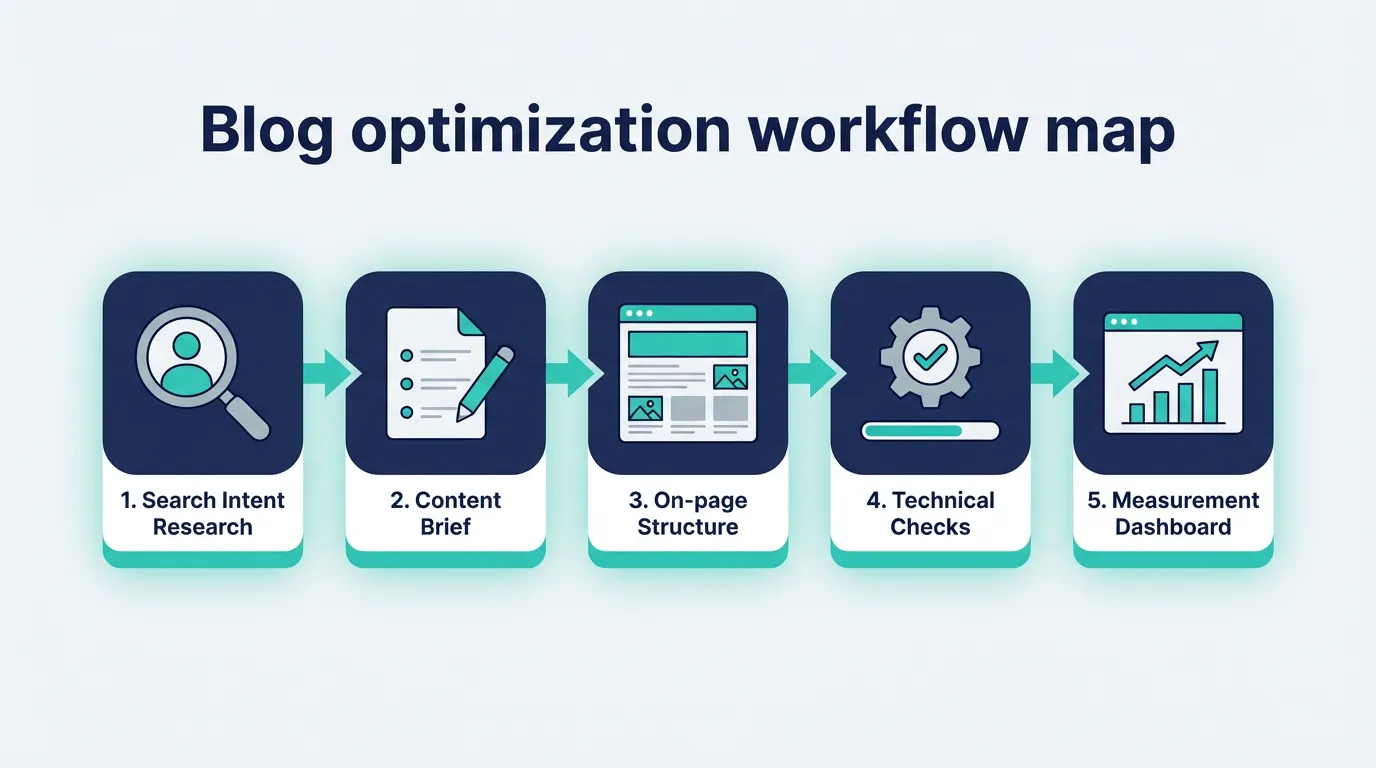
In a modern SEO context, optimizing a blog post is not just adding keywords. It is a system that connects:
- Search intent and topic selection.
- Page structure and on-page signals.
- Technical readiness (speed, indexing, rendering, structured data).
- Conversion paths (CTAs, internal links, forms).
- Measurement and iteration.
This matters more for independent B2B sites and exporter websites because budgets are tighter, topics are more specialized, and credibility is non-negotiable. Search engines also reward sites that demonstrate clear structure and helpfulness across a topic area, not just one-off posts. Google's own guidance emphasizes clear, helpful page structure and technical accessibility (see Google Search Central's SEO Starter Guide).
SeekLab.io approaches this as a combined content and technical problem: establish a baseline first, then prioritize the few changes that actually move growth (not a never-ending list of "best practices").
Start with intent, business goals, and a content brief (before writing)
Most underperforming blogs fail upstream: the topic is slightly off, the angle does not match what searchers want, or the post cannot naturally lead to your service.
A simple intent-to-business alignment method
For each post (new or existing), document:
- Who the reader is (e.g., marketing/ops manager, exporter, website owner).
- What they need right now (learn, compare, decide, fix).
- What you want next (newsletter, demo, inquiry, audit request).
- What proof they require (examples, process, technical details, visuals).
Industry guides consistently show that aligning page structure with intent improves performance (see Search Engine Land's optimization guide).
What a high-performing SEO content brief should include
A usable brief prevents "AI-like" generic writing and reduces rewrites:
| Brief element | What to decide | Why it matters for B2B sites |
|---|---|---|
| Search intent match | Guide, checklist, comparison, template | Reduces pogo-sticking and increases trust |
| Target persona | Role, market, region | Ensures the examples reflect real buying scenarios |
| Key entities to cover | Products, processes, standards, locations | Builds subject-matter depth beyond keywords |
| Internal link targets | 3 to 7 pages to reference | Strengthens site structure and discovery |
| Visual plan | 2 to 4 visuals (diagrams, tables, screenshots) | Increases comprehension and perceived quality |
| Technical requirements | Max image weight, schema types, URL rules | Avoids performance regressions and indexing issues |
For on-page execution details (headings, titles, and scannability), cross-check with a reputable on-page framework like the Mangools on-page SEO guide.
Build site-wide trust with hubs, internal linking, and structured data
One strong post is useful. A connected set of posts is a competitive advantage.
Use a hub-and-spoke structure
Create one "hub" page that explains the core concept and links to supporting "spokes" that answer specific questions (templates, checklists, region-specific guidance, technical deep-dives). This does two things:
- Helps search engines understand your expertise area.
- Helps humans navigate from general education to decision-ready actions.

Internal links: treat them like product navigation, not afterthoughts
Practical internal linking standards for B2B blogs:
- Link from general educational posts to the most relevant service or next-step page.
- Link laterally between closely related articles (so readers can continue research).
- Use descriptive anchors that reflect meaning (avoid "click here").
If you want to validate whether internal links are actually discoverable and well-distributed, that is usually part of a full crawl-based SEO audit, along with structure and indexability checks.
Structured data: a small detail that often unlocks clarity
Many sites publish decent content but miss structured data consistency. Basic Article/BlogPosting markup and optional FAQ markup can help search systems interpret the page. Google documents structured data and quality fundamentals in its developer documentation (start with the SEO Starter Guide).
Upgrade faster by updating what you already have: refresh, merge, or prune
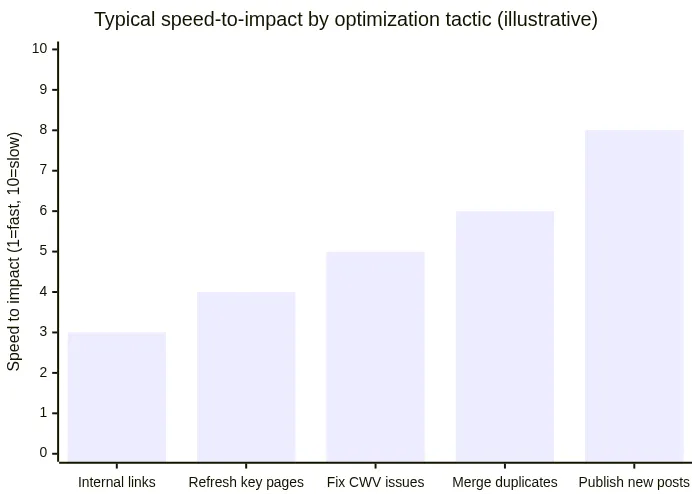
For many mature sites, the fastest wins come from improving existing URLs rather than publishing net-new posts every week. This is especially true if your archive includes outdated market info, old screenshots, or multiple similar posts competing with each other.
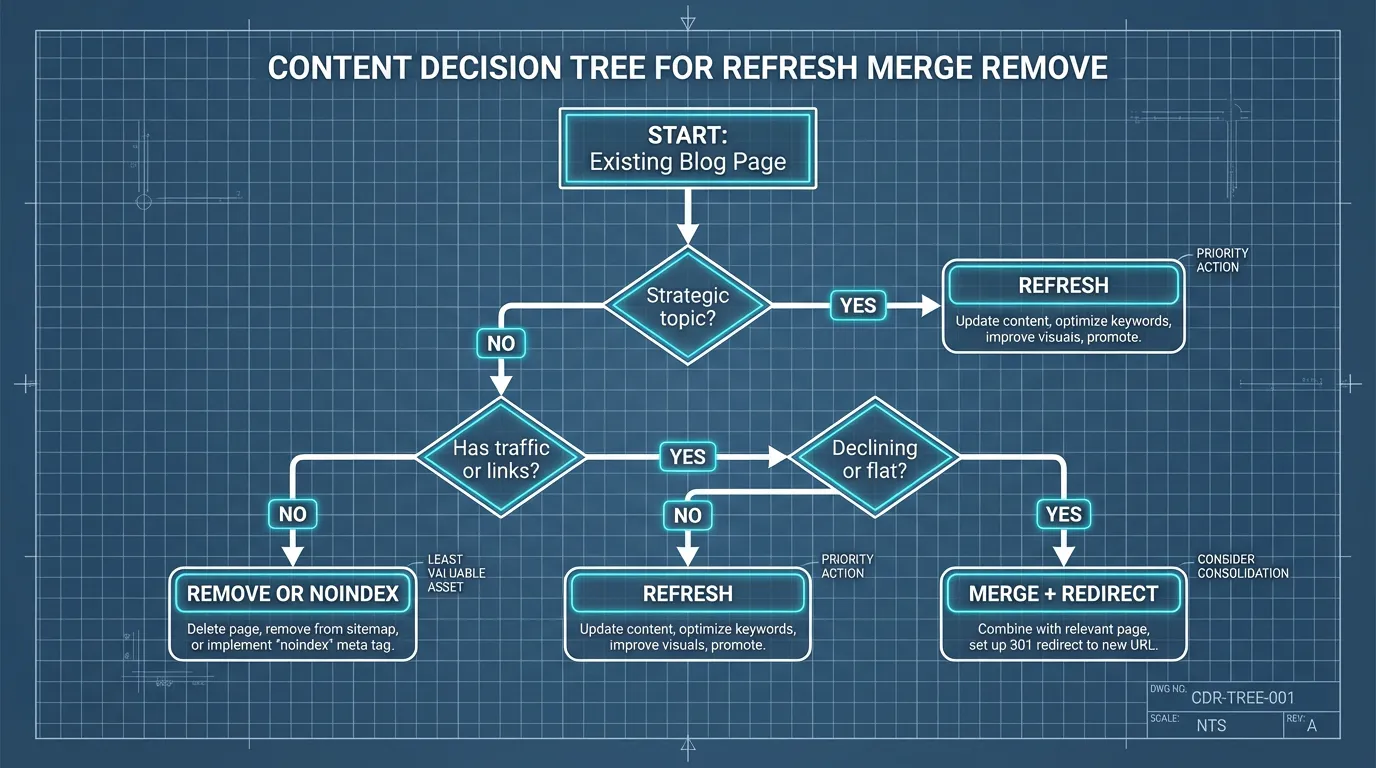
A decision table you can use immediately
| Situation | Recommended action | Common mistakes to avoid |
|---|---|---|
| Strategic topic, rankings declining | Refresh the page (deeper update) | Changing the URL unnecessarily; removing sections that still match intent |
| Strategic topic, multiple thin pages | Merge into one strong resource + redirect | Keeping all pages live and causing cannibalization |
| Not strategic, no traffic, no links | Remove or noindex | Letting index bloat grow and weaken crawl efficiency |
| Not strategic, but has links or steady traffic | Consolidate carefully | Deleting without preserving equity |
Suggested review rhythm (simple but realistic)
- 0 to 3 months after publishing: confirm indexing, fix obvious technical blockers, add a few internal links.
- 3 to 6 months: refine titles/meta, improve sections with low engagement, adjust CTA placement.
- 6 to 12 months: do a major refresh (new visuals, expanded sections, schema review).
- 12+ months: reassess strategically (refresh vs merge vs remove).
If you are unsure which posts are worth touching first, prioritize by business impact: pages closest to your offers, pages that rank on page 2, and pages that already attract qualified visitors.
Make every post easier to index, faster to load, and better at converting
Many "content-only" playbooks ignore the real limiting factors: Core Web Vitals, crawlability, rendering, and conversion design.
Technical checks that directly impact blog performance
A practical baseline:
- Indexing and crawlability: confirm pages are not blocked by robots.txt, canonical mistakes, or inconsistent sitemap signals.
- Rendering issues (especially JavaScript): ensure primary content is visible to search engines and users reliably.
- Core Web Vitals and page speed: compress images, lazy-load below-the-fold media, and keep layout stable.
- Schema validation: confirm required fields are present and consistent.
Conversion design: treat the blog like a sales assistant
If traffic rises but inquiries do not, the blog is likely missing one or more of these:
- A clear "next step" CTA that matches the reader's stage.
- Contextual internal links to service pages or relevant proof.
- Forms that capture what sales actually needs (country, product interest, timeline).
A good mid-article CTA for B2B readers who want clarity is: request a free audit report. It sets a concrete next step without forcing a commitment.
Track outcomes that matter (not just rankings)
Measure at two levels:
- Page metrics: impressions, CTR, average position, entrances, scroll depth.
- Business metrics: contact clicks, form submits, inquiry quality, assisted conversions.
Then iterate. If you want a structured loop, use this "plan, publish, measure, diagnose, improve" approach from widely accepted optimization playbooks (see Search Engine Land's guide).
How SeekLab.io helps teams implement this without wasted effort
Blog improvement is rarely blocked by writing alone. It is blocked by uncertainty: which topics matter, which pages are worth fixing, and whether technical constraints are silently limiting results.
SeekLab.io supports B2B and international sites with a combined approach:
- Full-site crawling and structured analysis, including performance diagnostics and indexing checks.
- Content planning that prioritizes intent and business outcomes, not just volume.
- High-quality blog production with strong visuals, plus guidance on internal linking and structured data.
- International and multilingual consistency (including hreflang and architecture), supported by teams in Singapore and Shanghai and a BD team in Dubai.
- A practical prioritization mindset: focus on what drives growth, deprioritize what does not.
If you want to identify your highest-impact opportunities first, you can get a free audit report by contacting SeekLab.io and leaving your website domain.