Hawaiian Flooding Power Outages & Local SEO
Expert reviewed

Flooding in Hawaii and the resulting power cuts are not just a public safety story. The March 23, 2026 disruption is also a sharp example of how quickly local search visibility can fail when physical infrastructure breaks. This article looks at what the Hawaiian Flooding Power Outages reveal about climate disruption, local SEO fragility, and geo-targeted disaster response, then turns that into a practical framework for business websites.
You will find three things here: what happened in Hawaii, where local search systems usually break during outages and closures, and what site owners can do before the next disruption hits. The useful part is not abstract theory. It is the operational layer: status pages, structured data, Google Business Profile workflows, hosting resilience, and citation control.
For marketing and operations teams, this matters because users do not stop searching during a disaster. They search differently. They look for "open now", "road access", "power outage", "shipping delay", and "temporary closure". If your website and local signals are not prepared, authoritative news, utilities, and government pages will take the space, while your own business information becomes late, vague, or invisible.
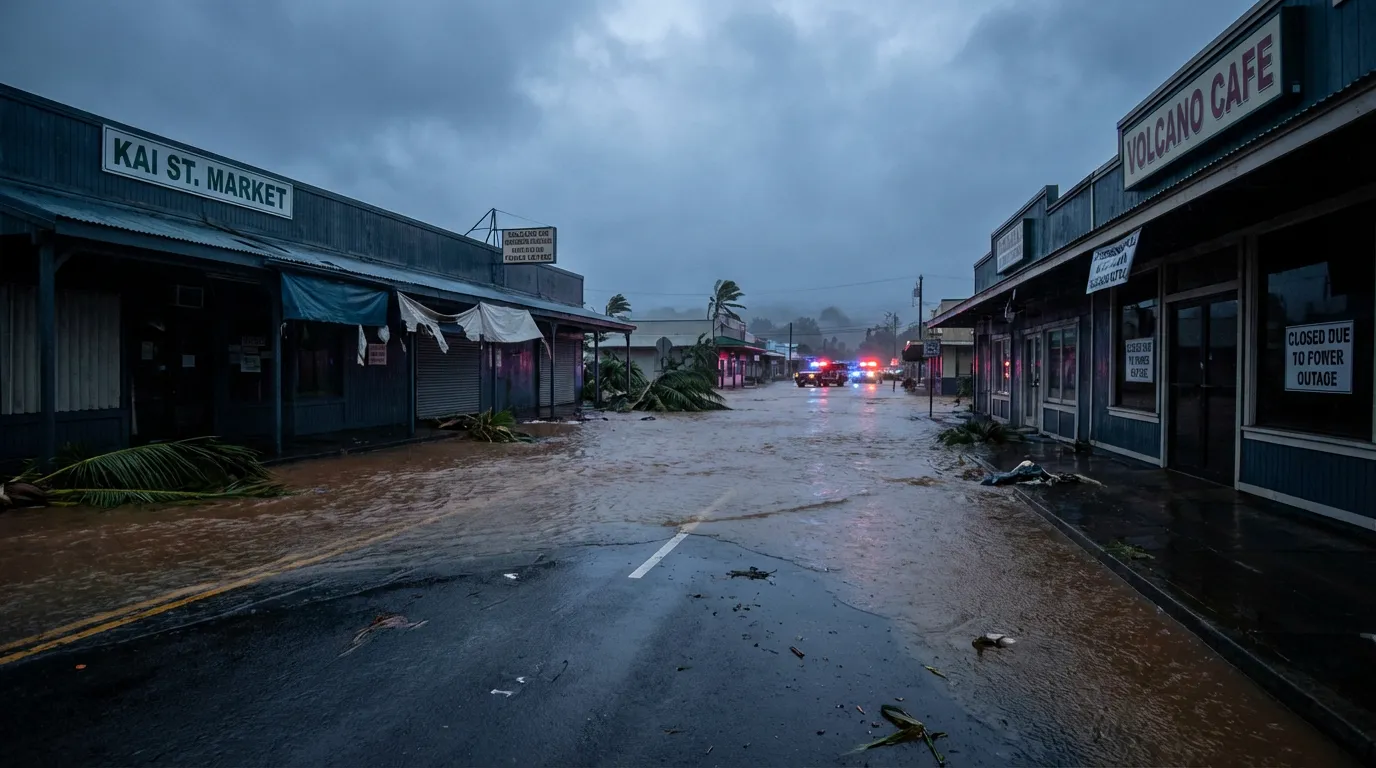
Hawaiian Flooding Power Outages and local SEO fragility in real conditions
The Hawaiian Flooding Power Outages followed a severe Kona low storm system that brought extreme rainfall across the islands in late March 2026. Reporting from WSLS, Civil Beat, FOX Weather, and ABC News described historic flooding, damaged roads, blackouts, evacuations, and extensive infrastructure strain.
Some locations saw more than 12 inches of rain within 24 hours. Oahu, Maui, and Hawaii Island all faced outages. At the peak, more than 115,000 customers on Oahu lost power, with thousands more affected on Maui and Hawaii Island, according to local coverage summarized in the research. Hawaiian Electric also carried out proactive shutoffs in high-risk areas on Oahu for safety reasons, as explained in its official storm update.
From a local search perspective, this is where local SEO fragility becomes obvious. A business can be physically unreachable, flooded, or without power, yet still appear as open in Google Business Profile. Its phone number may still be listed even if the local PBX or VoIP system is down. Its website may timeout if hosting, origin servers, or local office-managed systems fail. That gap between reality and what searchers see is where trust gets damaged fast.
| What happened on the ground | What users searched for | Typical local SEO failure |
|---|---|---|
| Roads blocked or washed out | "open gas station near me" | Maps show accessible routes poorly or business pages show normal operations |
| Power outage at location | "store open now" | Business still shows standard hours |
| Staff displaced or offline | "hotel status Honolulu" | No updated FAQ, no status page, no recent GBP post |
| Flooded warehouse or office | "shipping delay Hawaii" | Main site has no region-specific disruption notice |
One practical lesson: geo-targeted visibility is only reliable if the site and listing system can reflect operational reality under stress.
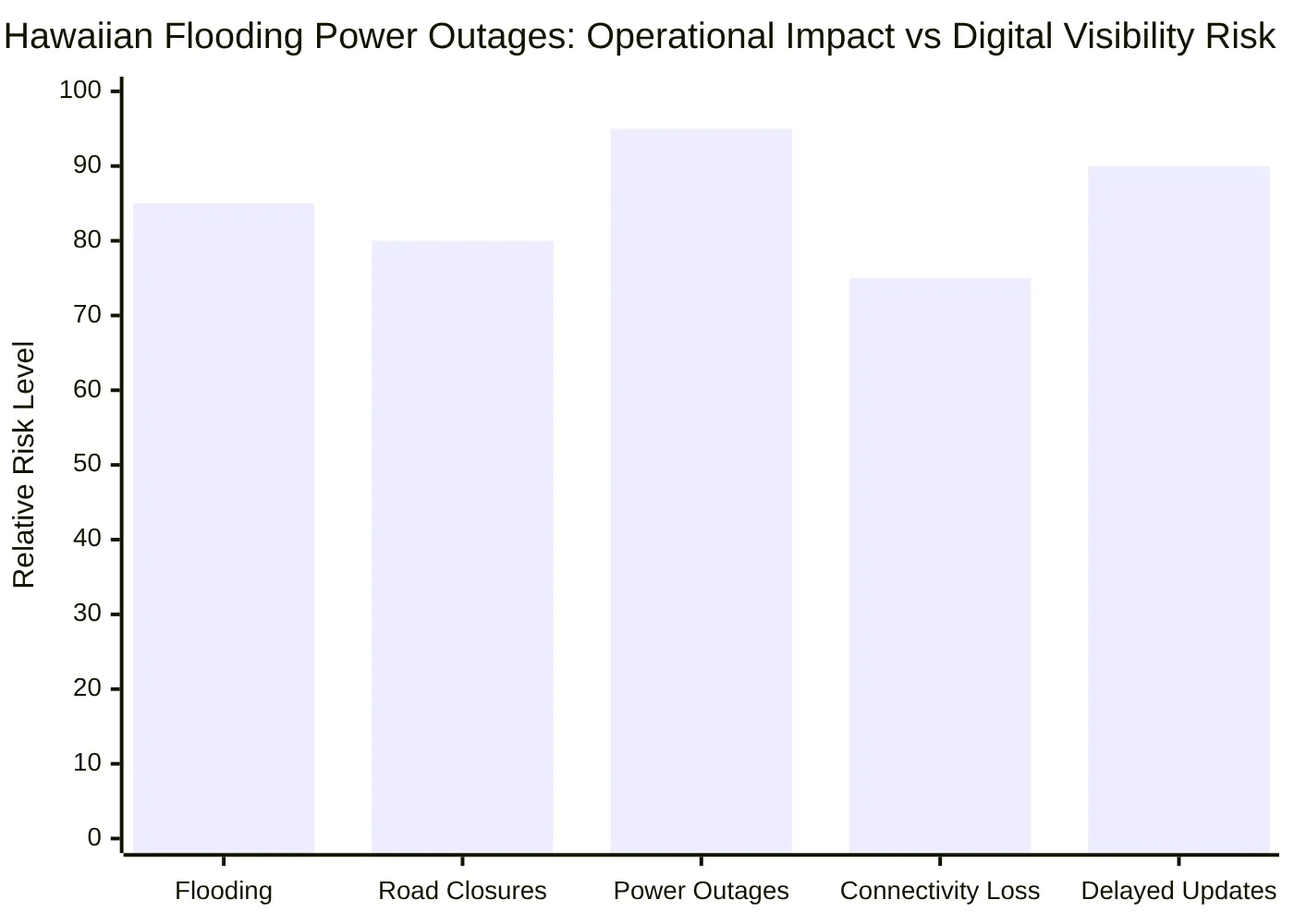
Hawaiian Flooding Power Outages show how climate disruption changes search behavior
The broader issue is climate disruption, not one isolated storm. Scientific and policy sources cited in the research report, including the National Academies, NOAA Climate Resilience Toolkit, and Hawaii Climate Portal, point in the same direction: coastal flooding risk is increasing, and island infrastructure is exposed from multiple angles at once.
That matters for SEO because local search systems were built around stable assumptions. A store has an address. A business has opening hours. A phone number works. A route is drivable. During floods, those assumptions break. Search demand shifts from discovery to verification. Users are no longer casually comparing options. They are trying to confirm whether a place is reachable, powered, stocked, and operating.
This is why climate disruption creates a different kind of local SEO fragility. It does not just reduce foot traffic. It scrambles intent. A normal location page written for "best family hotel in Oahu" is not useful when the actual query becomes "is this hotel accessible from the airport today". Search engines respond by elevating fresher, more authoritative, and more clearly structured information.
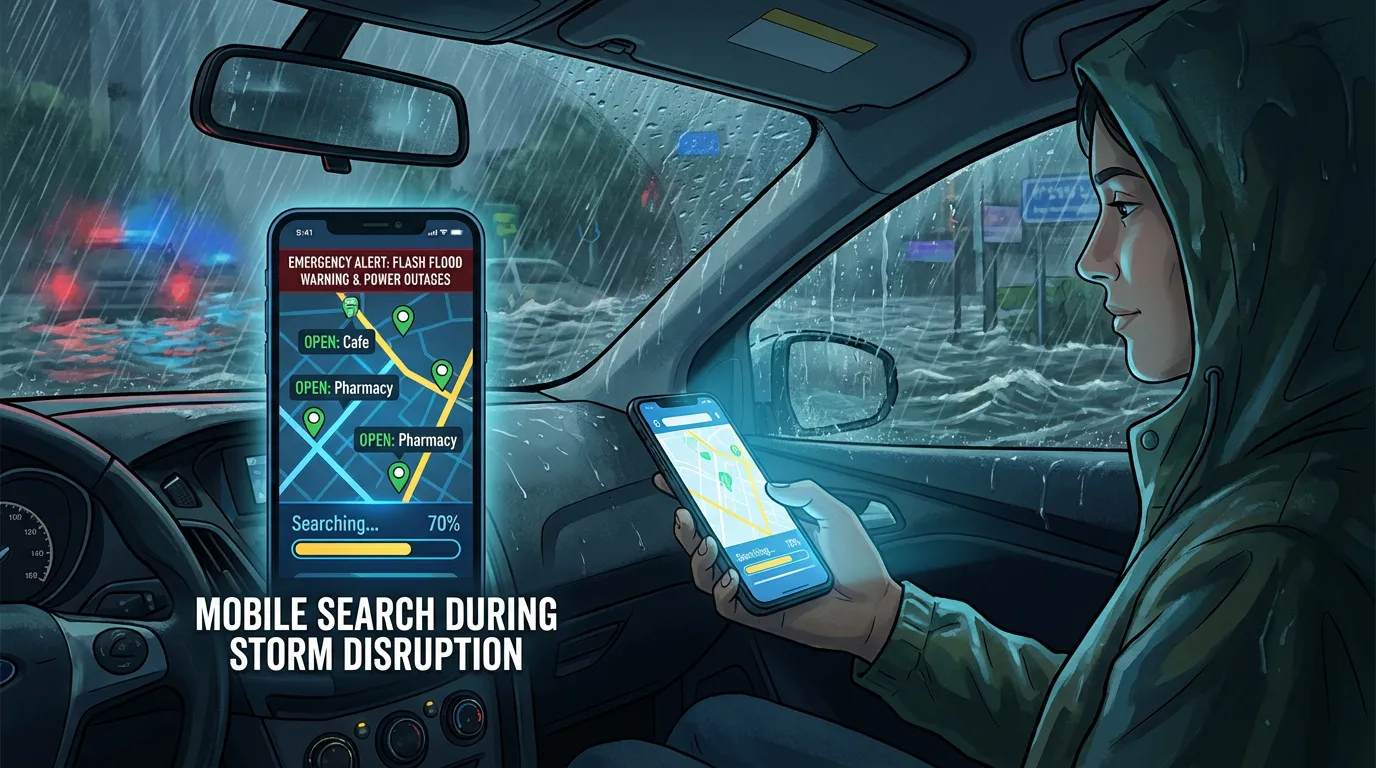
For business websites, this creates two immediate consequences:
- Government, utility, and news pages dominate broad disaster SERPs.
- Brand-owned pages can still win branded and long-tail queries if they are structured well and updated fast.
That second point is where preparation matters. SeekLab.io focuses on helping brands strengthen content structure, page architecture, internal linking, and technical readiness so search engines, AI systems, and real users can understand the site more clearly. In a disaster scenario, that same discipline becomes resilience rather than just optimization.
If your location pages are heavy, JavaScript-dependent, poorly linked, or missing clear structured entities, they are more likely to fail when networks are weak. If you want a sense of where those weaknesses usually begin, SeekLab.io's article on technical JavaScript SEO and indexing solutions is directly relevant.
Hawaiian Flooding Power Outages and geo-targeted disaster response for websites
A solid geo-targeted disaster response is not a press release. It is a system. The useful version includes a status page, structured updates, clear ownership of listing changes, and fallback communication paths.
The table below shows what that looks like in practice.
| Response layer | What to prepare before disruption | What to do during disruption |
|---|---|---|
| Google Business Profile | Admin access, backup owners, closure playbook | Set temporary closure or special hours, publish a concise post |
| Website status page | Lightweight page on resilient hosting | Publish location-by-location operating status |
| Structured data | LocalBusiness, Organization, FAQPage, GeoCoordinates, SpecialAnnouncement templates | Mark closures, access limits, and review dates clearly |
| Internal linking | Link status resources from header, footer, and location pages | Push affected visitors toward current status instead of evergreen copy |
| Citations and directories | Audit top traffic-driving directories in advance | Update the few that matter most, not every directory at once |
Google's documentation on special hours and special announcements structured data gives the official baseline. But the operational reality is messier. Many businesses do not update fast enough because the only person with access is also dealing with flooding, evacuation, staff safety, or facility damage.
That is why geo-targeted disaster response needs delegation and simplification. A good setup allows someone outside the affected region to publish updates quickly. That can mean a globally hosted status page, a simple banner toggle, and server-rendered content that does not depend on heavy front-end execution.
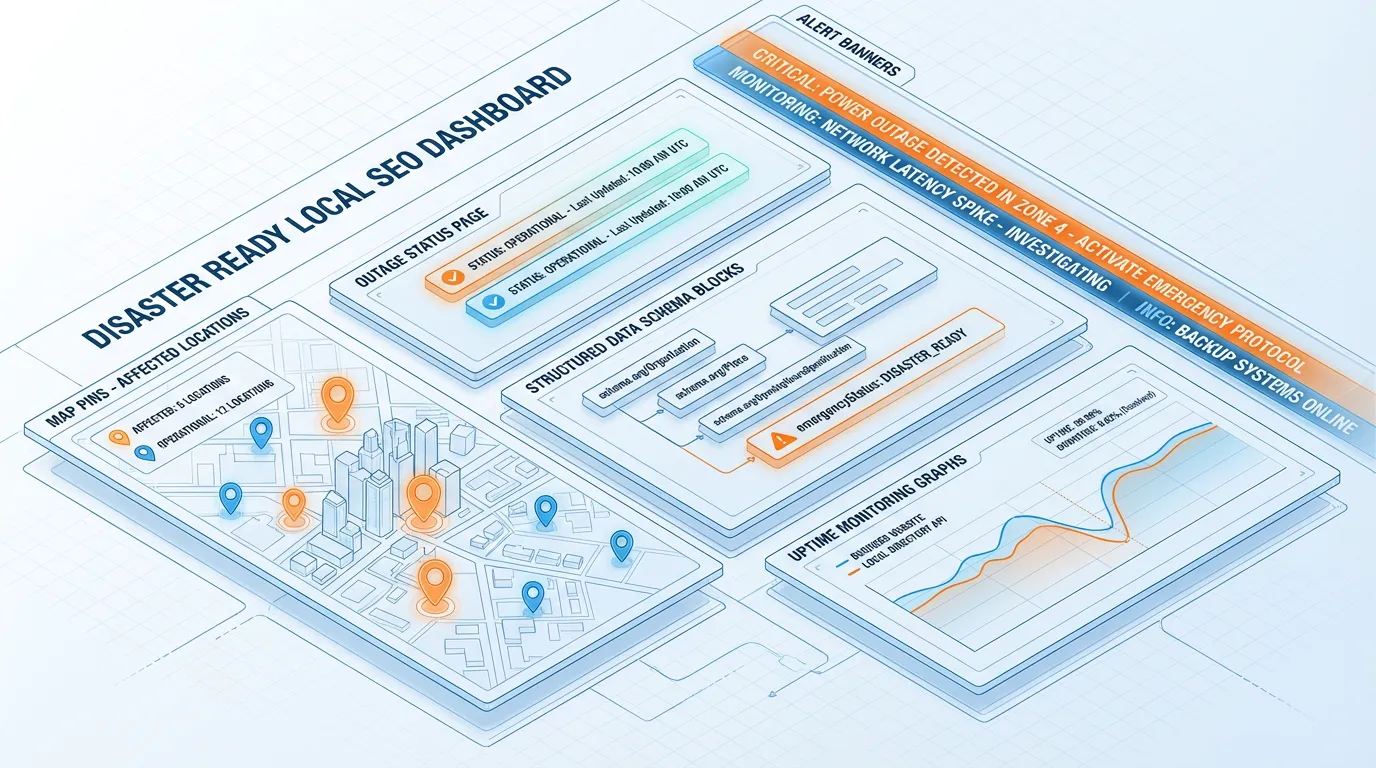
A simple response stack usually includes:
- One global status page hosted outside the affected region.
- One per-location status block with plain-language updates.
- One FAQ covering cancellations, access issues, and alternate service options.
- One structured data layer that search engines can parse without guessing.
- One internal process for who updates what, in what order.
For businesses with multiple markets, the response also has to stay geo-contained. A Hawaii-specific issue should not make your Europe or Singapore visitors think the whole company is down. SeekLab.io's work on multilingual and international SEO structure is relevant here because regional segmentation, internal hierarchy, and clear entity relationships determine how well a disruption stays isolated to the right pages and audiences.
You can also see the logic behind better local entity control in SeekLab.io's post on local citations strategy. In a disaster, citation hygiene stops being a ranking chore and becomes an accuracy problem.
Hawaiian Flooding Power Outages and the structured data fixes that hold up better
The most practical technical response to local SEO fragility is to reduce ambiguity. Search engines and AI-generated answers work better when your business status is machine-readable, recent, and consistent.
For the Hawaiian Flooding Power Outages scenario, five schema types matter most:
| Schema type | Why it matters in disruptions |
|---|---|
LocalBusiness |
Confirms location identity, contact info, and opening details |
Organization |
Clarifies brand-level entity and contact structure |
GeoCoordinates |
Improves precise location understanding |
FAQPage |
Helps answer operational questions directly in a structured format |
SpecialAnnouncement |
Signals temporary closures, access restrictions, or emergency notices |
This is not about adding markup for its own sake. It is about making your site readable under pressure. If Google Business Profile says one thing, a media article says another, and your site says nothing structured at all, search systems will trust the clearer source. Usually that means the source is not you.
A practical example:
- A hotel can stay open but suspend airport shuttle service.
- A warehouse can close locally while orders reroute from California.
- A clinic can suspend walk-ins but keep telehealth available.
A binary open-or-closed listing does not handle that nuance well. A status page plus structured FAQ often does.
SeekLab.io helps brands make websites easier for search engines, AI systems, and users to understand by improving structure, clarity, internal linking, and overall site readiness. That matters here because many sites fail not from a lack of effort, but from messy implementation. Overbuilt JavaScript, weak internal paths, inconsistent location data, and missing schema create confusion long before a storm arrives.
If you are reviewing whether your site is technically prepared, SeekLab.io's main services overview and its article on adapting content for AI search are useful next reads. They connect technical structure with how search systems interpret entities and citations.
Hawaiian Flooding Power Outages lessons for local SEO fragility and recovery planning
The biggest takeaway from the Hawaiian Flooding Power Outages is simple: local search resilience now belongs in operations planning, not just marketing planning.
A business that wants to reduce local SEO fragility should check the following before the next disruption:
- Are all important locations represented with crawlable HTML and structured data?
- Can someone outside the affected region update business status in minutes?
- Is there a lightweight status page on resilient infrastructure?
- Are key citations and Google Business Profile access centrally controlled?
- Can affected-region messaging be shown without confusing unaffected users?
- Are location pages usable on slow mobile connections?
This is where many teams head in the wrong direction. They spend time fixing every minor SEO defect while ignoring the few structural weaknesses that really affect discoverability and conversion. SeekLab.io's approach is useful precisely because it does not try to fix everything. It focuses on identifying what actually limits growth, what can wait, and what needs clear technical or content action now.
The March 2026 Hawaii floods made the risk visible. Climate disruption will keep creating similar moments in coastal, island, and infrastructure-sensitive markets. Businesses that prepare only for ranking will struggle. Businesses that prepare for real-world status changes, machine-readable communication, and geo-targeted disaster response will hold their visibility better.
If your site has multiple locations, international traffic, or location-sensitive lead flow, this is a good time to review the technical foundation before the next event forces the issue. You can contact SeekLab.io or get a free audit report to identify the parts of your site that matter most for resilience, visibility, and conversion.