Apple Vision Pro use can intensify VR addiction risks
Expert reviewed

How does Apple Vision Pro make compulsive VR behavior more plausible, and what should brands, product teams, and content operators do about it? This article breaks down the most useful distinctions first: VR addiction versus VR sickness, why high-fidelity immersion changes user behavior, where AI-driven engagement can intensify immersion risks, and how digital wellness content should be structured for both readers and search visibility.
You will also get a practical view of the issue rather than a panic headline. We will look at what current research actually supports, where Apple Vision Pro changes the risk profile, what behavioral health teams and website owners should pay attention to, and how a site like SeekLab.io can turn a fast-moving topic into credible, high-conversion SEO content without leaning on hype.
1. VR addiction epidemic: what the term really covers in the Apple Vision Pro era
The term "VR addiction epidemic" is more media-friendly than clinical, but it points to a real pattern. Research summarized in Frontiers in Virtual Reality suggests that roughly 2% to 20% of VR users may show compulsive-use traits, depending on how strictly the behavior is defined. That range is wide, but the signal is clear enough: problematic use exists, and immersion risks rise as headsets become more comfortable and more integrated into daily life.
That is where Apple Vision Pro matters. It is not just another gaming headset. Its high-resolution displays, spatial audio, eye and hand tracking, and mixed reality passthrough reduce friction. In practical terms, that means fewer reasons to take the headset off. A device that feels usable for work, media, messaging, and ambient computing creates a different pattern from a console accessory used for a single game session.
A useful distinction for readers and for SEO structure is this:
| Term | What it means | Typical timeframe | Main signals |
|---|---|---|---|
| VR sickness | Acute physical discomfort from VR use | During or shortly after use | Nausea, dizziness, headache, eyestrain |
| VR addiction | Ongoing compulsive or harmful use pattern | Weeks to months | Loss of control, overuse despite harm, disrupted sleep or responsibilities |
| Immersion risks | Broader category covering physical, cognitive, and behavioral downsides | Immediate to long-term | Time distortion, overload, dissociation, compulsive return behavior |
That distinction matters because many articles flatten everything into one problem. A teen who ends a session nauseous is not automatically experiencing addiction. A user who feels fine physically but spends five hours nightly in a headset while school, work, or sleep deteriorates may be much closer to a behavioral health issue.
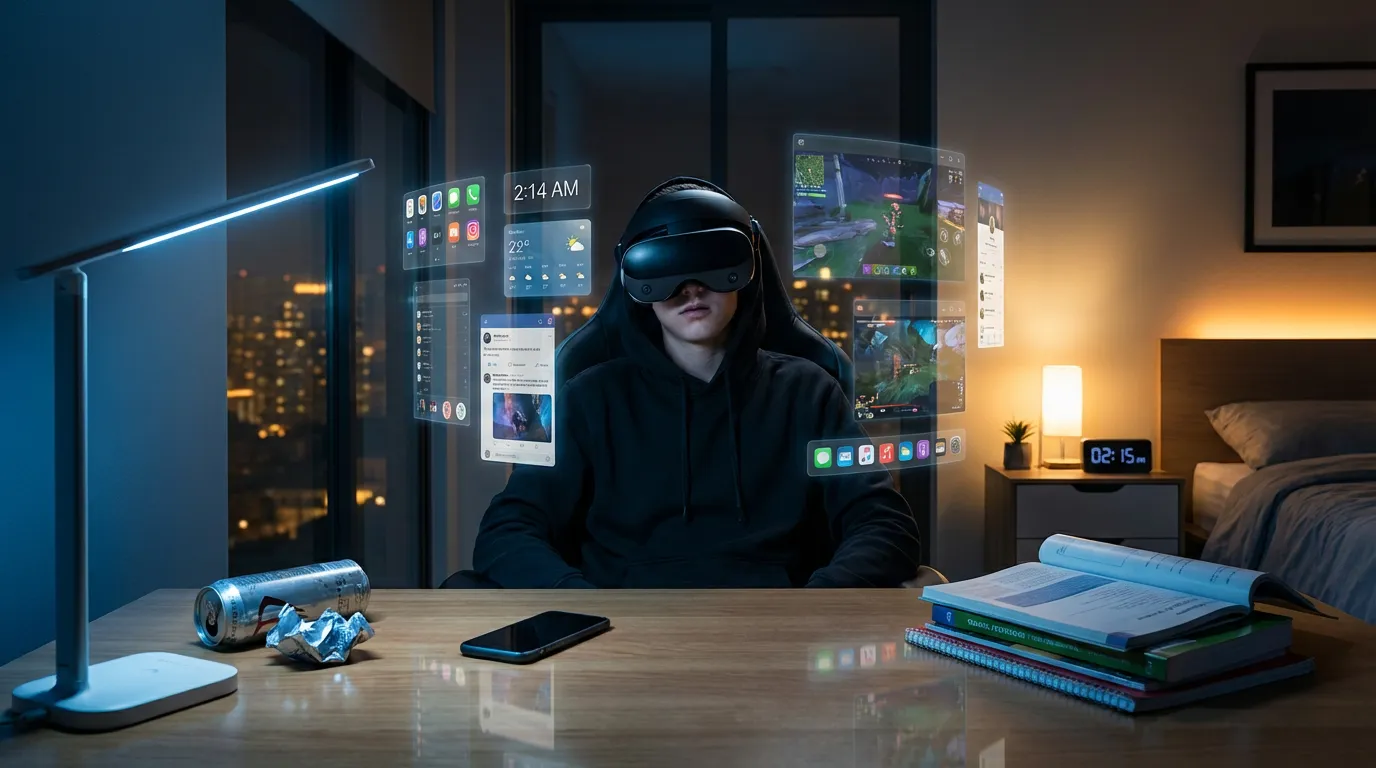
The recent media framing around February 2026 hospitalizations should also be handled carefully. The underlying pattern appears to blend severe VR sickness, dehydration, sleep disruption, panic, and prolonged use rather than proving a single neat diagnosis. That is exactly why this topic needs more disciplined content. Readers do not need another dramatic headline. They need a page that separates known evidence from inference.
2. Apple Vision Pro and VR addiction epidemic risk: why high-fidelity immersion changes behavior
Apple Vision Pro changes the discussion because it shifts VR from an event to an environment. Traditional headsets often have a natural stopping point: a game ends, the headset gets uncomfortable, or the user returns to a different device for normal tasks. Apple Vision Pro narrows that gap. You can watch, work, message, browse, and manage your day inside the same immersive interface.
That creates a different kind of compulsive pattern. The risk is not only "one more game." It is also "one more window," "one more episode," or "one more task." For adults, that may look less like entertainment addiction and more like never switching off. For teens, the same hardware can intensify emotional attachment to media, social spaces, and recommendation loops.
The feature stack matters:
- High-resolution displays make long sessions easier to tolerate.
- Passthrough mixed reality blurs the line between physical and digital space.
- Eye and hand tracking reduce interaction friction.
- Tight ecosystem integration encourages repeated micro-sessions throughout the day.
A lot of weak tech commentary treats comfort as a pure benefit. In reality, comfort can be a risk multiplier. Friction often protects users. The moment a device becomes seamless, digital wellness becomes a design problem rather than a user-discipline problem.
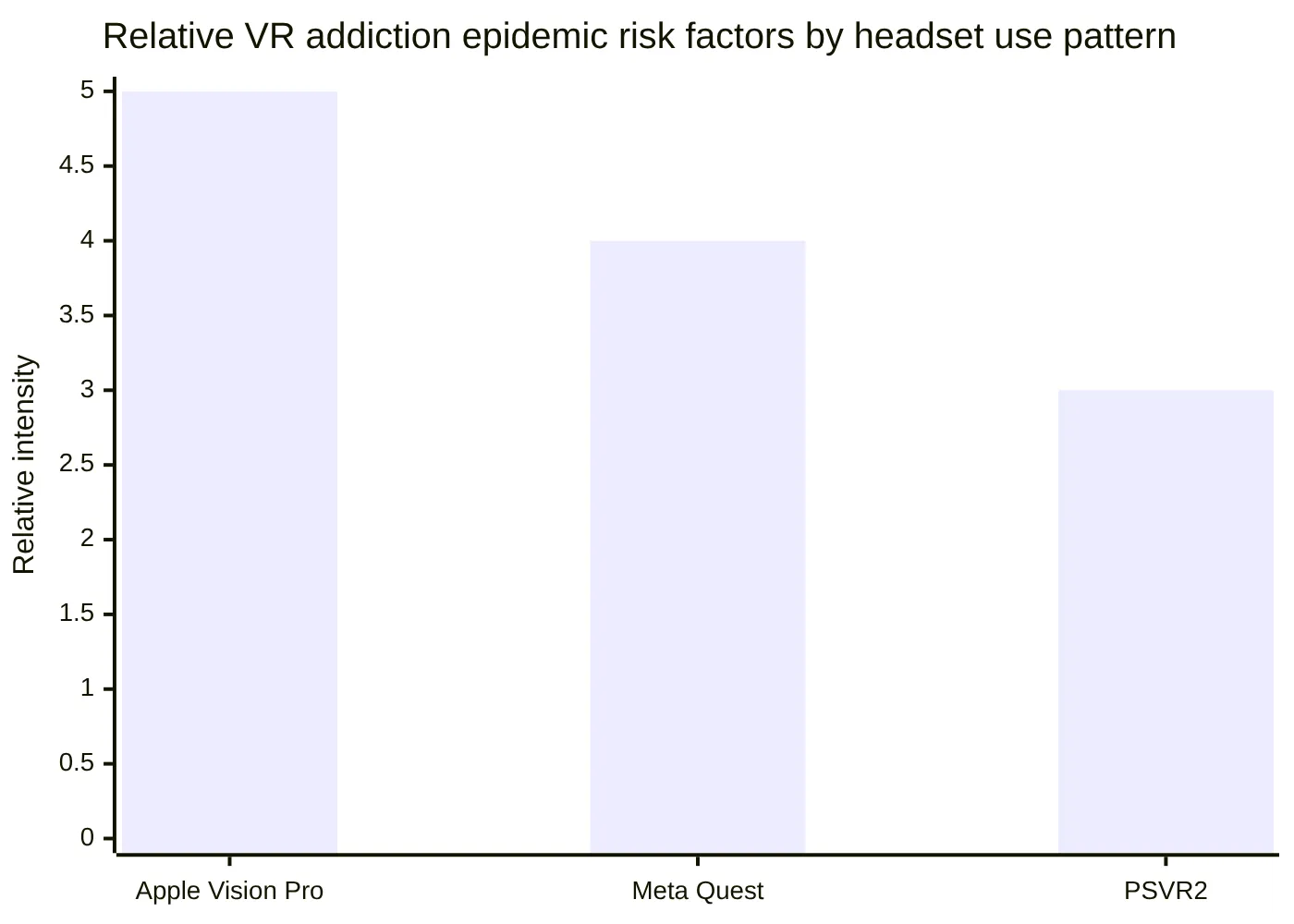
The chart above is qualitative, not clinical data. It reflects a practical observation from the research report: Apple Vision Pro stands out less for social VR intensity than for always-on ecosystem depth. That makes its immersion risks more likely to show up in work, media, and general computing habits rather than in gaming alone.
This is also where a site like SeekLab.io can add something more useful than tech review commentary. The better angle is not "Apple Vision Pro is dangerous." It is "high-fidelity spatial computing changes how compulsive usage develops, and brands need better language, better architecture, and better guardrails around that shift."
For teams building websites around AI, XR, health, or product strategy, this is the sort of trend that deserves early content treatment. SeekLab.io already focuses on identifying high-potential topics before they become crowded, then supporting them with technical SEO, structured content, and stronger site readiness. That matters here because the opportunity is not just traffic. It is authority.
3. VR addiction epidemic and immersion risks: the behavioral health and digital wellness angle
The behavioral health side of the VR addiction epidemic deserves more nuance than most search results currently give it. WHO Europe has already warned more broadly about problematic digital behavior among adolescents, sleep disruption, and mental health strain. VR adds a stronger sensory load than ordinary screen use. That means the user is not only consuming content but inhabiting it.
A practical way to think about immersion risks is to separate them into short-term, medium-term, and habit-forming effects.
| Risk layer | Typical examples | Why it matters |
|---|---|---|
| Short-term physical | Nausea, dizziness, headache, eyestrain | Can escalate quickly in long sessions and lead to severe discomfort |
| Short-term cognitive | Fatigue, overload, poor attention recovery | More likely in multi-window spatial work or emotionally intense content |
| Medium-term behavioral | Sleep loss, skipped routines, family conflict | Often the first real-world sign of a problem |
| Longer-term pattern | Compulsive return behavior, social withdrawal, loss of control | Closest to addiction-like use |
One overlooked issue is time distortion. In high-immersion environments, users regularly underestimate session length. That matters commercially as well as clinically. If product teams optimize around session duration without considering user recovery, they may be rewarding the wrong outcomes.
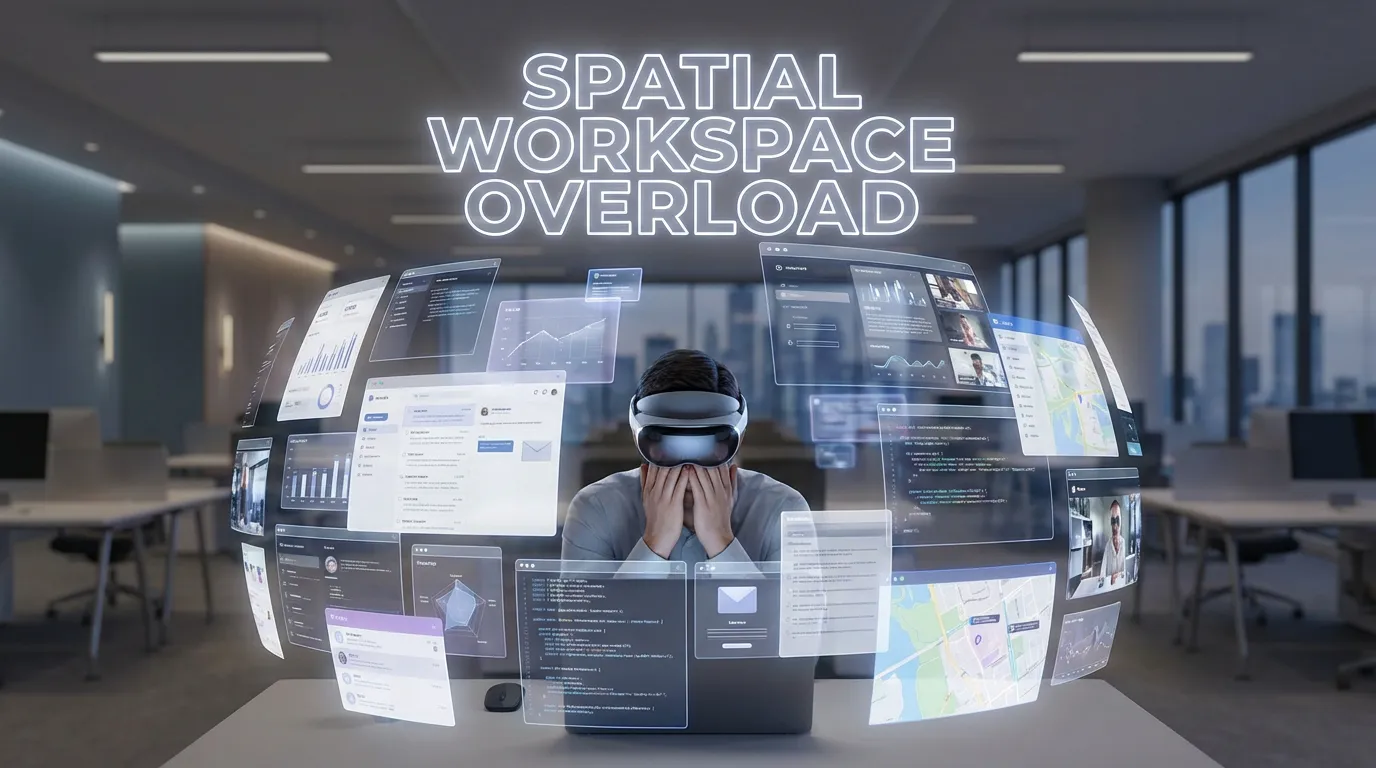
For teens, the warning signs are often mundane before they become dramatic. Late-night sessions, missed schoolwork, irritability when the headset is unavailable, and a growing preference for mediated interaction over offline routines tend to matter more than a single scary anecdote. For adults, the pattern can be quieter but still damaging: work bleeding into leisure, constant headset use framed as productivity, and low-grade exhaustion treated as normal.
This is why digital wellness content should not stop at "take breaks." That advice is not wrong, but it is too thin to rank well or help readers. Better pages explain what to monitor, when to stop a session, how to distinguish discomfort from dependency, and which usage patterns call for professional support.
If you publish in this space, structure matters. SeekLab.io helps brands build visibility and AI-era discoverability by making content easier for search engines, AI systems, and real users to interpret. On a topic like this, that means clear definitions, careful internal linking, readable tables, strong heading logic, and content that is useful enough to be cited rather than skimmed and forgotten.
4. VR addiction epidemic and AI engagement loops: where Apple Vision Pro raises new design questions
The most underexplored part of the VR addiction epidemic discussion is not the headset by itself. It is what happens when immersive hardware meets AI-driven engagement. Recommendation systems, adaptive experiences, social suggestions, and always-available assistants can all keep users inside an environment longer than they intended.
That does not require malicious design. It only requires a narrow optimization goal.
If a platform rewards teams for longer sessions, more interactions, more retained attention, or more frequent return visits, AI systems will often discover patterns that intensify immersion risks. In a flat app interface, that is already a concern. In a headset, where the system can respond to gaze, dwell time, gesture patterns, and emotional context, the feedback loop becomes tighter.
A few examples from the research direction are especially relevant:
- AI recommendation systems can surface the next experience at the exact moment a user might otherwise stop.
- Adaptive difficulty can remove natural friction and extend "flow" states far past healthy limits.
- AI companions or assistants can become emotionally sticky, especially for users under stress or isolation.
- Spatial work environments can blur boundaries between focus, distraction, rest, and entertainment.
This is not a niche product issue anymore. As immersive systems mature, AI and behavioral health will increasingly collide inside the interface layer.

For independent websites and official company sites, this creates a content gap worth capturing. Most existing pages focus either on hardware reviews or generic wellness advice. There is much less content explaining how AI engagement mechanics interact with immersion risks. That gap is commercially meaningful because product teams, operations managers, and marketers all need language they can use internally.
This is also a strong fit for internal linking if you are publishing on SeekLab.io. A reader interested in this topic is likely to also care about content structure, technical readiness, and whether pages are built to earn visibility in both traditional search and AI-generated answer systems. Natural internal paths could point readers to High-Quality Blog Content Optimization Tips, Technical JavaScript SEO & Indexing Solutions, and Get Your Free SEO Site Check Now | SeekLab.io. Those pages support the same strategic point: visibility comes from sound decisions, not content volume alone.
5. How to cover the VR addiction epidemic responsibly: SEO opportunities for SeekLab.io and brand websites
For SeekLab.io, the search opportunity is not just the main keyword. It is the cluster around Apple Vision Pro, immersion risks, digital wellness, and behavioral health. The strongest angle is evidence-led commentary with practical structure. That means content that answers current concern without pretending the data is settled.
A sensible topic cluster could include:
| Page type | Suggested angle | Search value |
|---|---|---|
| Hub article | VR addiction epidemic and Apple Vision Pro risks | Captures broad trend demand |
| Supporting article | Apple Vision Pro and VR sickness: what users should know | Matches device-specific symptom searches |
| Supporting article | AI engagement loops in immersive environments | Differentiates with a non-obvious angle |
| Supporting article | Digital wellness guardrails for VR products and brands | Useful for product and operations audiences |
| FAQ or glossary page | Definitions of VR addiction, cybersickness, immersion risks | Strong for AI citation readiness |
This is where SeekLab.io's value proposition actually fits the topic naturally. The company helps brands improve search visibility and AI-era discoverability through high-quality content and technical optimization. That includes structured analysis, internal linking, performance diagnostics, schema guidance, and content decisions grounded in what affects growth instead of what merely sounds advanced. On a topic like the VR addiction epidemic, that discipline matters because overstatement can damage credibility and under-explanation can make the page useless.
A commercially useful article in this space should do five things well:
- Confirm what is known and what is still uncertain.
- Separate VR sickness from addiction-like behavior.
- Show how Apple Vision Pro changes the usage pattern.
- Explain how AI systems can intensify immersion risks.
- Give readers a next step, whether that is a design decision, a content architecture change, or a site audit.
Many brands skip the strategic step and jump straight into publishing. That is usually how they end up with thin pages that rank for nothing meaningful. Before writing content or fixing technical issues, make the right direction choice first. That is one of the practical reasons companies use SeekLab.io: not just to produce content, but to avoid heading in the wrong direction.
If your site covers emerging technology, behavioral topics, or AI-driven products, the question is not whether this trend deserves content. It is whether your site is structured well enough to capture that demand with authority. If you want a prioritized view of what actually impacts growth, you can get a free audit report or contact us through SeekLab.io and start with the pages that matter most.