Best Keyword Research Tools in 2026: What to Use and Why
Expert reviewed

The best keyword research tools in 2026 are not all built for the same job. Some are better for deep SEO research, some are stronger for long-tail discovery, and others work best for smaller budgets or international markets. This guide compares the leading keyword research tools by strengths, limitations, pricing, and use case so you can choose the right tool faster.
Instead of looking for one “perfect” platform, it is more useful to understand which tools are strongest for different stages of research. Some help with broad keyword discovery, some are better for competitor analysis, and some are more useful for content planning or search intent validation.

How to evaluate keyword research tools in 2026
Tool features are converging. The bigger differentiator is whether a tool helps you make confident decisions across markets, languages, and funnel stages.
Prioritize these evaluation criteria:
- Intent-aware research and SERP context: You need more than search volume. Look for tooling that helps you spot commercial investigation queries and map formats that win in the SERP.
- International coverage: If you operate across APAC, the US, and Europe, you need country and language flexibility (and a plan for multilingual architecture).
- Audit depth tied to content outcomes: Great content underperforms when indexing, crawlability, Core Web Vitals, internal linking, or JavaScript rendering is broken.
- Workflow fit: The best stack is the one your team will actually use consistently (exports, reporting, stakeholder clarity).
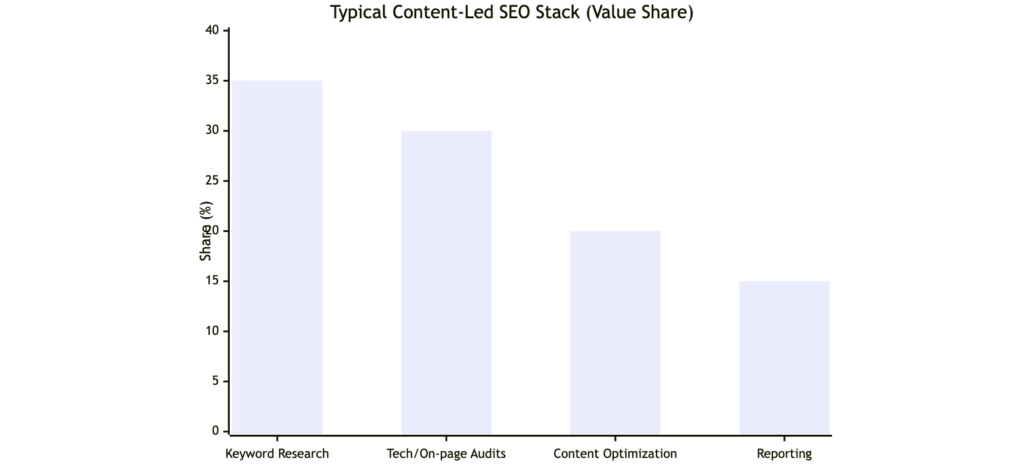
Best keyword tools to plan content that can win (with strengths, limits, and pricing)
Below are widely used keyword tools that show up repeatedly in commercial evaluations. Use this as a short list for your 2026 content strategy stack, especially if you need scalable research across regions.
| Tool | Best for | Notable strengths for content strategy | Common limitations | Starting price (approx.) |
|---|---|---|---|---|
| Semrush Keyword Research features | Teams that want deep data + workflow breadth | Large database, strong grouping, built-in intent labeling, integrates with audits and tracking | Can feel complex for small teams | From about $129.95 to $139.95 per month via Semrush pricing |
| Ahrefs Keywords Explorer | Content-led growth teams and agencies | Strong SERP context, "traffic potential" thinking, excellent competitor and topical gap workflows | Higher cost at scale, learning curve | From about $29 per month via Ahrefs pricing and the Ahrefs Starter plan explanation |
| Moz Pro and Moz Keyword Explorer | Marketers who want simpler metrics | Clear UI, helpful prioritization concepts, accessible for less technical teams | Smaller data breadth vs. top-tier suites | From about $99 per month via Moz pricing |
| Google Keyword Planner | Volume sanity checks and PPC alignment | Direct Google Ads dataset, good for early scoping by region | Broad ranges, fewer SEO-specific metrics | Free with a Google Ads account |
| KeywordTool.io | Long-tail discovery across platforms | Autocomplete-based ideas for Google, YouTube, Bing, and Amazon-style research | Full metrics gated behind paid plans | From about $69 per month via KeywordTool.io pricing |
| KWFinder | Smaller sites and niche strategies | Friendly UX, localized filters, solid long-tail workflow | Limited for very large sites and complex segmentation | From about $ 37.70 per month via Mangools pricing |
| Ubersuggest | Beginners and budget-conscious teams | Simple all-in-one basics (keywords, content ideas, light audit) | Often less deep than enterprise tools | From about $12 per month via Ubersuggest pricing |
| SE Ranking | Agencies and international SMEs | Balanced all-in-one value (keywords + tracking + audits) | Dataset breadth can vary vs. top suites | From about $55 to $65 per month via SE Ranking pricing |
How to choose quickly:
- If you need maximum depth and broad workflows, shortlist Semrush or Ahrefs.
- If you need balanced capability on tighter budgets, SE Ranking is often a practical middle ground.
- If you mainly need long-tail expansion and fast topic ideation, add KeywordTool.io or KWFinder to your primary platform.
SEO audit tools that prevent "great content, zero results"
Content strategy fails when the site's technical foundation blocks discovery, indexing, or user experience. That is why high-performing teams pair keyword tools with seo audit tools that diagnose crawlability, internal links, Core Web Vitals, and on-page structure.
A practical audit toolkit for 2026 typically includes:
- Full-site crawler for diagnostics and architecture
- Screaming Frog SEO Spider for detailed crawling (including JavaScript rendering, hreflang checks, and structured data extraction).
- Sitebulb for visual site structure insights that translate well into content hub and internal linking decisions.
- Cloud audits inside all-in-one platforms
- Ahrefs Site Audit for ongoing issue detection and tying crawl findings to organic opportunities.
- Semrush Site Audit for scheduled crawls, issue categories, and historical comparisons.
- Google-first validation for indexing and performance
- Google Search Console to confirm indexing, coverage, rich result status, and real performance data.
- PageSpeed Insights for Core Web Vitals diagnostics at the URL level.
- GTmetrix for deeper performance analysis (like waterfall behavior).
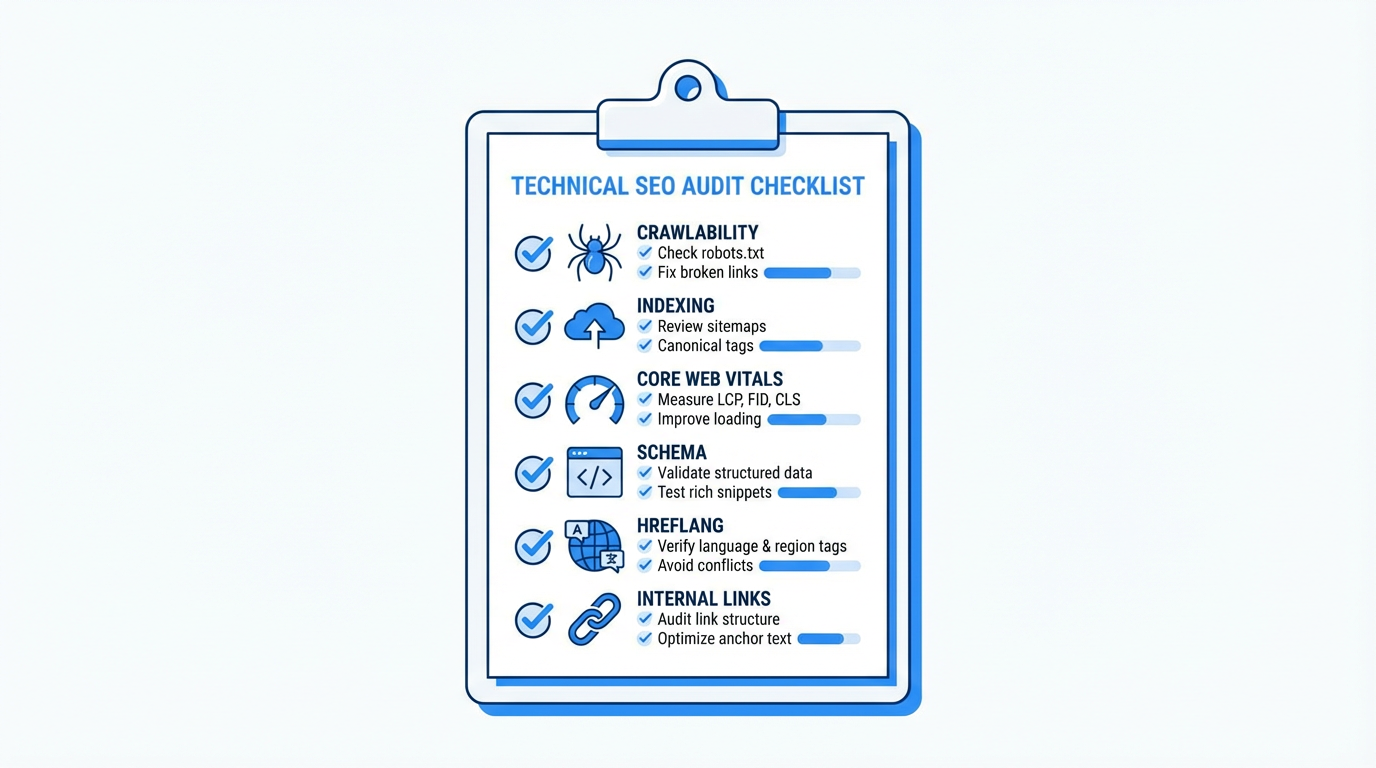
What these tools help you catch before you scale content:
- Pages that are technically "publishable" but not indexable (canonical, robots, or rendering issues).
- Weak internal linking that strands your best pages (orphan pages, deep click depth).
- Performance bottlenecks that hurt user experience and conversions, not just rankings.
- Structural issues (template duplication, parameterized pages, inconsistent headings) that dilute topical authority.
A simple workflow to turn tool data into a content roadmap (not a backlog of noise)
Most teams do not fail because they lack tools. They fail because they start writing before they make the right strategic decisions.
Use this workflow to connect keyword research and technical audits into a single growth-focused plan:

Practical tips (especially for international sites):
- Pick one primary keyword platform for consistency, then supplement with a crawler + Google validation.
- Treat tool scores as signals, not truth. Your prioritization should reflect revenue impact and realistic implementation effort.
- Build internal linking with conversion paths in mind: informational pages should naturally route to commercial pages and inquiry actions.
Where tools stop and SeekLab.io starts (strategy, prioritization, and execution)
Keyword tools and audits can generate thousands of data points, but they do not understand your products, sales cycle, or which markets matter most this quarter. That gap is where SeekLab.io operates.
SeekLab.io combines:
- Full-site crawling and structured analysis
- Core Web Vitals and page performance diagnostics
- Indexing, crawling, rendering, and JavaScript compatibility checks
- Internal link equity and semantic structure analysis
- Schema data compliance and enhancements
- Sitemap.xml and robots.txt validation
- Trend-driven topic selection based on intent and contextual scenarios
- High-quality blog creation with visually appealing images, structured layouts, and internal links
- Clear, actionable solutions and technical guidance (with a focus on what truly impacts growth and what can be deprioritized)
If you are worried about overpromising and under-delivery, SeekLab.io also reduces risk operationally: no charge if the minimum expected results are not achieved (based on agreed expectations), and some simple technical issues can be resolved for clients at no cost.
Get a free audit report: contact us and leave your website domain. Ask for a prioritized list of the top technical blockers and the highest-potential topics to target next.
FAQ: choosing the right stack for 2026
Do I need both Semrush and Ahrefs?
Usually no. Most teams do better with one primary platform (Semrush or Ahrefs) plus a crawler (Screaming Frog or Sitebulb) and Google Search Console for validation.
Can free tools be enough?
For early-stage sites, you can go far with Google Keyword Planner, Google Search Console, and PageSpeed Insights. The tradeoff is speed and depth. As soon as you need scalable competitive research, clustering, or multi-market planning, paid platforms become more cost-effective.
Which tools are best for international and multilingual SEO?
Look for strong localization options in your main keyword suite and pair that with technical audits that support hreflang checks and architecture validation, such as Screaming Frog or Sitebulb, then validate results in Google Search Console.
Why does my traffic rise but leads do not?
Tools can push you toward high-volume topics that are easy to win but low intent. A conversion-driven strategy prioritizes commercial investigation queries, clearer internal linking paths, and pages designed to match intent and drive inquiries.
If you want a second set of eyes on your current setup, request a free audit report from SeekLab.io and include your domain so the review can be specific and prioritized.