Get Your Free SEO Site Check Now | SeekLab.io
Expert reviewed

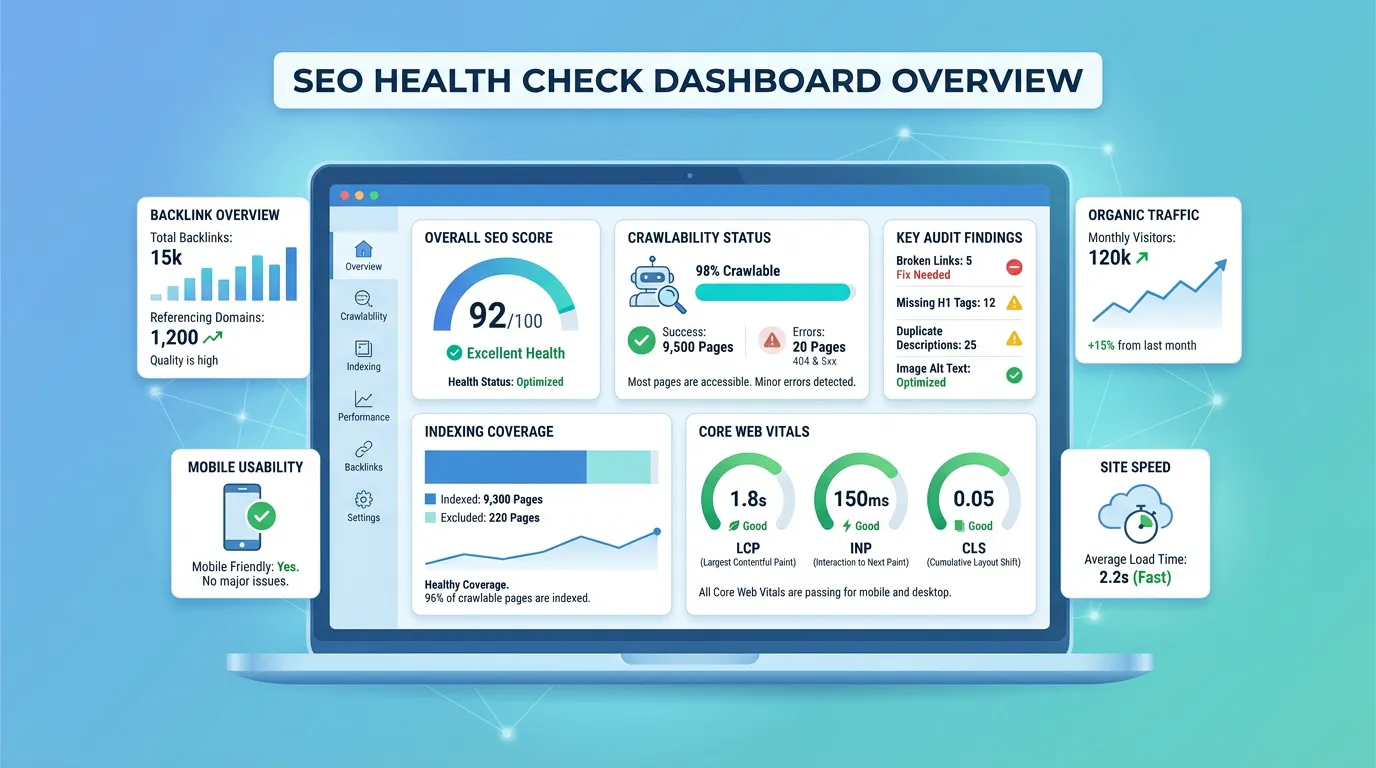
If you are searching for an seo health check, you are usually trying to answer one practical question: "Is something broken or misaligned enough that our next SEO effort will be wasted?"
Below is a structured Q&A you can use to run an SEO site check that is fast, business-focused, and clear about what to fix first (and what can wait).
Why should you run an SEO health check before doing more SEO?
Q: What problem does an SEO health check solve?
A: It prevents wasted budget. Many sites publish more content or start technical work without confirming whether the site can be crawled, rendered, indexed, and converted effectively. A modern health check is a focused diagnosis designed to identify what truly impacts growth and what can be deprioritized.
Q: What are the most common symptoms that signal you need one?
A: If any of these sound familiar, a health check usually pays for itself quickly:
- New pages are not getting indexed (or indexing is inconsistent).
- Rankings fluctuate even when you do not change content.
- Traffic is stable or growing, but leads, RFQs, or demo requests are not.
- The site feels slow on mobile, especially on key landing pages.
- International pages rank in the wrong country or language.
- You keep getting long issue lists from tools, but no clear priorities.
Action: If you want a second set of eyes, SeekLab.io can provide a free SEO diagnosis. Share your domain, target markets (US, APAC, Europe, or other), and your main goal (leads, ecommerce revenue, brand visibility), and you will receive a prioritized set of next steps.
What should an SEO health check include (and how is it different from a full audit)?
Q: What is included in a real SEO health check?
A: A practical health check covers four pillars:
- Technical foundations (crawling, indexing, performance)
- Site architecture and internal links
- Content quality and intent alignment
- Conversion paths plus international SEO considerations (if applicable)
Q: How is it different from a full SEO audit or an automated site checker?
A: Use this as a quick decision guide:
| Option | Best for | Typical output | Main limitation |
|---|---|---|---|
| SEO health check | Fast, high-impact diagnosis before investing more | Prioritized issues + action plan | Not exhaustive across every template |
| Full SEO audit | Complex sites, migrations, multi-month roadmaps | Deep crawl + comprehensive backlog | More time and stakeholder effort |
| Automated SEO checker | Quick snapshot and basic hygiene | Score + generic warnings | Limited strategic context and prioritization |
For deeper reading on audit scope, see the guide from Ahrefs on SEO audit fundamentals.
How do you check technical SEO health: crawling, indexing, performance, and schema?
Q: What are the first technical checks to run?
A: Start with the blockers that can prevent rankings entirely:
- Crawlability: robots.txt, sitemap.xml coverage, server errors (4xx, 5xx), redirect chains.
- Indexability: accidental noindex, canonical tag conflicts, duplicate URL variants.
- Rendering: JavaScript-heavy templates where important content is not visible to crawlers.
- Structured data: schema coverage and correctness for key page types.
Q: How should Core Web Vitals fit into an SEO site check?
A: Treat Core Web Vitals as both a ranking signal and a conversion signal. If key templates fail, prioritize improvements on pages that drive leads or revenue first (not random low-traffic URLs). Google's documentation is the best baseline reference: Core Web Vitals guidance.
Q: What does a prioritized technical checklist look like?
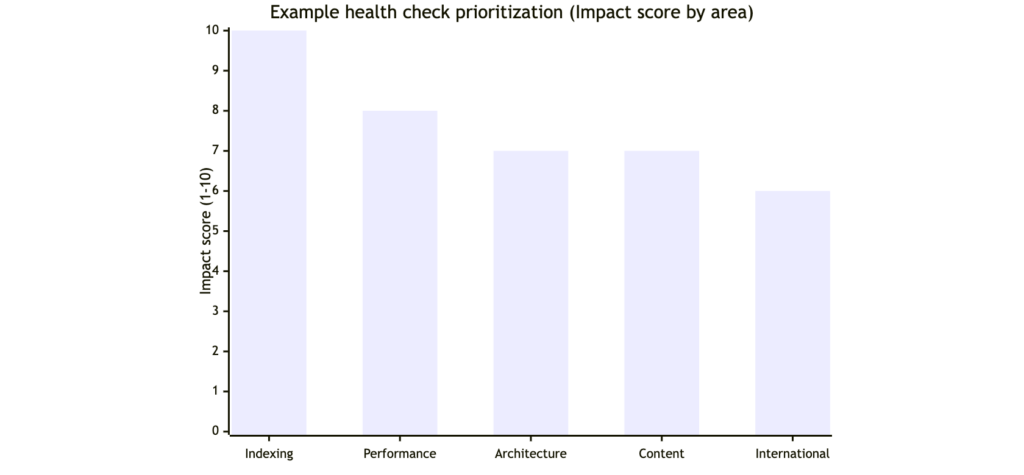
A: Here is a simple impact-first matrix you can reuse:
| Issue type | Why it matters | Quick signal to look for | Priority when... |
|---|---|---|---|
| Indexing and canonicals | Pages cannot rank if the wrong URL is indexed | Non-indexed important pages, canonical to irrelevant URL | Money pages are missing from results |
| robots.txt and sitemaps | Guides crawlers to the right URLs | Blocked sections, sitemap contains non-canonical URLs | Large sites or multi-region setups |
| Core Web Vitals | Affects UX and can reduce conversions | Slow LCP, poor INP on mobile templates | Lead forms and landing pages feel slow |
| JavaScript rendering | Content may not be fully understood or indexed | Main content loads late or only after interaction | React/Vue SPA templates drive revenue |
| Schema markup | Improves understanding and eligibility for rich results | Missing Organization, Product, Article schema | Your SERP presentation is weak |
How do you evaluate site architecture, content health, and conversions together?
Q: Why does architecture matter if our content is good?
A: Because internal link equity and semantic structure determine which pages search engines discover, trust, and rank. Even strong pages underperform when they are buried deep, orphaned, or competing with near-duplicate pages.
Q: How do you diagnose content quality without guesswork?
A: Evaluate content against search intent and real buyer questions, not just keywords. In practice, a health check should flag:
- Thin pages that do not fully satisfy the query.
- Cannibalization: multiple pages targeting the same intent.
- Missing topic coverage in high-value clusters (especially for exporters and B2B).
- Weak trust signals: unclear authorship, shallow claims, lack of specificity.
Q: How does conversion fit into "site health"?
A: A healthy SEO funnel turns relevant queries into clear next steps. During diagnosis, look for intent mismatches like:
- Informational traffic landing on pages with no logical CTA.
- Service pages ranking for research intent (high bounce, low leads).
- International visitors routed to the wrong region or language, hurting trust and conversion.

What do you get from SeekLab.io's free SEO diagnosis, and how do you prepare?
Q: What does SeekLab.io focus on during a free SEO health check?
A: SeekLab.io is built around comprehensive diagnosis plus clear guidance. The free check is designed to surface high-impact issues across technical, content, and business outcomes, including:
- Full-site crawling and structured analysis (focused on what impacts growth)
- Core Web Vitals and page performance diagnostics
- Indexing, crawling, rendering, and JavaScript compatibility checks
- Internal link equity and semantic structure review
- Schema data compliance and enhancement opportunities
- sitemap.xml and robots.txt validation
- Website tech stack analysis
- International architecture signals (hreflang and regional structure) when relevant
- A clear prioritization list: what to fix now vs. what can wait
SeekLab.io operates with teams and legal entities in Singapore and Shanghai, plus a BD team in Dubai, supporting global execution across APAC, the US, and Europe.
Q: What is not included in a free check?
A: It is not a months-long, template-by-template implementation backlog. The goal is to help you make the right strategic decisions first, then decide whether you need deeper work.
Q: How can you prepare to get the most accurate site health result?
A: When you request the free report, include:
- Your domain and top target markets
- Your primary conversion goal (leads, RFQs, signups, ecommerce)
- The top 3 to 5 pages that matter most (money pages)
- Any known issues (migration, redesign, indexing drops)
- If you can, read-only access or exports from Search Console and analytics
To get your free audit report, contact us and leave your website domain, target markets, and goal. You will receive a prioritized SEO diagnosis focused on measurable growth, not busywork.