Technical SEO Roadmap for Early-Stage Growth
Expert reviewed

Why technical SEO is the fastest way to de-risk early-stage growth
Early-stage teams rarely fail at SEO because they "did not publish enough." They fail because search engines cannot reliably crawl, render, and index the pages that actually drive leads: product, pricing, use-case, and contact pages.
In startup SEO, this happens more often because:
- Resources are tight: dev time is shared with core product.
- Positioning changes: navigation, URLs, and landing pages get rebuilt.
- Modern stacks are fragile: JavaScript-heavy frameworks can hide critical content from crawlers.
- The margin of error is small: one robots.txt mistake can silently block months of content work.
Google is explicit that pages must be crawlable and indexable before they can rank (see Google's overview of crawling and indexing). And once pages are reachable, page experience and speed still matter for usability and rankings (see Core Web Vitals on web.dev and Google's page experience documentation).
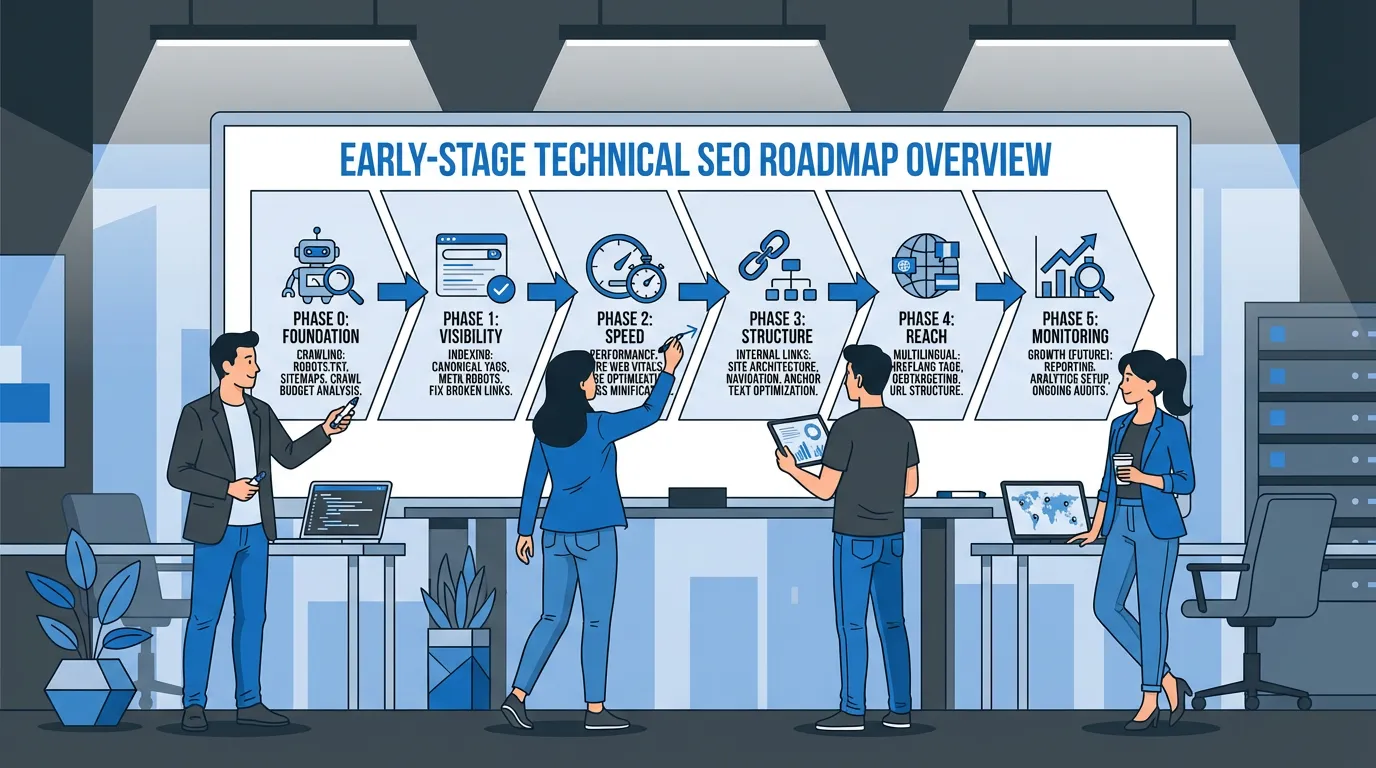
Phase 0: make the strategic decisions before you touch code or content
A practical SEO roadmap starts with decisions, not tasks. Your goal is to prevent two expensive mistakes: fixing the wrong things and creating content for the wrong market.
What to decide in week 1 (the non-negotiables)
- Conversions that matter
- Demo requests, RFQs, contact forms, inbound inquiries.
- Define what "qualified" means (so you do not optimize for empty traffic).
- Markets and languages
- If you sell globally, pick the first 1 to 2 regions to win (commonly APAC, the US, and Europe).
- Decide whether you will localize product pages first or educational content first.
- Page types that must become visible
- Money pages: product/service, pricing, use cases, industries.
- Trust pages: case studies, about, certifications.
- Support pages: docs, FAQs (only if they map to search intent and sales).
- Constraints
- Monthly dev capacity, CMS limitations, and release cadence.
- The tech stack reality (SSR vs SPA, headless CMS, subfolders vs subdomains).
SeekLab.io's approach fits here: we do not try to fix everything. We identify what truly impacts growth, what can wait, and what would send you in the wrong direction.
Phase 1: technical baseline (crawlability, indexing, performance, rendering)
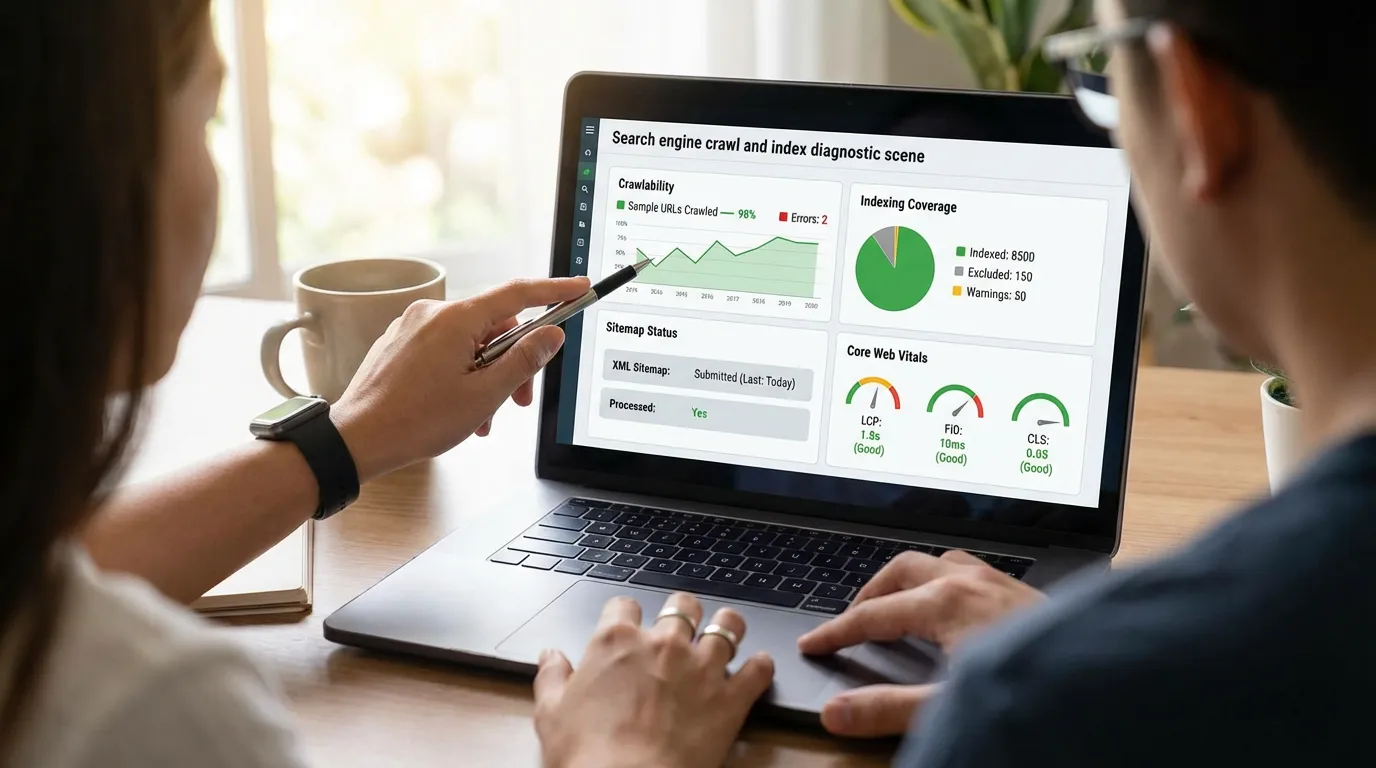
This phase answers one question: "Can Google reliably discover, render, and index our priority pages?"
Below is a focused checklist designed for early-stage SEO, where speed of execution matters more than perfection.
The baseline checklist (what to verify first)
- robots.txt and XML sitemaps
- Do not block important pages or critical assets (JS/CSS).
- Keep sitemaps clean, current, and submitted in Search Console.
- Indexing diagnostics
- Investigate "Crawled - currently not indexed" and "Discovered - currently not indexed."
- Validate priority pages with live URL inspection.
- Canonical and duplicate control
- Ensure canonicals match your intended URLs.
- Avoid conflicts between canonicals and sitemap entries.
- Core Web Vitals and mobile usability
- Prioritize fixes on your top landing page templates.
- Use Core Web Vitals definitions to align teams on LCP, INP, and CLS.
- JavaScript rendering risks
- Confirm that critical content and internal links appear in rendered HTML.
- Use Google's JavaScript SEO guidance to avoid common pitfalls.
Must-fix-now vs can-wait (a startup-friendly prioritization table)
| Area | Must fix now (blocks growth) | Can usually defer (optimize later) |
|---|---|---|
| Crawl access | robots.txt blocks key sections, sitemap missing core pages | minor crawl warnings on low-value pages |
| Indexing | priority pages excluded, wrong canonical signals, soft 404 on key landing pages | slow indexation of non-priority content |
| Rendering | JS prevents Google from seeing main content/links | minor layout differences after render |
| Performance | severe CWV failures on top templates (homepage, product, lead-gen pages) | chasing perfect scores on every template |
| Architecture | orphaned money pages, important pages buried | micro-optimizing navigation labels |
If you want one external benchmark to motivate the team, SE Ranking highlights how often large images and missing alt text show up across sites (see their SEO statistics). The point is not "fix everything." It is "remove the biggest friction first."
Where SeekLab.io helps most in Phase 1
SeekLab.io runs a structured audit that combines full-site crawling, indexing and rendering checks, Core Web Vitals diagnostics, internal link equity review, schema validation, and tech stack analysis. The output should be a prioritized list labeled like:
- Must fix now
- Fix next
- Nice to have
That format protects your engineering budget and reduces stakeholder anxiety about overpromising.
Phase 2 to 4: build an architecture that scales, then publish content that converts (and localize only when stable)
Once the technical foundation is stable, you can scale without accidentally creating thousands of low-value URLs or orphan pages that never rank.
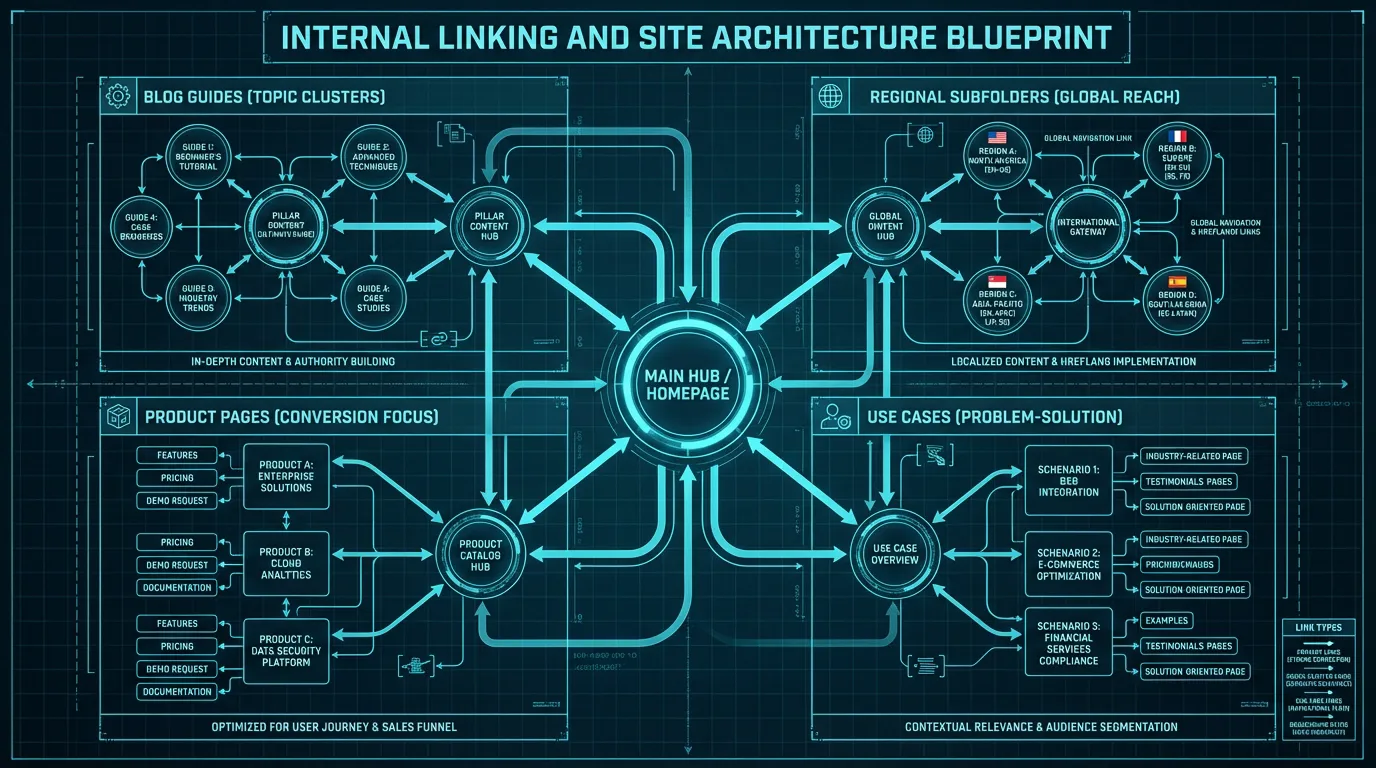
Phase 2: architecture and internal linking (how to stay flexible without getting messy)
For early-stage SEO, the best architecture is not the most complex one. It is the one that makes your priorities obvious to users and crawlers.
Practical rules:
- Keep key pages within 3 clicks from the homepage.
- Use topic clusters: one hub page plus supporting articles that interlink.
- Link contextually in-body, not only in nav or footers.
- Avoid orphan pages and vague anchors (see Moz's internal linking guidance).
Phase 3: content and on-page execution (quality beats volume in early-stage SEO)
Publishing volume without strategy often creates three problems: weak indexing, weak rankings, and weak leads.
Instead, build content around real business scenarios:
- Questions your sales and support teams hear repeatedly
- Use cases that match your ICP
- Competitor gaps where SERPs are generic
Then apply on-page basics consistently:
- Clear titles and headings that match intent
- Scannable structure (bullets, tables, diagrams)
- Intent-aligned CTAs (learn, compare, contact)
- Schema where appropriate (see Google's structured data guide)
Phase 4: multilingual and exporter-ready SEO (only after the structure stops changing weekly)
If you operate across APAC, the US, and Europe, multilingual execution is a growth lever, but only if the underlying architecture is stable.
Key decisions:
- Prefer subfolders for many teams (simpler consolidation and governance).
- Implement hreflang carefully and consistently.
- Localize more than words: examples, compliance references, and conversion paths.
This is also where SeekLab.io's global operating experience matters in practice: teams and legal entities in Singapore and Shanghai, plus a BD team in Dubai, help ensure the roadmap matches cross-border realities, not just generic advice.
Phase 5: measurement and iteration (keep reporting light, tied to leads)
Most early-stage teams track too much and learn too little. A better approach is a small dashboard that answers:
- Are priority pages indexed and healthy?
- Are we gaining visibility where we can actually convert?
- Are we generating qualified inquiries?
TapClicks recommends keeping SEO reporting focused rather than vanity-heavy (see SEO reporting best practices).
A simple KPI set that executives and operators both trust
| KPI group | Metric | Why it matters for early-stage teams |
|---|---|---|
| Technical | Indexed vs submitted pages | Verifies your roadmap is not blocked by indexing issues |
| Technical | Core Web Vitals status on key templates | Protects conversion rate and mobile experience |
| Visibility | Impressions and clicks for priority pages | Shows demand capture without overfocusing on rankings |
| Business | Organic conversions (forms, demo, RFQ) | Connects SEO to revenue outcomes |
| Business | Lead quality feedback loop | Prevents "traffic that does not convert" |
Timeline expectations (so you do not quit too early)
Multiple industry sources suggest meaningful SEO results often take 6 to 12 months, with earlier traction possible if foundations are solid (see Shopify's SEO timeline and Squarespace's overview).
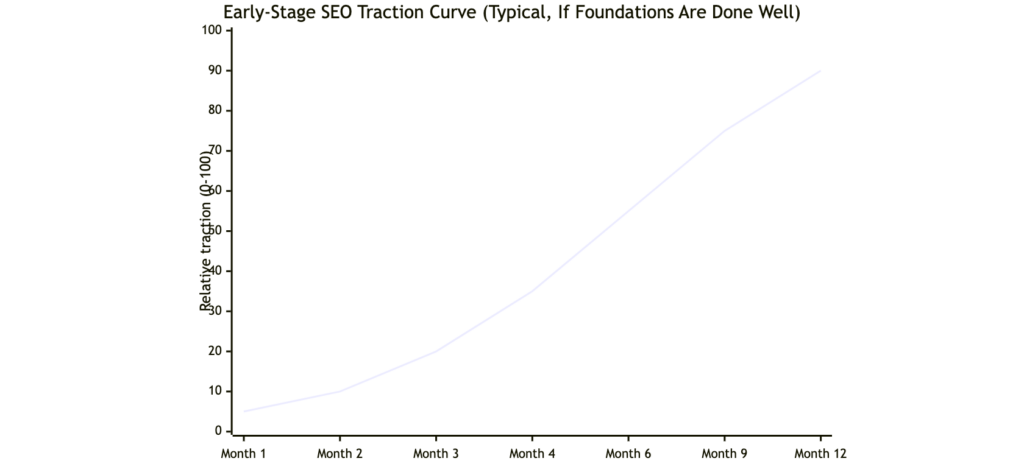
Use this as expectation management: early months are about removing blockers and creating compounding assets, not instant wins.
Where SeekLab.io fits in ongoing iteration
SeekLab.io supports monthly reviews that translate data into prioritized actions, not noise:
- What changed (indexing, CWV, visibility)
- Why it likely changed (releases, templates, internal linking, content)
- What to do next (must-fix vs can-wait)
Next step: get a free audit report (and stop guessing)
If you are building SEO with limited time and a fast-changing site, the highest ROI move is to confirm you are not blocked by crawlability, indexing, rendering, or performance issues.
- Get a free audit report from SeekLab.io.
- Contact us and leave your website domain so we can map your priority pages, identify the real technical blockers, and propose a focused roadmap aligned with leads, not vanity metrics.