Top AI SEO Agents: Keytomic vs Synscribe
Expert reviewed

Why AI SEO Tools and Automation Matter More in 2026
March 2026 marked a noticeable shift in how marketers approach AI SEO Tools and Automation. Instead of relying only on one-off prompts, teams are increasingly evaluating agentic systems that can audit websites, organize keyword research, generate briefs, and monitor GEO opportunities in a more continuous way.
That shift is why the comparison between Keytomic and Synscribe matters. Both are positioned as part of a new generation of AI agents for SEO and GEO workflows, but they appear to solve different problems. At the same time, open-source options such as geo-seo-claude show that not every advanced workflow has to come from a commercial platform.
For independent websites, exporter brands, and multilingual company sites, the bigger question is not just which tool looks more advanced. It is which form of AI SEO Tools and Automation actually improves search visibility, AI discoverability, and lead generation without sending the business in the wrong direction.
Keytomic vs Synscribe in AI SEO Tools and Automation
At a high level, Keytomic looks more content-workflow oriented, while Synscribe appears more GEO-first and autonomy-driven.
| Category | Keytomic | Synscribe |
|---|---|---|
| Primary positioning | Keyword research and content workflow support | Autonomous GEO agent for ongoing organic growth |
| Best-fit use case | Lean teams that need topic discovery and briefs | Brands needing continuous GEO and international visibility monitoring |
| Likely autonomy level | Semi-agentic | More agentic or scheduled monitoring |
| GEO emphasis | Secondary or moderate | Core differentiator |
| Technical SEO depth | Limited | Moderate, but still not a full technical SEO audit |
| Best for | Startups, content teams, smaller sites | Exporters, multilingual brands, complex international sites |
The practical difference is simple:
- If your main bottleneck is keyword research, topic clustering, and content planning, Keytomic is likely the more natural fit.
- If your main bottleneck is GEO visibility, AI answer presence, and ongoing prioritization across markets, Synscribe looks more aligned.
Neither should be treated as a full replacement for human-led strategy, especially if your site depends on qualified inquiries instead of traffic alone.
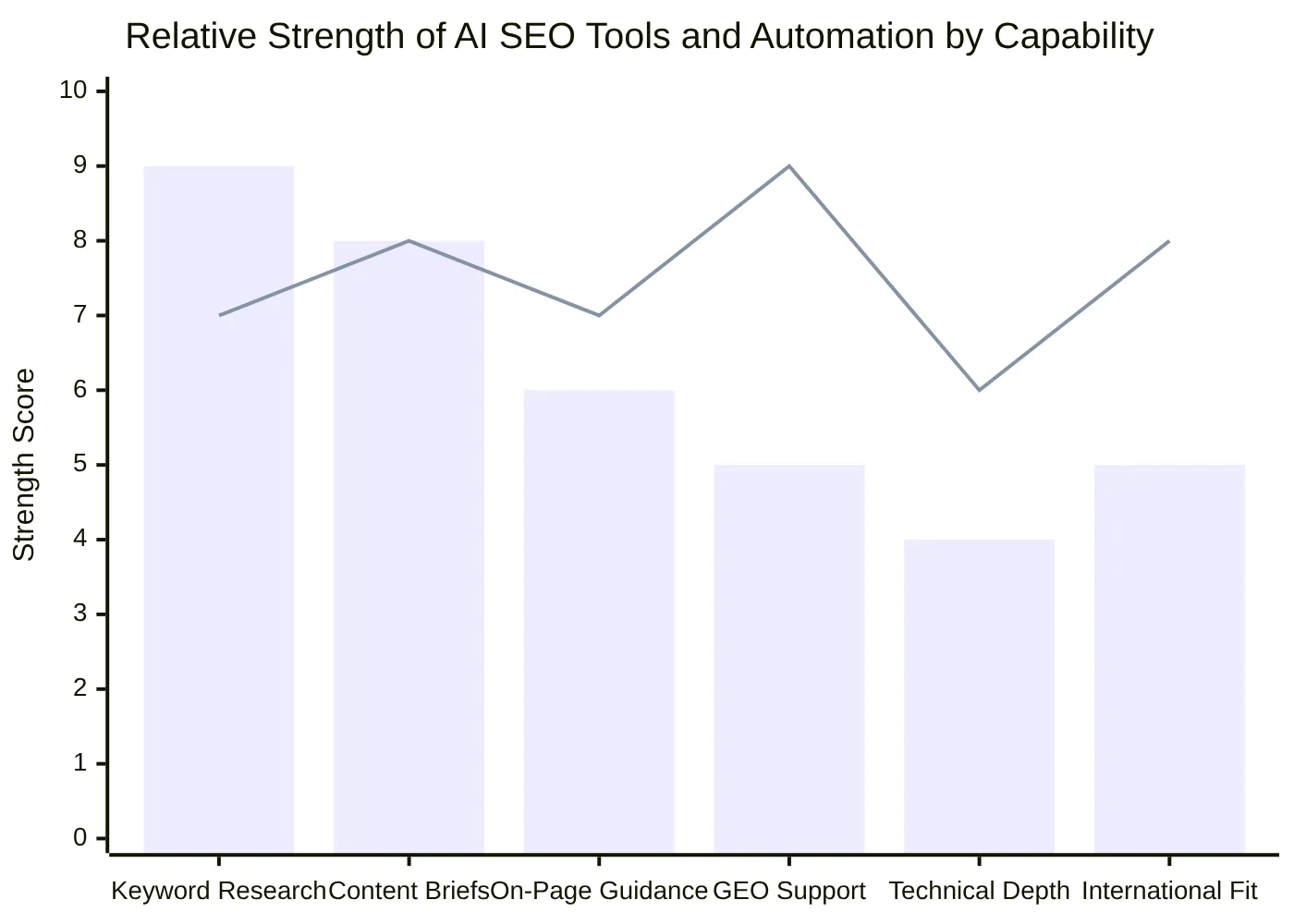
In the chart above, the bar series represents Keytomic and the line represents Synscribe, based on the research report's directional comparison.
How geo-seo-claude Changes AI SEO Tools and Automation
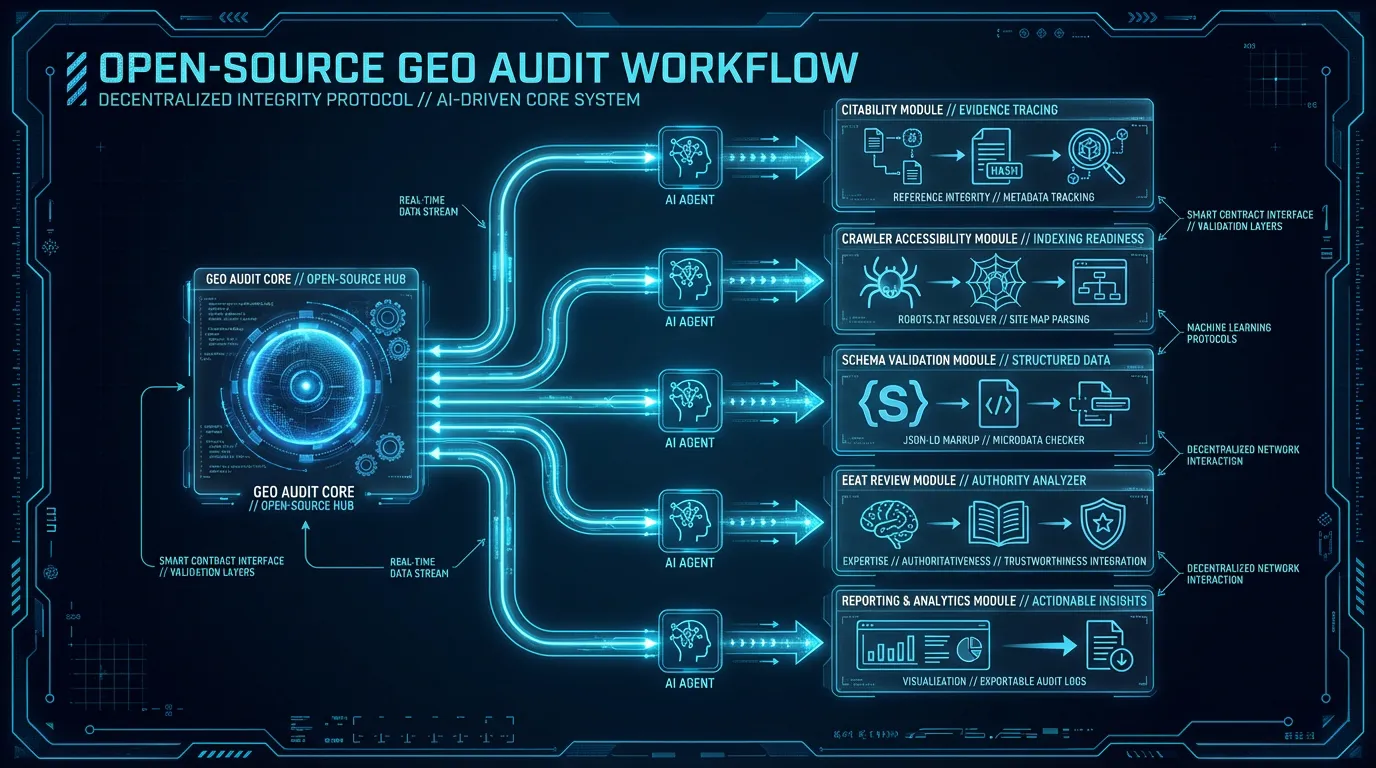
One of the most interesting developments in AI SEO Tools and Automation is geo-seo-claude, an open-source GEO audit workflow built for Claude Code. According to the research report, it uses parallel AI agents or skill-based workflows to assess:
- Citability
- AI crawler accessibility
- Schema quality
- Brand mentions and authority signals
- Content structure and EEAT-style gaps
- Platform-specific GEO readiness
You can review the project on geo-seo-claude on GitHub.
This matters because it expands what marketers now expect from an SEO audit. Traditional technical checks still matter, but GEO audits increasingly add another layer: can AI systems understand, access, and cite your content?
That does not mean open-source GEO audit tools replace strategic SEO work. They are better viewed as diagnostic accelerators. They can surface patterns quickly, but they do not inherently understand margin, market priorities, product availability, lead quality, or regional business constraints.
For companies that already know they need a stronger audit foundation, SeekLab.io's guide to The Complete SEO Audit Checklist For 2026 is a useful reference point for turning issue lists into business-focused actions.
Where AI SEO Tools and Automation Help Most, and Where They Fall Short
The strongest case for AI SEO Tools and Automation is speed and coverage. These systems can help teams do more of the following:
- Scan large websites for recurring issues
- Generate content maps and keyword clusters faster
- Identify missing topical coverage
- Suggest internal linking opportunities
- Flag GEO readiness gaps
- Organize repeatable reporting
For an independent website or B2B exporter, that is valuable. Smaller teams often do not have the time to run full manual reviews every month.
But these tools also have consistent limitations.
Where they help
- Faster keyword research
- Better content workflow consistency
- Ongoing GEO monitoring
- Early detection of structural SEO patterns
- More efficient SEO reporting
Where they fall short
- Business-priority judgment
- Complex technical SEO debugging
- Multilingual architecture decisions
- Conversion path analysis
- Market nuance and buyer intent validation
This is especially important for multilingual or cross-border websites. A tool may spot that a page should exist for a region, but it cannot reliably decide whether that page supports the right commercial objective, whether the market is worth prioritizing, or whether the messaging matches local expectations.
That is why many teams still need a human layer between diagnosis and execution. SeekLab.io's approach is not just to find issues, but to identify what truly impacts growth and what can be deprioritized. That matters when teams are trying to avoid wasting months on low-impact fixes or content that will never convert.
If your challenge is more technical than topical, this article on technical SEO audit adds context on why crawling, rendering, performance, and site structure still shape outcomes before any automation workflow does.
Best AI SEO Tools and Automation Use Cases by Site Type
Not every site needs the same setup. The best use of AI SEO Tools and Automation depends on business model, market complexity, and internal capabilities.
| Site type | Best-fit tool direction | Why |
|---|---|---|
| Startup content site | Keytomic-style workflow | Fast keyword research and scalable content planning |
| Exporter website | Synscribe plus GEO audit support | Better for cross-market discoverability and AI answer monitoring |
| Multilingual brand site | Synscribe with human review | Stronger fit for GEO and regional visibility, but needs architecture oversight |
| Dev-led SEO team | geo-seo-claude | Flexible open-source workflow for diagnostics |
| Lead-driven B2B site | Hybrid model | Tools for speed, experts for prioritization and conversion alignment |
For many brands, the best answer is not Keytomic or Synscribe in isolation. It is a layered approach:
- Use open-source or commercial tools to collect signals quickly.
- Validate those signals against technical SEO realities.
- Build content and architecture around revenue goals, not vanity metrics.
- Review results monthly and adjust priorities.
This is also where SEO content strategy and technical diagnostics need to work together. Content momentum without crawlability, internal linking, or schema clarity often leads to disappointing outcomes.
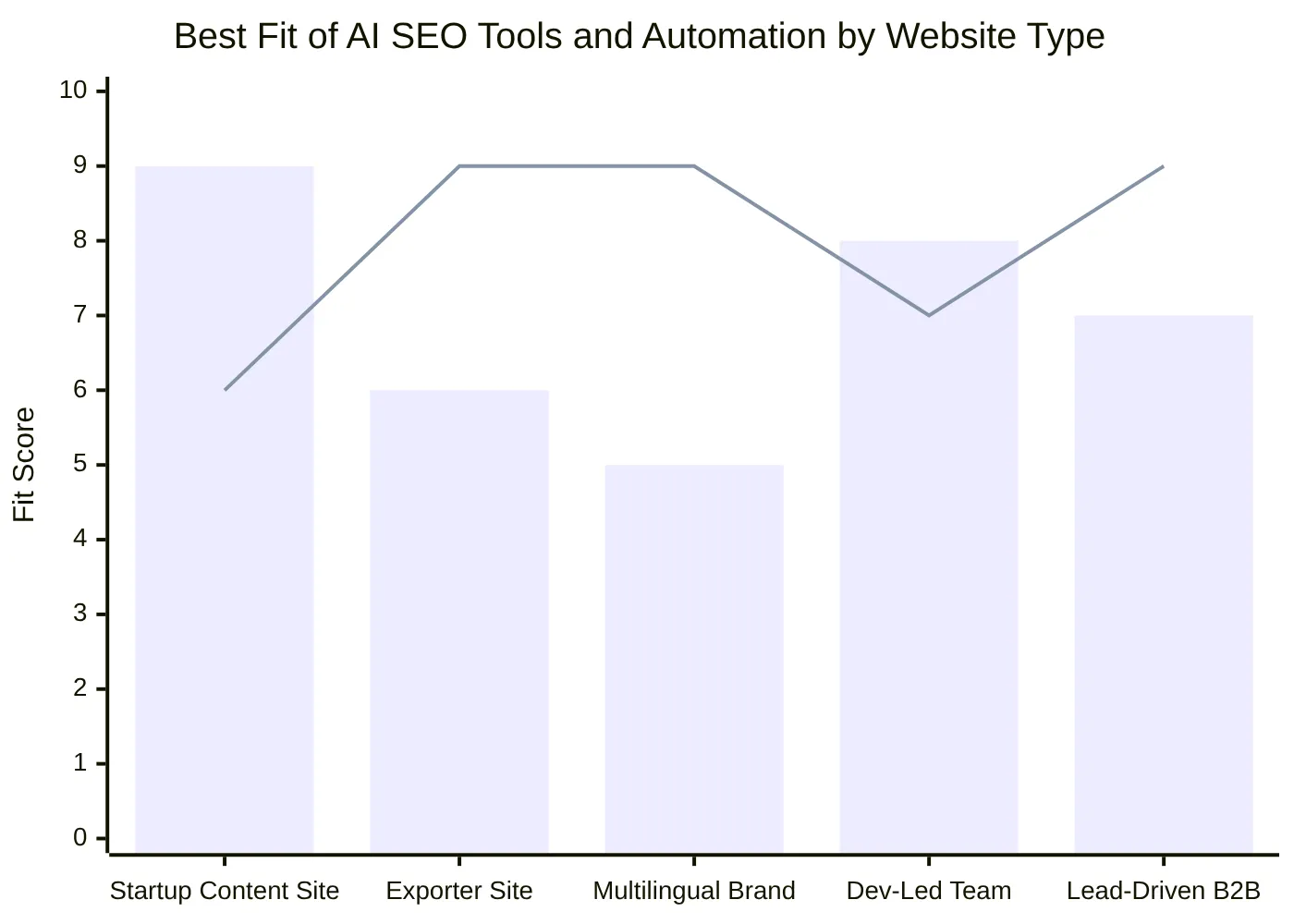
In this chart, the bar series represents Keytomic-style fit, while the line represents Synscribe-style fit.
How SeekLab.io Fits Into AI SEO Tools and Automation
AI SEO Tools and Automation can accelerate research and diagnostics, but they do not remove the need for structured judgment. For brands that care about inquiries, credibility, and long-term search visibility, the missing piece is often not another dashboard. It is the ability to decide what actually deserves action.
SeekLab.io helps bridge that gap by combining technical diagnosis with high-quality content planning and execution. That includes:
- Full-site crawling and structured analysis
- Core Web Vitals and rendering diagnostics
- Schema and internal linking recommendations
- SEO content topic selection based on real search intent
- AI search friendliness and citation readiness evaluation
- Guidance for multilingual and international website structure
- Content creation built for both rankings and conversions
This is particularly useful when teams are experimenting with AI agents, open-source GEO audit tools, or prompt-based content checks, but still need a clear roadmap. Before writing at scale or fixing every visible issue, the smarter move is often to decide what supports growth and what can wait.
For readers exploring broader SEO automation and site-health decisions, these resources from SeekLab.io are relevant:
Final Verdict on AI SEO Tools and Automation: Keytomic vs Synscribe
If you want a simple conclusion, it is this:
- Choose Keytomic if your main priority is content planning, keyword research, and faster execution for a lean team.
- Choose Synscribe if your main priority is continuous GEO guidance, international discoverability, and a more agentic workflow.
- Use geo-seo-claude if you want an open-source GEO audit layer and have the technical confidence to work inside that environment.
The bigger opportunity is not just picking one platform. It is building a decision-making process around AI SEO Tools and Automation that keeps your team focused on visibility, credibility, and conversion potential.
That is where expert support still matters. SeekLab.io helps brands build search visibility and AI-era discoverability through high-quality content production and technical optimization. The goal is not to fix everything. It is to identify what truly impacts growth, avoid heading in the wrong direction, and turn SEO and GEO work into measurable business outcomes.
If you want a clearer picture of what is limiting your website today, you can contact SeekLab.io or get a free audit report to identify the next steps that actually matter.