SEO Automation: Boost Efficiency in 2026
Expert reviewed

What SEO Automation Actually Means in 2026
SEO automation is no longer just about saving time on repetitive tasks. In 2026, it is about building a system that can surface issues faster, support better decisions, and help lean teams scale across more pages, more markets, and more content formats without losing control.
At its core, SEO automation uses software, AI, and rule-based processes to handle recurring work such as crawling, reporting, keyword clustering, content briefs, and anomaly monitoring. An automated audit can flag indexing issues, broken internal links, Core Web Vitals regressions, or schema errors across thousands of URLs far faster than a manual review. Workflow automation can connect your data sources so rankings, site health signals, and content performance roll into one consistent process.
But there is an important catch: automation identifies symptoms, not priorities.
That distinction matters because many marketing and operations teams do not struggle with a lack of tools. They struggle with knowing what to fix first, what can wait, and what is not worth spending developer time on. That is where SeekLab.io's model stands out. It combines structured diagnostics with expert judgment, so you are not just collecting issues; you are making better strategic decisions before investing in fixes or content.

Why this matters now
Several trends make SEO automation more relevant than ever:
- Search environments are more volatile.
- AI-generated answers are changing how content gets discovered and cited.
- Multilingual and international websites are harder to manage manually.
- Small teams are expected to deliver both traffic growth and qualified leads.
According to AllOutSEO's AI SEO statistics roundup, 86.07% of SEO professionals use AI-powered tools for tasks like keyword research and site audits, while 67% use them to automate repetitive work.
That means the question is no longer whether teams should automate. The real question is how to automate without creating shallow content, noisy reporting, or the classic "traffic but no leads" problem.
Why Most Automated Audits Are Useful but Incomplete
An automated audit is one of the best starting points in modern SEO. It can consistently check crawlability, indexation, site performance, rendering issues, and on-page signals at scale. For large sites, especially those operating across the US, Europe, and Asia-Pacific, that consistency is a major advantage.
Still, many automated audits disappoint because they produce long lists without real business context.
A tool may report:
- 2,000 pages missing canonicals.
- Hundreds of title length warnings.
- Multiple schema inconsistencies.
- Template-level performance drops.
All of that may be technically correct. But the business value is not equal.
If the affected pages are low-priority archives, the issue may be safely deprioritized. If the problem hits core service pages, money pages, or localized landing pages in strategic markets, it becomes urgent. That is why SeekLab.io does not aim to fix everything. The goal is to identify what truly impacts growth, what can be scheduled later, and what should not consume time at all.
You can see this same business-first thinking in SeekLab.io's guide to a technical SEO audit checklist, where the audit is positioned as a decision tool rather than a random to-do list.
Common gaps in automated-only SEO
| Area | What automation does well | Where human review is still required |
|---|---|---|
| Site crawling | Finds broken links, redirect chains, orphan pages, duplicate tags | Determines which issues affect leads, revenue, and key page types |
| Performance monitoring | Tracks LCP, INP, CLS, and template regressions | Prioritizes fixes by traffic, conversion value, and development effort |
| Indexing checks | Flags blocked, noindex, or non-canonical URLs | Interprets whether the issue is systemic or low impact |
| Content support | Clusters keywords and drafts briefs | Adds industry expertise, brand nuance, and conversion logic |
| Reporting | Builds dashboards and alerts | Explains why performance changed and what to do next |
This is also why purely tool-focused articles miss the bigger point. They tell readers what can be automated, but not how to decide what actually matters.
7 Practical Ways SEO Automation Boosts Efficiency
1. Run recurring site health checks instead of one-off reviews
The biggest efficiency gain often comes from consistency. Rather than waiting for rankings to drop, teams can schedule automated audit cycles that continuously check for:
- Crawl errors and broken links
- Redirect chains and orphan pages
- Duplicate titles and missing metadata
- Sitemap.xml and robots.txt issues
- Indexing anomalies
- Invalid or missing schema
This is especially useful for fast-changing websites, ecommerce catalogs, and multilingual sites where small template issues can spread widely. SeekLab.io's approach to technical SEO audit services aligns with this model by pairing recurring diagnostics with clear next-step guidance.
2. Catch technical SEO patterns faster across large sites
Manual review might spot one broken page. Automation spots a broken template.
That difference is crucial for issues like:
- canonical conflicts across product or service templates
- hreflang mismatches between regional versions
- JavaScript-rendered content that search engines struggle to see
- internal linking gaps that weaken topical clusters
- Core Web Vitals regressions across devices or countries
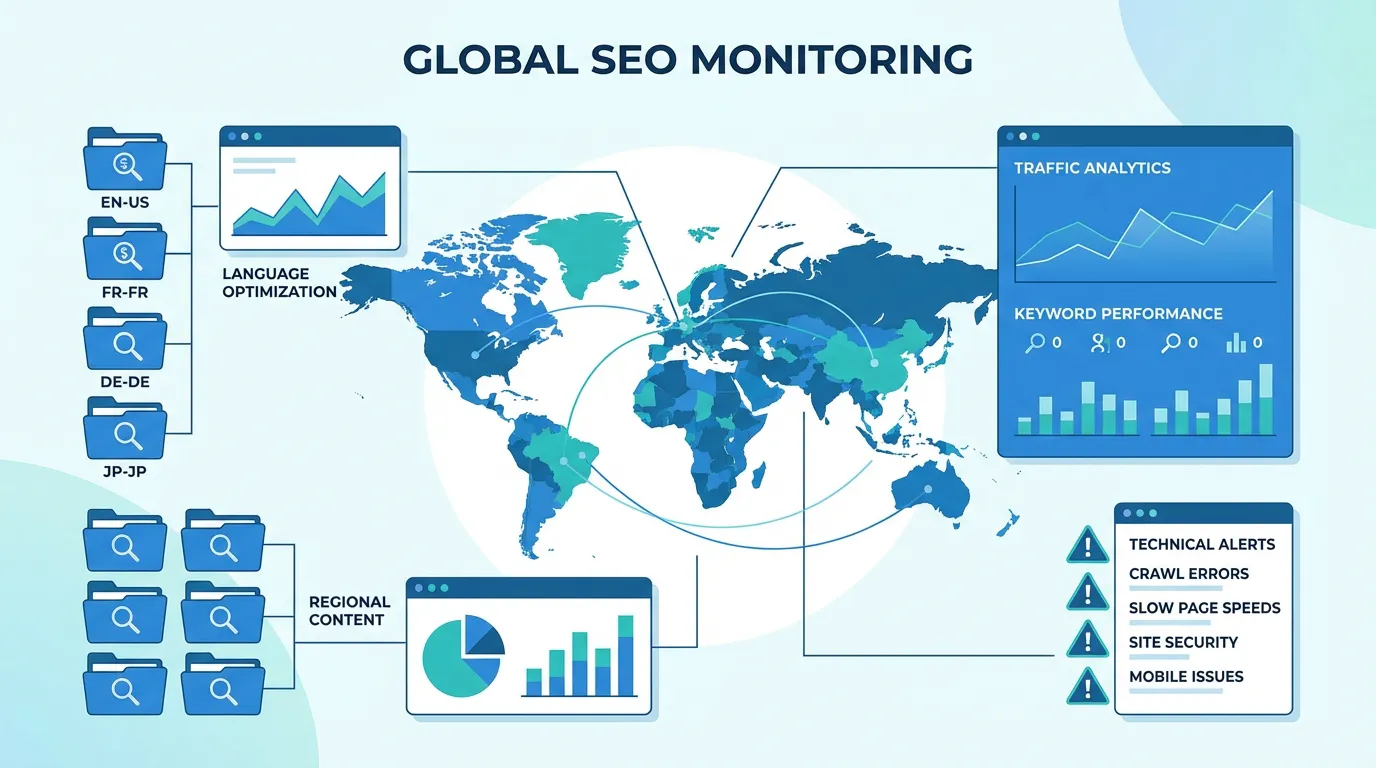
For global sites, technical patterns rarely stay isolated. A single template bug can affect thousands of URLs. Automation helps detect those patterns early, but human analysis is still needed to connect them to architecture decisions, content priorities, and implementation roadmaps.
If your site operates across multiple languages or markets, SeekLab.io's multilingual SEO strategy guide is a useful companion resource because it shows how architecture, hreflang, performance, and localization fit together.
3. Improve keyword research and topic selection at scale
Keyword research is one of the best candidates for workflow automation because it involves repetitive data gathering, clustering, and comparison. Automated workflows can help teams:
- group search queries by intent
- identify topic clusters faster
- map keywords to funnel stages
- track emerging themes before they peak
- compare SERP shifts over time
That said, the output is only as strong as the strategy behind it. For example, a cluster may show high volume, but if it does not match your buyer journey or commercial reality, it can still be the wrong topic.
SeekLab.io uses data-backed topic selection to help clients avoid heading in the wrong direction before content production starts. That same thinking is reflected in its article on planning an SEO content strategy and content calendar, where diagnostics, topic clusters, and business goals are tied together from the start.
4. Make content production more structured without making it generic
Automation can accelerate parts of content operations, including:
- outline creation
- keyword clustering
- on-page gap checks
- internal link suggestions
- FAQ and metadata drafting
- content quality reviews against a checklist
Used well, this speeds up production and improves consistency. Used poorly, it creates repetitive copy that feels disconnected from real buyer concerns.
This is a major pain point for many businesses. They do not just want more content. They want content that sounds credible, fits their industry, and supports conversion, not just impressions. SeekLab.io addresses that by combining automation-backed research with brand and industry knowledge, visual assets, structured layouts, and expert-level writing standards.
5. Automate SEO reporting so teams can spend more time deciding
Reporting is often one of the most repetitive parts of SEO work. Workflow automation can collect data from rankings, traffic, conversions, and technical monitoring into scheduled dashboards and monthly summaries. That gives teams faster visibility into:
- keyword movement
- landing page performance
- country and language trends
- link growth or loss
- technical regressions
- sudden traffic anomalies
The time savings here are real. According to AllOutSEO's compiled statistics, 75% of businesses use AI to reduce manual work in areas like metadata optimization and competitor analysis.
A simple way to visualize the operational difference is below:
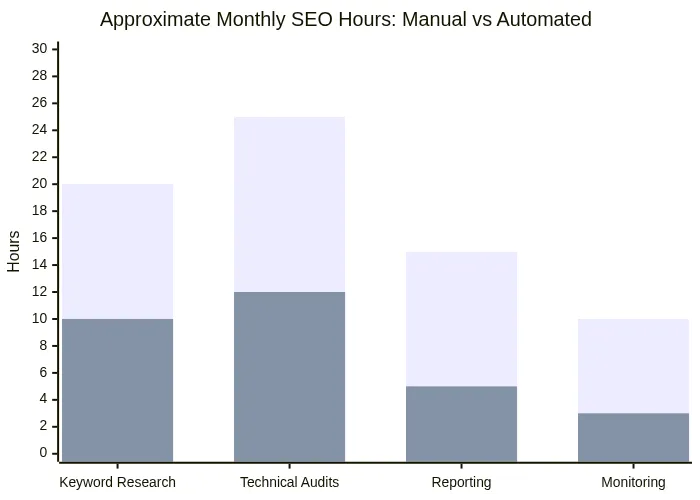
Automation collects the data. Experts still need to interpret it, connect it to pipeline outcomes, and recommend what to do next.
6. Build a repeatable workflow automation system
Workflow automation becomes powerful when it connects the entire SEO lifecycle rather than just isolated tasks. A practical structure looks like this:

This kind of workflow helps teams avoid common breakdowns, such as:
- collecting data without acting on it
- publishing content without technical readiness
- fixing low-value issues while high-value pages remain weak
- reporting on rankings without looking at inquiries or qualified leads
For independent site owners and marketing managers, this structure is often more valuable than buying yet another platform. The process matters as much as the software.
7. Scale international SEO without losing control
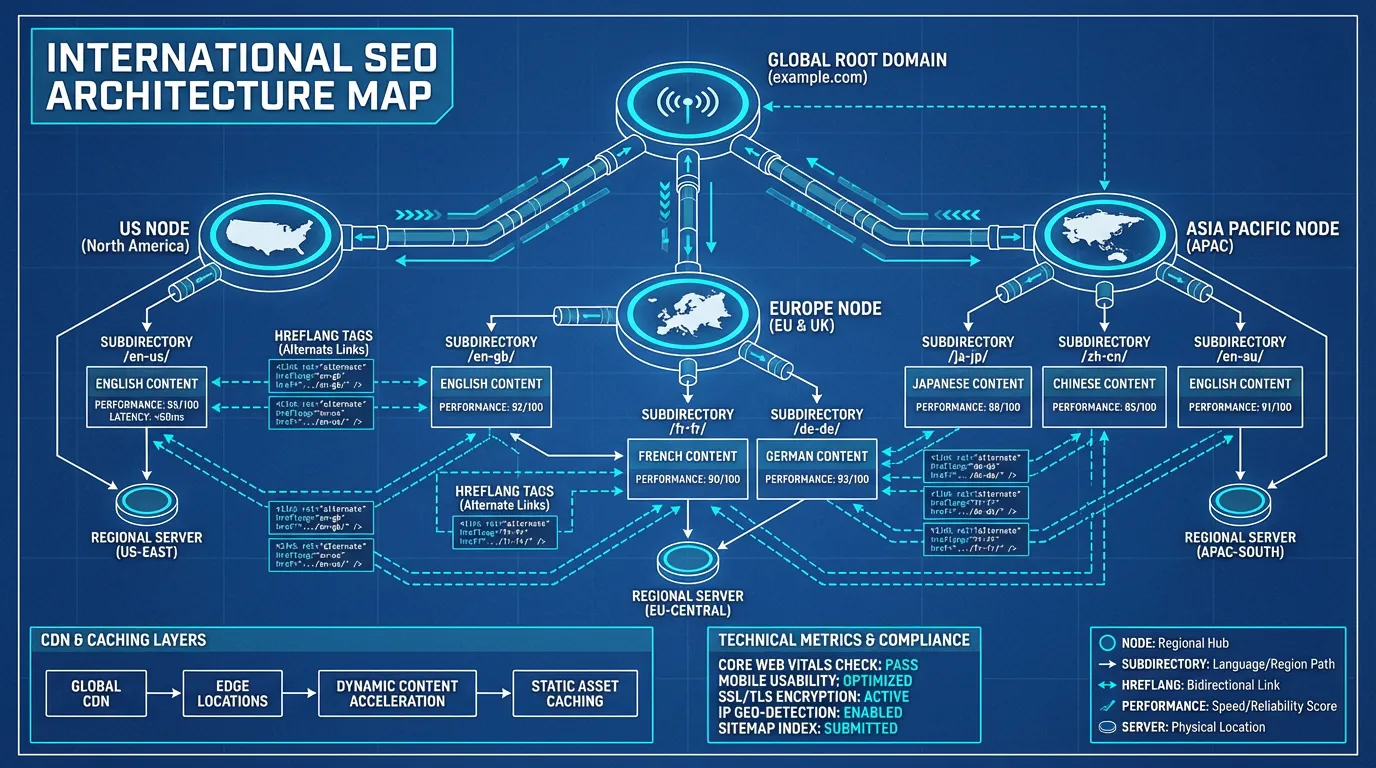
Automation becomes even more valuable on multilingual websites, where technical and content complexity multiplies quickly. Automated checks can help monitor:
- hreflang coverage and errors
- canonical alignment across language versions
- region-specific Core Web Vitals
- localized schema consistency
- indexation by country or directory
- internal link patterns between regional sections
But automation alone does not solve market nuance. Search intent differs between the US, Singapore, Germany, and other regions. So do content expectations, terminology, and conversion behavior. That is where expert oversight remains essential.
SeekLab.io is especially well positioned here because its work spans Asia-Pacific, the US, and Europe, with teams in Singapore and Shanghai and business development support in Dubai. That regional perspective matters when you are deciding not just what can be automated, but how to localize what should be prioritized.
Best Practices for Using SEO Automation Without Losing Quality
The most effective SEO teams treat automation as a force multiplier, not a substitute for judgment. A few best practices stand out.
Focus on impact, not issue count
A report with 300 warnings is not automatically more valuable than one with 10 high-priority actions. The goal is not to reduce every error to zero. It is to improve visibility, traffic quality, and conversion outcomes.
Use automation for collection, not for blind decision-making
Let systems gather data, flag changes, and surface patterns. Then apply human review to decide what deserves action. This is especially important for technical trade-offs, multilingual site architecture, and content planning.
Add quality controls to AI-assisted content operations
If you automate outlines or drafts, include review checkpoints for:
- factual accuracy
- brand voice
- industry specificity
- search intent fit
- conversion logic
- visual quality
Measure leads, not just rankings
Traffic growth matters, but it is incomplete on its own. If SEO automation improves rankings but does not improve inquiries, the workflow still needs work.
Reassess your automation stack regularly
Sites change. Templates change. Business priorities change. Rules that were useful six months ago may now be noisy or irrelevant.
What SeekLab.io Does Differently
Many SEO automation articles stop at tool categories. SeekLab.io takes a different position: automation is necessary, but insufficient.
Its value comes from combining automation outputs with:
- full-site crawling and structured analysis
- in-depth Core Web Vitals and performance diagnostics
- indexing, rendering, and JavaScript checks
- internal link equity and semantic structure analysis
- schema validation and enhancement guidance
- AI search friendliness and citation readiness evaluation
- multilingual architecture support
- trend-based topic selection
- in-depth blog creation with images, tables, and internal links
- monthly review and performance reporting
Just as important, SeekLab.io does not promise to fix everything. It focuses on what truly affects growth, provides actionable technical guidance, and helps clients avoid wasting time on the wrong content direction or low-value technical cleanup.
That model directly addresses the most common buyer concerns:
| Buyer concern | How SeekLab.io responds |
|---|---|
| "I paid for SEO but did not get results." | Prioritizes growth-impact issues and offers a no-charge model if minimum expected results are not achieved |
| "The content feels too AI-generated." | Builds content from real industry context, structured layouts, and high-quality visuals |
| "We have traffic but few inquiries." | Balances ranking goals with conversion-focused content and reporting |
| "We do not know what technical issues matter." | Turns diagnostics into clear, actionable guidance and realistic priorities |
Where to Start in 2026
If your team wants to improve efficiency with SEO automation, do not start by trying to automate everything. Start with the foundation:
- Run a structured automated audit.
- Review findings through a business-impact lens.
- Fix one or two high-value technical blockers first.
- Build a more consistent content and reporting workflow.
- Add multilingual and market-specific checks if you operate internationally.
That phased approach is more sustainable than chasing a fully automated setup that looks impressive but creates little business value.
If you want expert help deciding what matters first, you can get a free audit report, contact SeekLab.io, and leave your website domain. It is a practical way to see which issues are truly limiting growth before you invest more time or budget.