2026 Guide to AI SEO Tools and Automation
Expert reviewed

March 2026 marked a real turning point for AI SEO Tools and Automation. What had been a mix of experiments, scripts, and isolated assistants started becoming something more operational: agent-based GEO audits, automated content workflows, and repeatable prompt-driven review systems.
For marketing managers, operations teams, and independent site owners, this shift is important for one reason above all: SEO is no longer only about ranking pages in classic search. It is also about whether AI systems can crawl, interpret, trust, and cite your content. That is why tools like geo-seo-claude, Keytomic, Synscribe, and broader AI agents are drawing attention so quickly.
At the same time, the rise of automation creates a second challenge. Faster output does not automatically mean better decisions. Many teams still need help figuring out what matters most, what can wait, and which fixes are actually tied to inquiries, revenue, and market expansion.
For that reason, the most effective 2026 approach is not "replace strategy with automation". It is to combine AI SEO Tools and Automation with strong SEO audit processes, technical prioritization, and content judgment.

Why AI SEO Tools and Automation became essential in 2026
The rise of AI SEO Tools and Automation did not happen in a vacuum. It came from three market pressures happening at once.
First, websites became harder to manage well. Teams now deal with Core Web Vitals, JavaScript rendering, canonical complexity, multilingual structures, hreflang SEO, and fragmented content operations across regions.
Second, search behavior changed. Users increasingly accept AI-generated answers before clicking through to a website. That means visibility now includes classic rankings and GEO-style citability.
Third, AI agents became practical enough to orchestrate tasks in parallel. Instead of one tool checking one issue, a coordinated system can crawl pages, review structured data, test content clarity, inspect accessibility for AI crawlers, and summarize findings into a decision-ready report.
This is where AI SEO Tools and Automation stand apart from older SEO software. Traditional tools often give isolated datasets. Newer systems attempt to connect the dots.
A simplified comparison looks like this:
| Workflow area | Traditional SEO process | AI SEO Tools and Automation process |
|---|---|---|
| Crawling | Manual setup and exports | Automated crawl plus grouped findings |
| Technical review | Human interpretation across tools | Agent-assisted issue clustering |
| Content planning | Separate keyword tool and manual briefing | Automated keyword research and draft briefs |
| GEO readiness | Usually not covered well | Citability and AI readability checks |
| Reporting | Manual slides and summaries | Structured reports generated rapidly |

For independent sites and exporter websites, the main gain is speed. But speed only matters when paired with correct prioritization.
How AI SEO Tools and Automation are changing GEO audits with geo-seo-claude
Among the most discussed launches in March 2026, geo-seo-claude stands out because it represents the open-source side of AI SEO Tools and Automation.
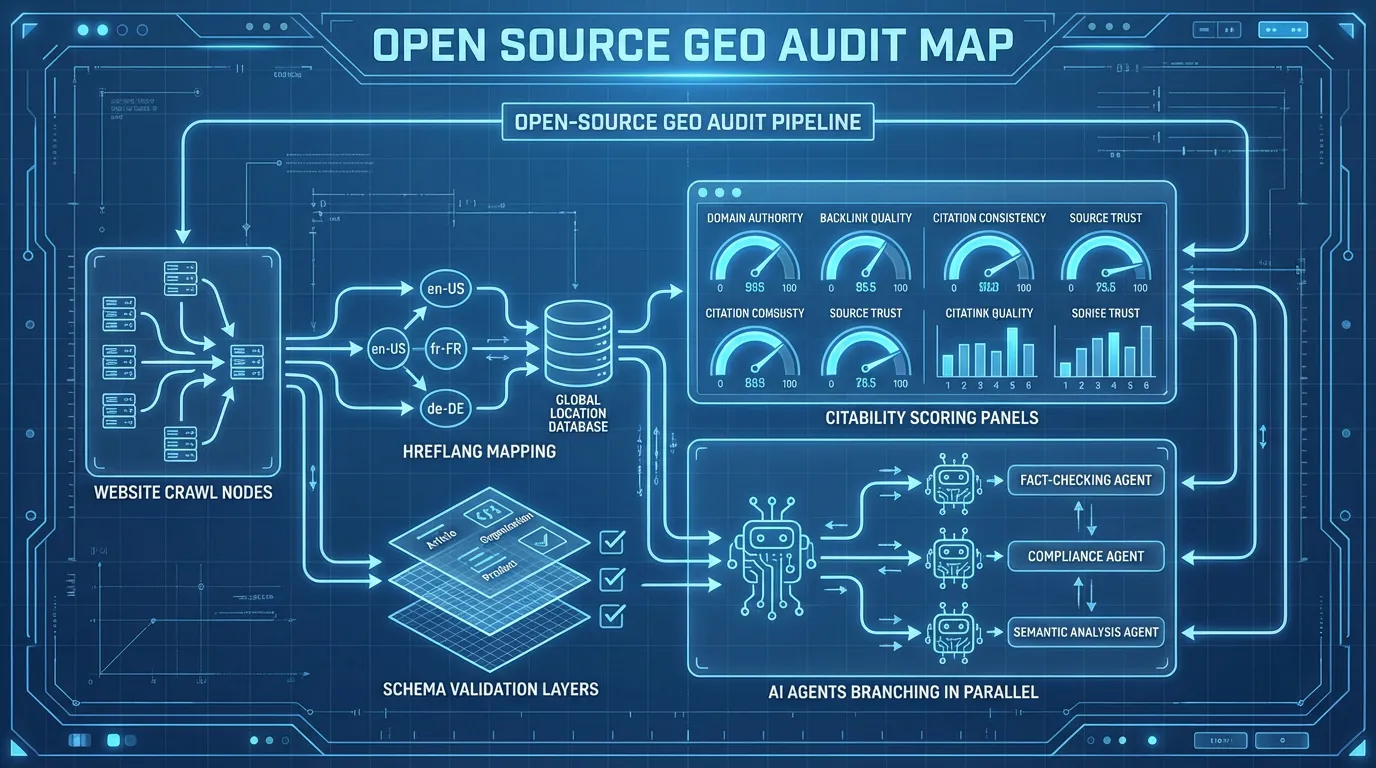
According to its GitHub repository, geo-seo-claude runs inside Claude Code and uses parallel AI agents to perform GEO-focused audits. Its scope goes beyond a standard crawler. It is designed to assess areas such as:
- Citability
- AI crawler accessibility
- Schema and structured data quality
- Brand mentions
- Multilingual and regional visibility patterns
In practical terms, geo-seo-claude helps answer a more modern question than "Is this page optimized?" It asks, "Can search engines and AI systems understand, trust, and potentially reference this page?"
That makes it especially relevant for brands managing multilingual or multi-region sites.
Key audit dimensions often include:
| GEO audit area | What it checks |
|---|---|
| AI crawler access | robots.txt, rendering barriers, blocked paths |
| Citability | whether pages are easy for AI systems to summarize and reference |
| Hreflang and regional structure | language targeting consistency across markets |
| Schema markup | entity clarity and structured context |
| Brand mentions | off-site reference signals and authority clues |
This matters because many websites are technically online but operationally invisible. A page may be indexed yet still fail to become a credible source in AI-generated answers.
geo-seo-claude is powerful for another reason: transparency. Unlike a closed SaaS interface, an open-source workflow allows technical teams to inspect the logic and adapt it.
Still, there are limits. An open-source GEO audit does not automatically know your sales cycle, margins, regional priorities, or which content gaps are commercially urgent. That is why AI SEO Tools and Automation are best viewed as force multipliers, not complete replacements for expert review.
If your team is already working on site diagnostics, the broader context from SeekLab.io's guides on SEO audit, technical SEO audit, and hreflang SEO becomes highly relevant here.
Which AI SEO Tools and Automation platforms matter most: geo-seo-claude, Keytomic, and Synscribe
The current landscape is not one-size-fits-all. Different AI SEO Tools and Automation platforms solve different parts of the workflow.
1. geo-seo-claude
Best for teams that want deep, customizable GEO and SEO diagnostics.
Strengths:
- Open-source flexibility
- Parallel AI agents
- Strong GEO audit orientation
- Useful for technical teams and structured reviews
Limits:
- Requires setup comfort
- Not built primarily for publishing workflows
- Needs experienced interpretation
2. Keytomic
Keytomic positions itself as a commercial, all-in-one growth platform. Based on its official site, it focuses more heavily on production workflows: keyword research, content planning, draft generation, and publishing support.
That makes Keytomic attractive for lean teams that want to operationalize AI SEO Tools and Automation rather than build custom systems.
Potential strengths include:
- Automated topic planning
- SEO calendar support
- Draft generation aligned with search intent
- CMS-friendly publishing workflows
Its fit is strongest when the business challenge is output efficiency. The main caution is content quality control. Automated publishing at scale can create volume faster than authority.
3. Synscribe
Public discussion around Synscribe's autonomous GEO agent is still early, but community references suggest a more always-on model of AI SEO Tools and Automation. The X discussion describes an autonomous agent approach that can monitor, plan, act, and refine over time.
That is interesting because it points to a future where AI agents do not just produce reports. They maintain a loop.
A practical comparison:
| Tool | Best use case | Main strength | Main caution |
|---|---|---|---|
| geo-seo-claude | Deep GEO and SEO diagnostics | Open-source audit depth | Needs technical setup |
| Keytomic | Content operations and publishing | Production efficiency | Requires strong human QA |
| Synscribe | Continuous autonomous workflows | Ongoing optimization potential | Early-stage ecosystem |
For many teams, the right answer is not picking only one. It is creating a stack where audits, content production, and monitoring support one another.
How AI SEO Tools and Automation support AI agents, manual prompts, and content operations
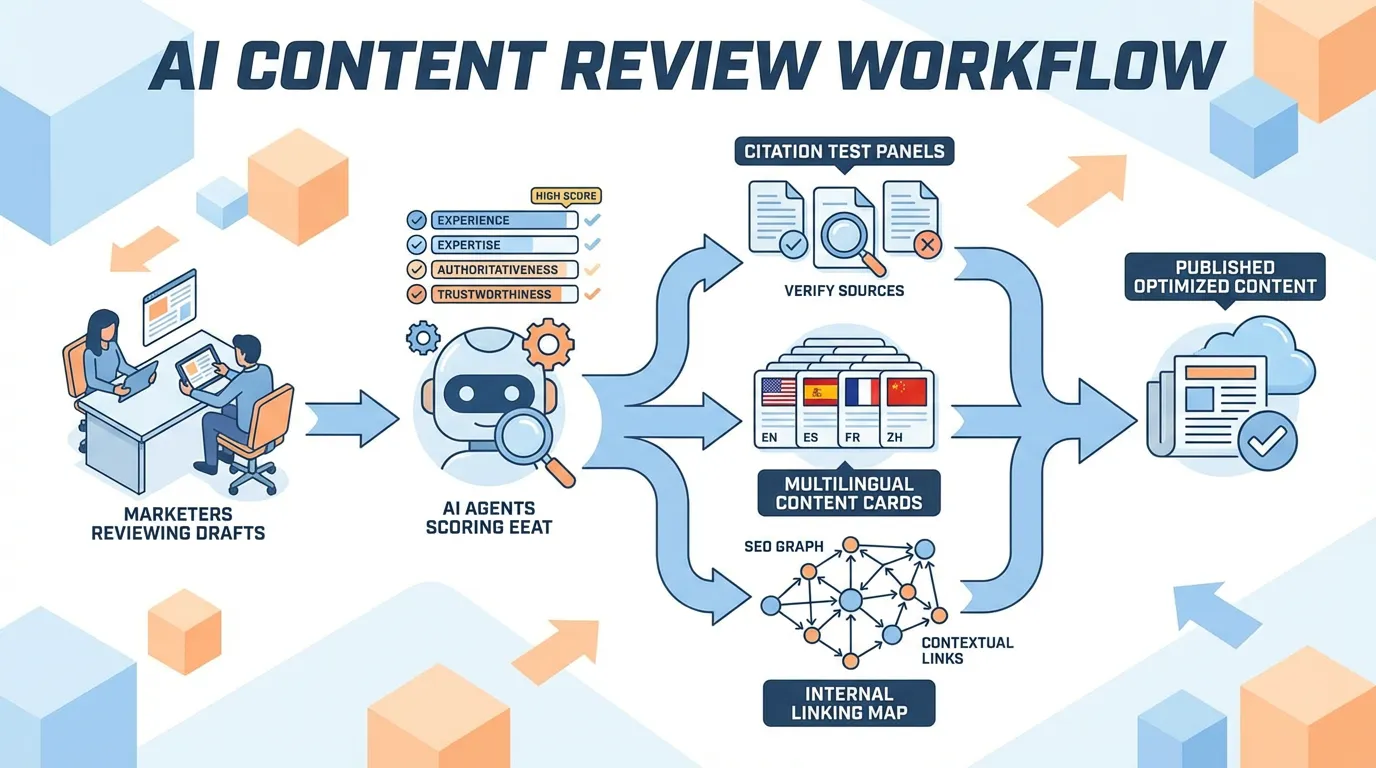
One of the most useful 2026 developments is that AI SEO Tools and Automation are no longer limited to formal platforms. Marketers are also using prompt-driven review methods to test how content performs from an AI interpretation perspective.
The most common examples mentioned in community discussions include Citation Tests and E-E-A-T style checks. Shared examples appeared in discussions on X about GEO and E-E-A-T prompt workflows and manual citation testing.
These prompt-based methods are helpful because they reveal issues that standard on page SEO checks may miss:
- Is the page clear enough to summarize?
- Does the explanation feel trustworthy?
- Is the structure easy for an AI model to quote?
- Are important buyer details missing?
A simple operating model looks like this:
| Prompt workflow | Purpose |
|---|---|
| Citation Test | Check whether your site appears as a credible source candidate |
| E-E-A-T review | Test perceived expertise, trust, and authority |
| Persona readability test | See whether content is understandable for buyers, engineers, or procurement teams |
These checks are not substitutes for technical validation. They do not diagnose crawlability, JavaScript SEO, or schema implementation in depth. But they are useful as fast qualitative filters.
That is especially valuable for teams building a stronger SEO content strategy. If the content is technically indexable but still hard to interpret, it may struggle in both classic search and AI discovery.
For planning content around authority and real search intent, SeekLab.io's article on SEO content strategy offers a useful framework that aligns diagnostics, topic choice, and execution.
How to use AI SEO Tools and Automation without sacrificing technical SEO or lead quality
The biggest risk with AI SEO Tools and Automation is not that they are ineffective. It is that teams expect them to solve the wrong problem.
Most websites do not need every possible issue fixed. They need the right issues identified, prioritized, and linked to business outcomes. That is where professional judgment still matters.
For example, a team may use AI agents to detect:
- Canonical inconsistencies
- Weak internal linking strategy
- Thin regional pages
- Missing schema
- Low citability for product explainers
But deciding whether to fix architecture first, rewrite money pages first, or expand multilingual content first depends on business context.
A realistic operating framework is:
| Task area | Best handled by automation | Best handled by expert review |
|---|---|---|
| Site crawling and issue collection | Yes | Only for validation |
| Initial GEO audit | Yes | Yes, for prioritization |
| Keyword research and clustering | Yes | Yes, for commercial relevance |
| First-draft content creation | Yes | Yes, for accuracy and brand fit |
| Multilingual structure decisions | Partly | Strongly yes |
| Final prioritization by revenue impact | No | Yes |
This is also where SeekLab.io is differentiated. SeekLab.io helps brands build search visibility and AI-era discoverability through high-quality content production and technical optimization. The focus is not only on detecting issues, but on helping teams understand what truly impacts growth, what can be deprioritized, and what should be acted on now.
That matters for independent websites because common frustrations are rarely about a lack of dashboards. They are about:
- unclear ROI
- weak content quality
- unattractive or missing images
- technical confusion
- traffic that does not convert into inquiries
A practical hybrid model looks like this:
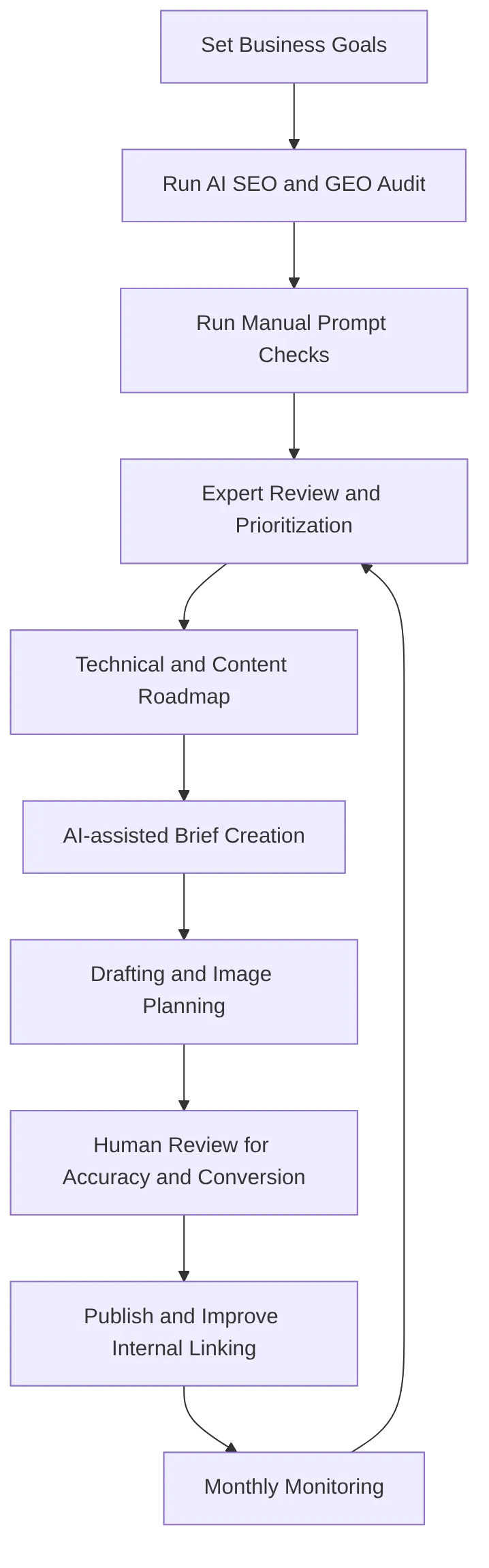
This kind of model fits how SeekLab.io approaches work across APAC, the US, and Europe. The company combines full-site crawling, structured analysis, Core Web Vitals review, rendering checks, schema evaluation, internal linking analysis, topic selection, and high-quality blog creation. The aim is not to automate for the sake of automation. It is to help brands become easier for search engines, AI systems, and real users to understand.
What AI SEO Tools and Automation should do next for your website
If you are evaluating AI SEO Tools and Automation in 2026, start with realistic sequencing.
-
Audit before scaling
Do not automate content production before understanding your crawlability, site architecture, rendering, and multilingual structure. -
Test GEO readiness on priority pages
Use geo-seo-claude for contained audits, then validate with citation and readability checks. -
Use commercial automation carefully
Platforms like Keytomic can reduce production bottlenecks, but they should support a clear SEO content strategy, not replace it. -
Keep expert review in the loop
AI agents can reveal patterns quickly, but they still cannot fully decide what matters most for your margins, markets, or lead flow. -
Connect output to inquiries
The end goal is not more dashboards or more posts. It is better visibility, stronger credibility, and more conversion potential.
For teams that want a clearer path, SeekLab.io can help bridge the gap between diagnostics and action. That includes structured analysis, high-quality content planning, technical guidance, and focused recommendations on what deserves attention first. If you want to move from scattered automation to a more reliable growth system, you can contact SeekLab.io or get a free audit report as a starting point.
In short, AI SEO Tools and Automation are now mature enough to change workflows, especially in GEO, technical auditing, and content operations. But the winners will not be the teams that automate the most. They will be the teams that combine automation with better decisions.