GEO vs SEO: What 6 Months of Real Campaign Data Shows
Expert reviewed

The short answer: After six months of running parallel GEO and SEO campaigns for clients, SEO consistently produces stronger click and ranking data while GEO produces brand citation signals that traditional SEO metrics never capture. The two are not competing — SEO remains the foundation, GEO adds a new measurement layer on top. Neither works without the other.
Here is what the data actually showed — and what it means for how you should measure search performance in 2026.
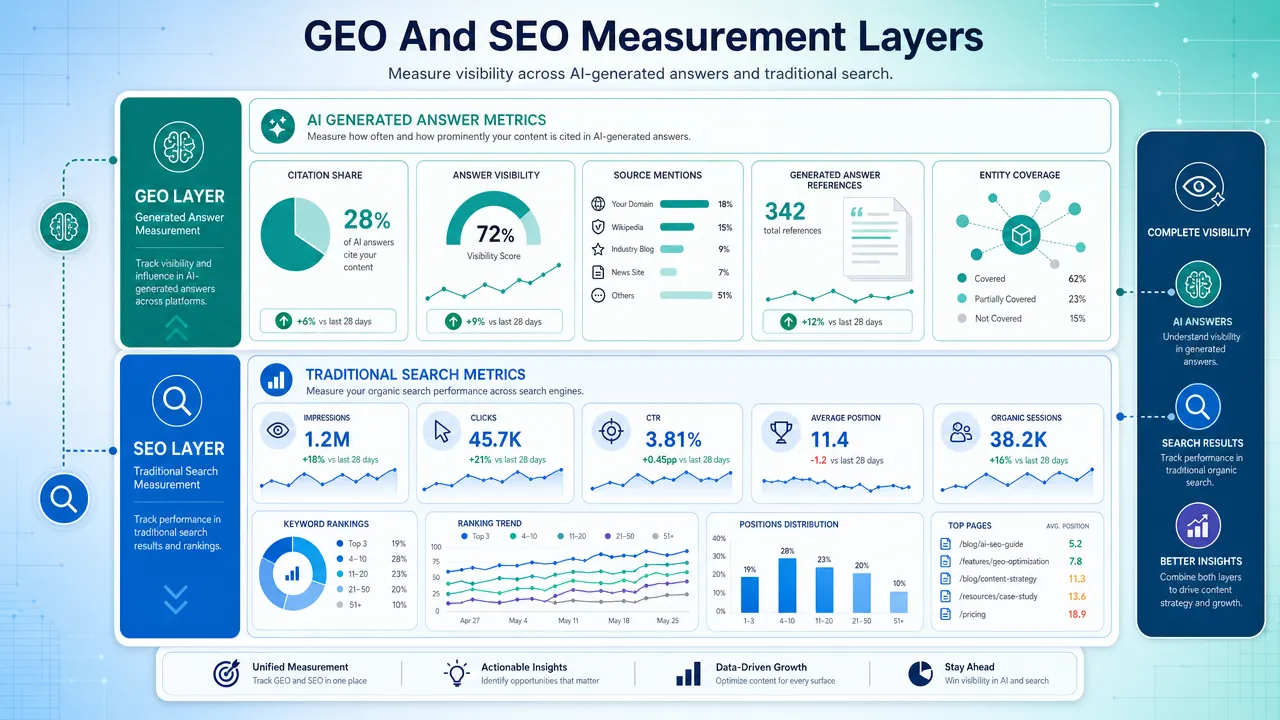
Six months of GEO vs SEO results data 2026 separates search performance into two measurable layers: traditional search outcomes and generated-answer citation outcomes. A useful six-month comparison does not ask whether Generative Engine Optimization replaces search engine optimization; it asks which signals moved, which signals produced qualified inquiries, and which signals still need more time before they can be trusted.
A practical six-month dashboard should separate organic impressions, clicks, CTR, rankings, index coverage, Core Web Vitals, and conversions from generated-answer inclusion, cited-source appearances, brand/entity consistency, and assisted demand. The first group belongs mainly to SEO results data. The second group belongs mainly to GEO. Shared readiness signals, such as schema validity, internal linking, content structure, and crawlability, sit between the two.
For independent websites, exporter websites, multilingual company sites, and cross-border brands, the main finding is steady rather than dramatic: SEO remains the foundation, while GEO adds a new measurement layer. A page still needs to be crawlable, indexable, technically stable, and useful before it can reliably perform in traditional search or be understood by generated-answer systems.
What SeekLab's Client Data Actually Shows
Before the methodology, the numbers. These come from real campaigns — anonymised but not adjusted.
Web3 client, comparison content campaign:
One comparison article published April 30, 2026. By May 14 — 14 days later — it was ranking #1 on Google and appearing in Google's AI Overview for its target query. Impressions: 2,628. Clicks: 3. Organic backlinks acquired without outreach: 2. A second comparison article published May 27 appeared in Google's AI Overview within 24 hours.
B2B tech client, 6-month GEO campaign:
Citations grew from near zero to approximately 277 across ChatGPT, Perplexity, and Google AI Overviews over six months. Peak citation count was reached at month 4. By month 6, citations had declined to 277 — a 6.1% drop — after content publication cadence slowed. This is the Citation Lag Problem: AI citations take 6-8 weeks to build and begin decaying 3-4 weeks after publishing activity slows.
The consistent finding across both: Comparison content — "best X for Y" articles with direct verdict sentences, specific numbers, and "Best for:" labels — produced AI citations at 3-4x the rate of informational content on the same domains.
SEO results (rankings, impressions, clicks) moved on a different timeline from GEO results (citation frequency, cited pages). The SEO signals moved first — typically weeks 2-6. The GEO signals followed — typically weeks 6-12. By month 6, the strongest performers had both: pages ranking in traditional results AND being cited in AI-generated answers for the same queries.
For a full breakdown of the comparison content formula, see What is GEO? SeekLab's Practitioner Definition.
How GEO vs SEO results data 2026 should be measured after six months
A six-month comparison is long enough to measure movement, but not always long enough to prove full ROI. That distinction matters for B2B and exporter websites, where a buyer may read a technical article in March, return through branded search in May, and submit an RFQ after a procurement review in July. Treating the first click as the whole story usually undercounts both SEO and GEO.
The cleanest baseline starts before any content is written or technical issue is fixed. Month 0 should record organic impressions, clicks, CTR, average position, index coverage, crawl errors, Core Web Vitals by template, schema status, internal link depth, branded search demand, current inquiry quality, and visible generated-answer inclusion for a defined query set. Google documents clicks, impressions, CTR, and average position in the Search Console Performance report, which is still one of the most defensible sources for SEO measurement.
SeekLab.io usually treats this baseline as a decision filter, not a report dump. A 900-page crawl can produce hundreds of warnings, but only a smaller group typically blocks growth: indexable pages hidden behind JavaScript, broken internal links to product pages, conflicting canonical tags, weak market pages, missing Organization schema, slow product templates, or content that answers the topic but never guides the visitor toward an inquiry.
For teams building their own baseline, the SEO audit checklist for 2026 gives a practical structure for crawlability, indexation, internal linking, content quality, schema, JavaScript SEO, international SEO, and analytics. The useful part is not checking every box. The useful part is knowing which issues affect search visibility, buyer trust, and conversion paths.
| Campaign stage | SEO results data to review | GEO signals to review | Business interpretation |
|---|---|---|---|
| Month 0 | Impressions, clicks, CTR, rankings, index coverage, crawl status | Current answer inclusion, citations, entity consistency | Establish what the website can already prove |
| Months 1-2 | Technical fixes, schema cleanup, internal links, Core Web Vitals by template | Content extractability, direct-answer sections, factual consistency | Build the foundation before scaling content |
| Months 3-4 | Long-tail impressions, early ranking movement, stable indexation | Narrow-query inclusion, cited-source tests, brand mentions | Identify early movement without overreading it |
| Months 5-6 | Click patterns, CTR shifts, lead paths, organic conversions | Citation stability, branded search support, assisted demand | Compare visibility against qualified inquiries |
In the early years of SEO reporting, rankings often carried too much weight. By the late 2010s, serious teams had learned to read rankings alongside Search Console data, analytics, page templates, and conversion paths. In 2026, that same progression is happening with GEO. A mention in a generated answer is not the same as a click, and a citation is not the same as a lead. It is an exposure signal that has to be connected to branded search, assisted conversions, and inquiry quality.
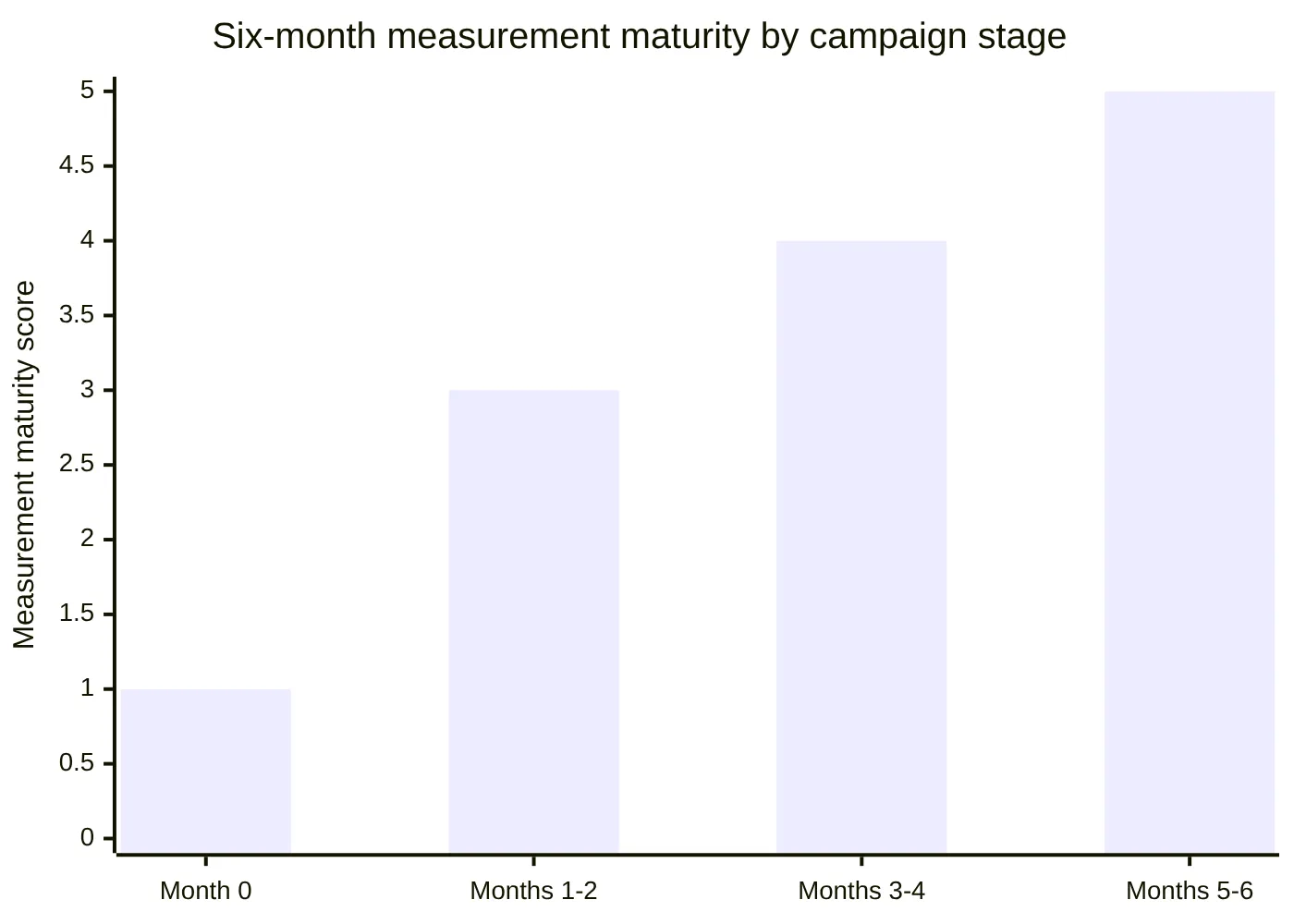
The chart above is a qualitative maturity model, not a benchmark claim. It shows why Month 0 data is often thin, why Months 1-2 are dominated by foundation work, and why Months 5-6 are usually better for interpretation than celebration. A six-month campaign that shows no ranking improvement but fixes blocked indexation, strengthens internal links, and starts appearing in narrow generated-answer tests may still be moving in the right direction. A campaign that increases traffic but produces no inquiries deserves a harder review.
GEO vs SEO results data 2026 definitions that matter for reporting
Generative Engine Optimization is the practice of making website content, brand information, and supporting authority signals easier for generated-answer systems to retrieve, understand, summarize, attribute, and cite. The measurable outcomes are inclusion, cited-source appearances, brand/entity mentions, passage-level extractability, referral sessions where available, and assisted demand that may later show up through branded search or direct visits.
Search engine optimization is the process of improving a website so search engines can crawl, index, understand, rank, and display its pages for relevant queries. Google's SEO Starter Guide still emphasizes useful content, clear organization, crawlability, and search-friendly page signals. That matters because many GEO conversations become weak when they skip the technical foundation that makes a page understandable in the first place.
The difference is easiest to see by looking at the unit of measurement. SEO usually reports at the URL and query level: which page appeared, how often it appeared, how many users clicked, and whether those users converted. GEO often reports at the passage, entity, or answer level: which brand was mentioned, which source was cited, which fact was extracted, and whether the generated answer represented the company accurately.
| Dimension | SEO focus | GEO focus | Shared requirement |
|---|---|---|---|
| Main surface | Traditional search results | Generated answers and cited summaries | Clear, accessible content |
| Main unit | Page, URL, query | Passage, entity, source citation | Structured information |
| Primary metric | Clicks, impressions, CTR, rankings | Inclusion, citations, mentions | Reliable source signals |
| Technical dependency | Crawlability, indexation, performance | Crawlability, rendering, extractability | Stable page architecture |
| Content dependency | Search intent match | Answer clarity and attribution | Specific, useful, factual content |
| Business risk | Ranking without conversion | Citation without traffic | Weak inquiry path |
This is where many weak websites expose their limits. A product page may have a title tag and a few paragraphs, but no specifications, no comparison table, no use cases, no internal links to related materials, and no clear RFQ path. That page may be technically indexable, but it gives both search engines and generated-answer systems very little to work with. The result is often surface-level visibility without buyer confidence.
SeekLab.io's work sits in this overlap: full-site crawling and structured analysis, Core Web Vitals diagnostics, indexing and rendering checks, internal link equity analysis, schema enhancement, AI-era discoverability evaluation, and content production that reflects real business scenarios. The goal is not to fix everything. The goal is to identify what truly affects growth and what can be deprioritized.
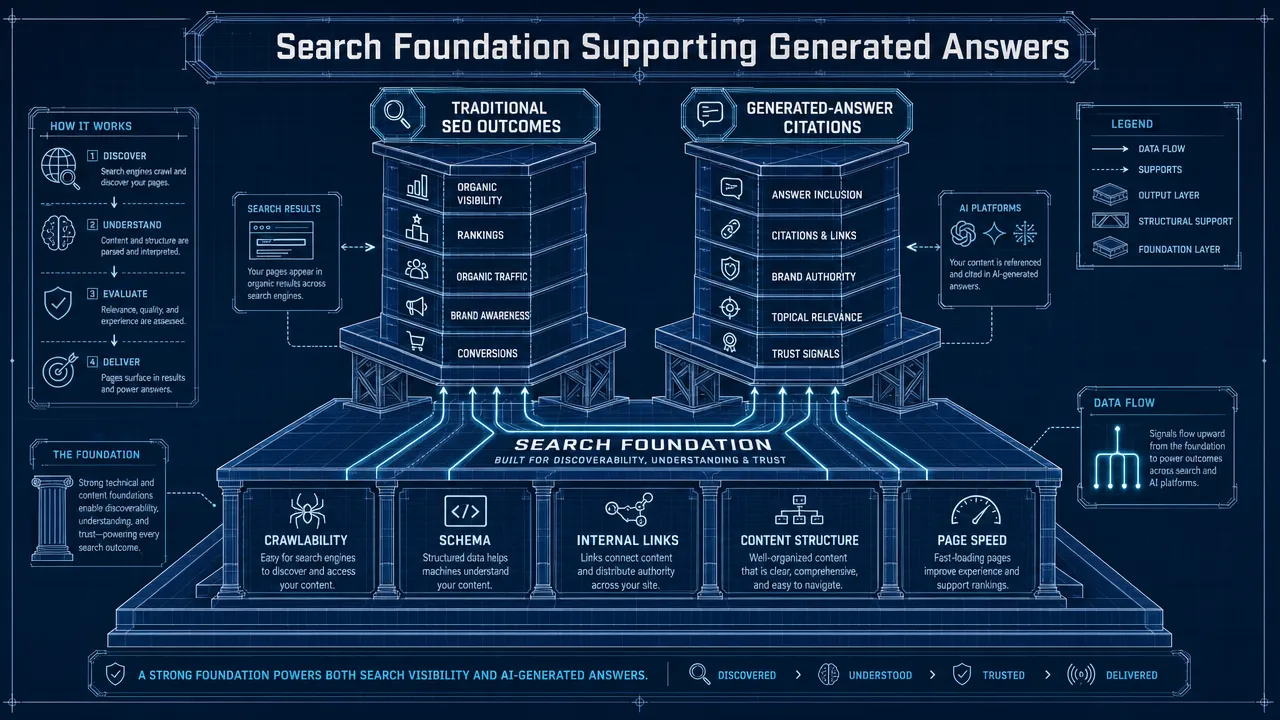
A mature report should also keep language precise. Generated-answer inclusion is not a ranking. A cited-source appearance is not a guaranteed referral. Branded search growth may come from content, sales activity, events, or market exposure. Schema can clarify entities, but it does not guarantee rich results or citations. The Google structured data documentation is careful about this point: structured data helps search engines understand content and can enable certain search features, but it is not a shortcut around content quality or technical readiness.
The same caution applies to 2026 search trends. Search result pages now include more answer-style features and generated summaries for many informational queries, but exact prevalence and CTR impact vary by dataset, country, query type, and methodology. A serious report should label public benchmarks as directional evidence and reserve stronger claims for verified campaign data that can be audited.
GEO vs SEO results data 2026 in the search results comparison
The search results comparison in 2026 is not a simple split between "old search" and "new search." It is a layered environment. A buyer may see paid listings, traditional organic results, product pages, videos, local or regional results, generated summaries, and cited sources before choosing whether to click. For a cross-border supplier, that buyer may also be searching in a second language or from a market where the SERP layout behaves differently.
Traditional organic results still produce the clearest reporting path. A user searches, sees a result, clicks a page, reads the content, and may submit a form, call, or request a quote. The path is imperfect, but it is measurable. Google Search Central continues to emphasize crawling, indexing, JavaScript handling, structured data, and page experience through its Search documentation, JavaScript SEO guidance, and page experience documentation.
Generated-answer surfaces create a different path. A user may receive a synthesized answer, notice a cited source, remember a brand name, and later search that brand directly. In other cases, the user may get enough information without clicking at all. This is where zero-click pressure complicates reporting. Lower CTR does not always mean the content became worse. Sometimes impressions expanded into broader queries. Sometimes the SERP answered part of the question before the click. Sometimes the query had informational intent and no realistic lead value.
For independent websites, the practical implication is uncomfortable but useful: content has to earn both the click and the citation. A generic "ultimate guide" that repeats common definitions may rank for a few low-intent terms, but it rarely gives generated-answer systems a specific reason to cite it. A better page states definitions clearly, uses tables for comparison, explains product or service scenarios, includes source-backed claims, links to relevant conversion pages, and maintains consistent entity information across the site.
| Search surface | What the user sees | What the website can measure | What can be missed |
|---|---|---|---|
| Traditional organic result | Ranked page title, description, URL, rich result features | Impressions, clicks, CTR, average position, conversions | SERP feature influence on CTR |
| Generated answer | Synthesized answer, limited citations, brand/source mentions | Inclusion tests, citation logs, referral sessions where available | Brand exposure without a click |
| Branded follow-up search | Brand query, company page, contact page | Branded impressions, clicks, direct leads | Earlier discovery source |
| Multilingual search | Local-language result, regional page, translated or localized content | Country and language performance | Wrong-language ranking or entity confusion |
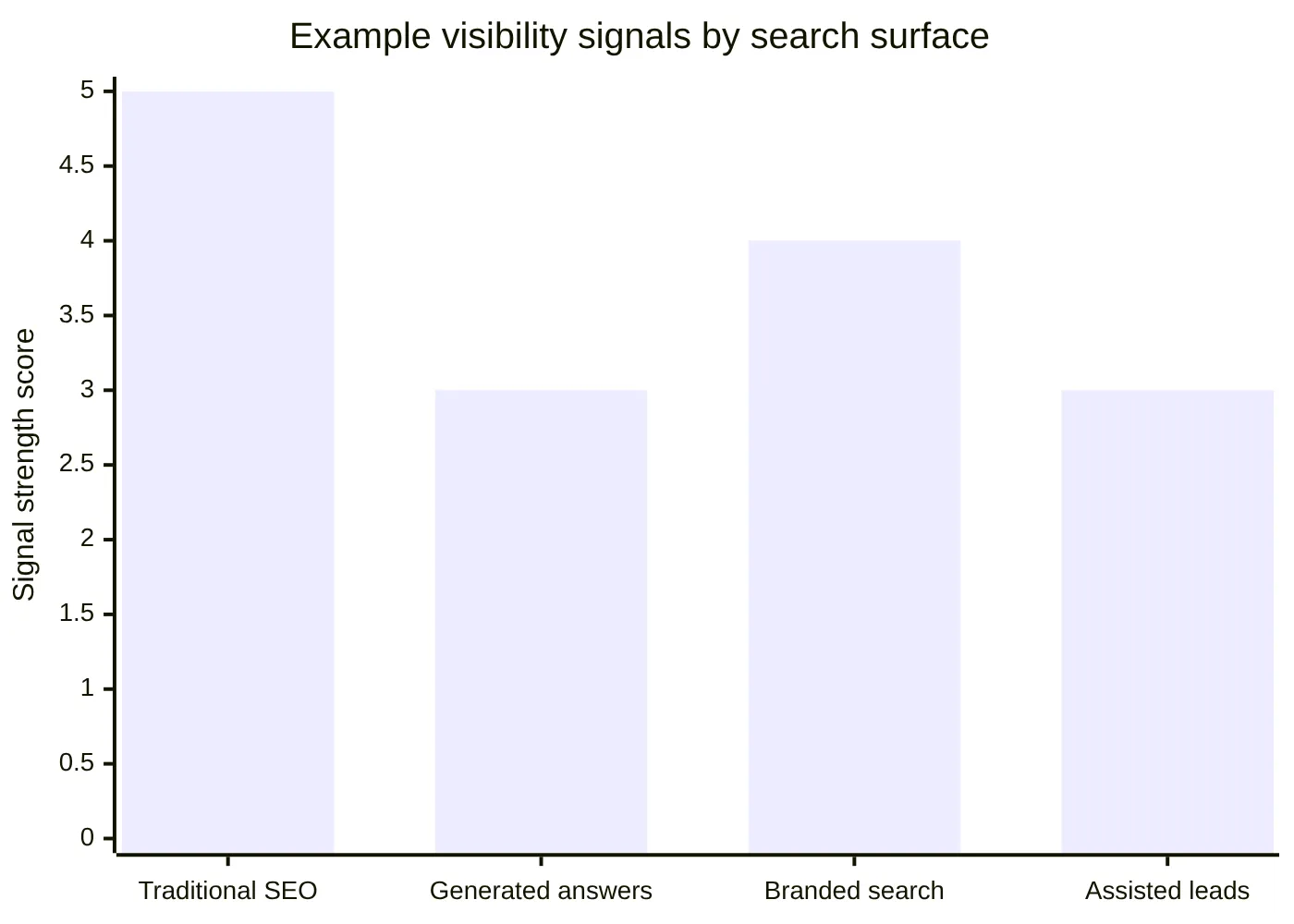
This example uses a signal-strength score to show relative reporting maturity, not market data. Traditional SEO still has the strongest measurement infrastructure. Generated-answer reporting is improving, but it remains fragmented and often requires manual checks with documented query sets, locations, dates, and prompt wording. Branded search and assisted leads often become the bridge between exposure and business impact.
SeekLab.io's keyword research for GEO and SEO focuses on this bridge before content production starts. Volume alone is not enough. A procurement manager comparing suppliers, a developer checking compatibility, and a founder looking for a trusted service provider may use different query language. Some queries deserve product pages. Some deserve comparison pages. Some deserve technical explainers. Some should be ignored because they attract traffic that never becomes a qualified inquiry.
GEO vs SEO results data 2026 metrics that usually move first
The first signals to move are often not the signals executives ask for. After technical fixes, crawl status and index coverage may improve before rankings do. After content restructuring, impressions may grow before clicks do. After adding direct-answer sections and comparison tables, generated-answer inclusion may appear for narrow questions before broader commercial terms. After internal links are cleaned up, high-value pages may gain better discovery before revenue changes.
Months 1-2 are usually dominated by foundation work. For a modern website, this can include sitemap.xml and robots.txt validation, canonical cleanup, redirect repair, JavaScript rendering checks, Core Web Vitals improvements, schema validation, internal link restructuring, and content template changes. Some simple technical issues can be resolved quickly, but template-level performance or multilingual architecture problems may take longer because they affect development resources and site structure.
Months 3-4 usually show early visibility movement. Long-tail impressions may rise. New or improved pages may begin ranking for narrower queries. Content clusters may start supporting each other through internal links. Generated-answer tests may show occasional inclusion for factual or low-competition questions. These are useful signals, but they are not stable enough to call final results.
Months 5-6 are better for interpretation. By then, a team can compare query-level SEO results data, page-level performance, generated-answer appearances, branded search growth, and qualified inquiry patterns. This is also when weak execution becomes visible. A content campaign that publishes many articles but fails to link them to service, product, market, or contact pages often produces reading sessions without commercial movement.

The content side needs the same discipline. SeekLab.io's high-quality SEO content creation is built around search intent, brand and industry knowledge, structured layouts, images, tables, internal links, and content that can support both rankings and buyer confidence. This is especially important for exporter and official company websites, where generic articles can attract visitors but fail to explain product fit, certifications, delivery regions, technical parameters, or the next step for procurement.
| Metric | Often moves early? | Why it moves or lags | Practical warning |
|---|---|---|---|
| Crawlability fixes | Yes | Technical blockers can be removed quickly | Not every crawl issue is worth fixing first |
| Index coverage | Often | Search engines can process cleaner URLs over time | Indexed pages are not guaranteed to rank |
| Impressions | Often | Expanded query coverage appears before clicks | CTR may fall when broader queries enter the mix |
| Rankings | Sometimes | Long-tail terms can move earlier than competitive terms | Average position can be distorted by new impressions |
| Organic clicks | Later | Users need stronger SERP appeal and intent match | Click growth without lead growth can mislead |
| Generated-answer inclusion | Sometimes | Narrow factual answers may be picked up early | Inclusion is volatile and query wording matters |
| Cited-source appearances | Sometimes | Clear passages and credible structure can help | Citation does not equal referral traffic |
| Qualified inquiries | Usually later | Buyer cycles, trust, and internal approval take time | Lead quality matters more than form volume |
A useful six-month review does not celebrate every green arrow. It asks which movements are connected. Did the pages that gained impressions have internal links to conversion pages? Did the content that appeared in generated answers contain accurate brand and product information? Did improved Core Web Vitals happen on templates that matter, or only on low-value pages? Did branded searches rise in markets where content was localized, or did the growth come from unrelated activity?
This is also where monthly reporting becomes more valuable than one large end-of-campaign report. SeekLab.io provides monthly data review and performance reporting because weak signals are easier to correct while the campaign is still active. Waiting six months to discover that the wrong content cluster was built is expensive. Choosing the right direction before writing content or fixing technical issues is often the cheapest growth decision a website can make.
GEO vs SEO results data 2026 implications for independent and cross-border websites
Independent websites do not have the default authority of marketplaces, directories, or large publishers. They have to make their business legible. The About page, service pages, product pages, regional pages, schema, internal links, and blog content should all describe the same company in consistent language. Generated-answer systems are especially unforgiving when a brand's location, offering, audience, or product terminology changes from page to page.
Exporter websites face a more specific problem. Many pages are written as if every buyer is already convinced. They list broad capabilities but omit technical specifications, materials, compliance details, use cases, minimum order logic, production workflows, shipping regions, and RFQ expectations. That weakens both SEO and GEO. A generated answer comparing suppliers or product types needs clear facts to extract. A human buyer needs the same clarity before contacting sales.
Multilingual sites add another layer. Hreflang errors, mixed-language templates, duplicated regional pages, and vague localization can cause the wrong page to rank in the wrong market. A US buyer, a European distributor, and an Asia-Pacific procurement manager may care about different specifications, service terms, or proof points. A single translated article rarely serves all three equally well.
SeekLab.io's operating footprint across Asia-Pacific, the United States, Europe, Singapore, Shanghai, and business development in Dubai gives this issue practical weight. Cross-border search is not only about translating keywords. It is about matching regional buyer behavior, clarifying page architecture, and making sure search engines, generated-answer systems, and real users can understand which page serves which market.
| Website type | Common weakness | Better priority | Why it matters |
|---|---|---|---|
| Independent company site | Thin service pages and weak trust signals | Clear service architecture, Organization schema, contact paths | Helps search engines and buyers understand the business |
| Exporter website | Generic product copy without specifications | Tables, use cases, certifications, RFQ links | Supports comparison queries and procurement decisions |
| Multilingual site | Wrong-language ranking and unclear hreflang | Clean regional URLs, localized examples, language-specific internal links | Reduces confusion across markets |
| Cross-border brand | Content written for one market only | Country-aware topic clusters and conversion paths | Improves relevance for regional buyers |
| JavaScript-heavy site | Hidden links or content during rendering | Rendering checks and crawlable content | Prevents pages from being invisible to search systems |
The strongest roadmap is not complicated, but it does require discipline. First, establish a real baseline. Second, fix blockers that affect crawling, indexation, rendering, internal links, schema, and performance on business-critical templates. Third, choose topics based on buyer intent and generated-answer intent, not just volume. Fourth, create content with direct answers, comparison tables, visuals, source-backed claims, and natural internal links. Fifth, measure qualified inquiries by page, market, and source instead of relying only on traffic.
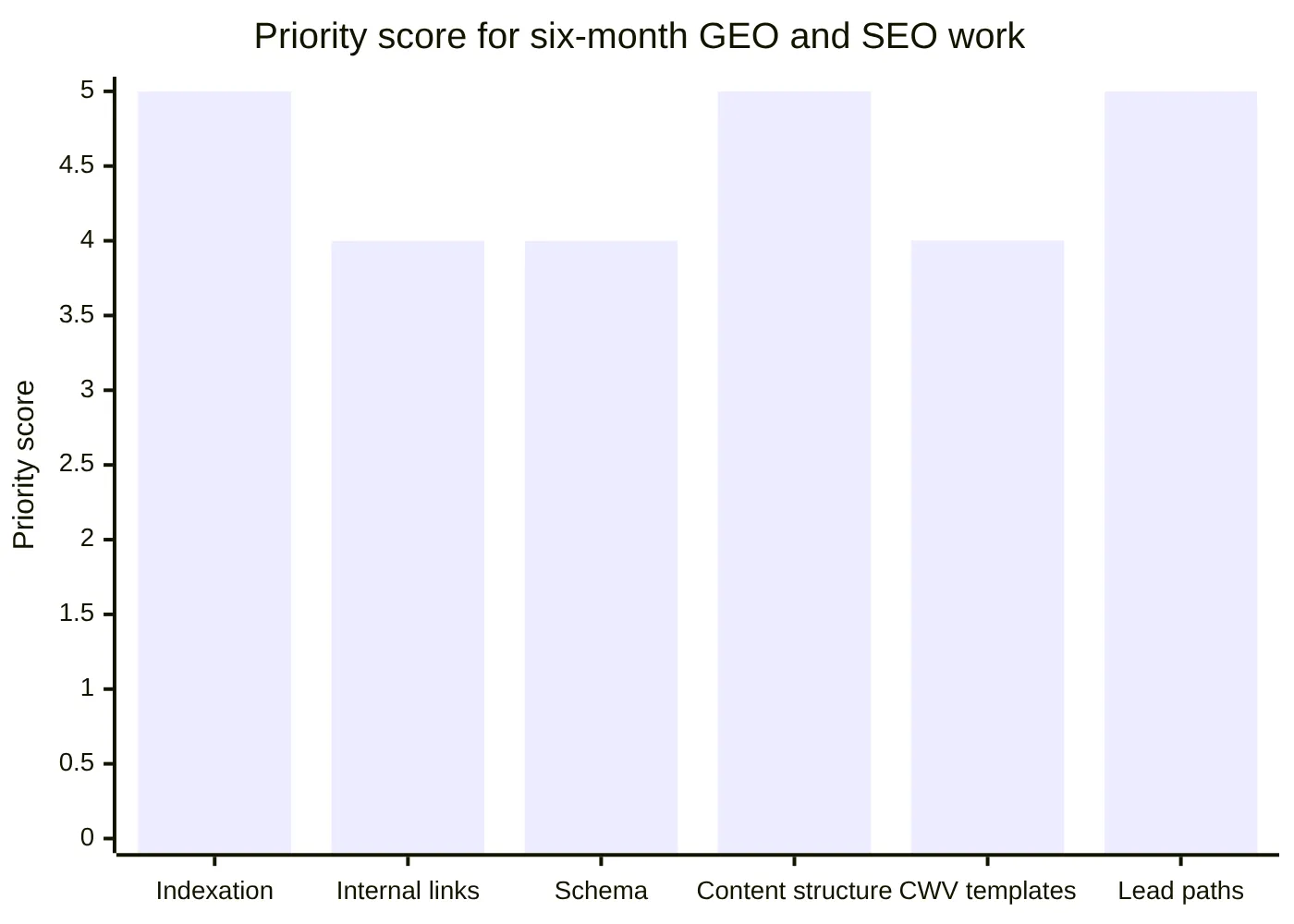
This priority model reflects a practical audit mindset. Indexation and lead paths often deserve more attention than cosmetic metadata changes on low-value pages. Internal links usually matter more than another generic blog post. Schema should clarify entities and page types, but it should be treated as support, not magic. Core Web Vitals should be reviewed by template because a fast homepage does not help much if the product or service template is slow.
SeekLab.io helps brands build search visibility and AI-era discoverability through content structure, information clarity, page architecture, internal linking, and overall site readiness. The work is not limited to technical issue detection. It also covers topic selection, content depth, visual assets, conversion pathways, multilingual architecture, and technical guidance that helps teams avoid heading in the wrong direction.
The best final question for a six-month GEO vs SEO comparison is not "Which one won?" It is "Which layer created measurable business progress, and which layer exposed the next constraint?" SEO may show stronger reporting through impressions, clicks, CTR, and rankings. GEO may show earlier evidence through answer inclusion, citations, and branded demand signals. Both can fail if the website is unclear, technically blocked, or disconnected from inquiry paths.
Get a free audit report if your team needs a baseline for crawlability, indexation, content structure, schema, internal links, generated-answer readiness, and conversion paths. Contact us if you want a six-month measurement framework built around your website, your markets, and the inquiries that actually matter.
FAQ
What is the difference between GEO and SEO results?
SEO results are measured in clicks, impressions, CTR, rankings, and conversions from traditional search result pages. GEO results are measured in citation frequency, cited-source appearances, brand mentions in AI-generated answers, and assisted demand signals that may not produce a direct click. Both matter in 2026 — SEO provides the foundation and the click-based traffic; GEO adds a citation and brand visibility layer that traditional SEO metrics cannot capture.
How long does GEO take to show results?
Based on SeekLab's campaign data, AI citations typically begin appearing 6-8 weeks after well-structured content is published on a site with adequate topical authority. This is the ramp-up phase of what SeekLab calls the Citation Lag Problem. Citations can also decay 3-4 weeks after publishing activity slows — making consistency a mechanical requirement, not just good practice.
Does GEO replace SEO in 2026?
No. GEO depends on SEO because AI answer systems still need crawlable, indexed, technically accessible content to retrieve. A page that is not indexed cannot be cited. A domain with weak topical authority will produce fewer citations regardless of content structure. The practical approach in 2026 is SEO as foundation, GEO as the additional layer that converts rankings into AI citations.
What content type gets cited most by AI in 2026?
Comparison content — "best X for Y" articles, tool roundups, framework comparisons — produces AI citations at 3-4x the rate of informational content based on SeekLab's campaign data. The structural elements that drive this are direct verdict sentences per item, specific verifiable numbers, comparison tables near the top, and "Best for:" labels that map directly to how AI generates recommendation answers.
What is the Citation Lag Problem?
The Citation Lag Problem is SeekLab's term for the timing asymmetry in GEO results. AI citations take 6-8 weeks to build after content is published, but they begin decaying 3-4 weeks after publishing activity slows. This means most teams do not connect the cause (slowing down content) to the effect (citations dropping) because the timing gap obscures the relationship. Consistent publication cadence is the only reliable fix.
How do you measure GEO results?
SeekLab measures GEO results through a combination of manual prompt testing — asking target queries across ChatGPT, Perplexity, Gemini, and Google AI Overviews and recording which sources appear — and automated monitoring tools. Key metrics are citation frequency (how often a brand appears for a defined query set), cited pages (how many individual pages have been cited at least once), and citation mentions (total citations across all queries tested). Branded search growth and assisted conversions serve as the business-level bridge between citation exposure and commercial outcomes.