How DTC Brands Get Into AI ‘Best of’ Product Roundups
Expert reviewed

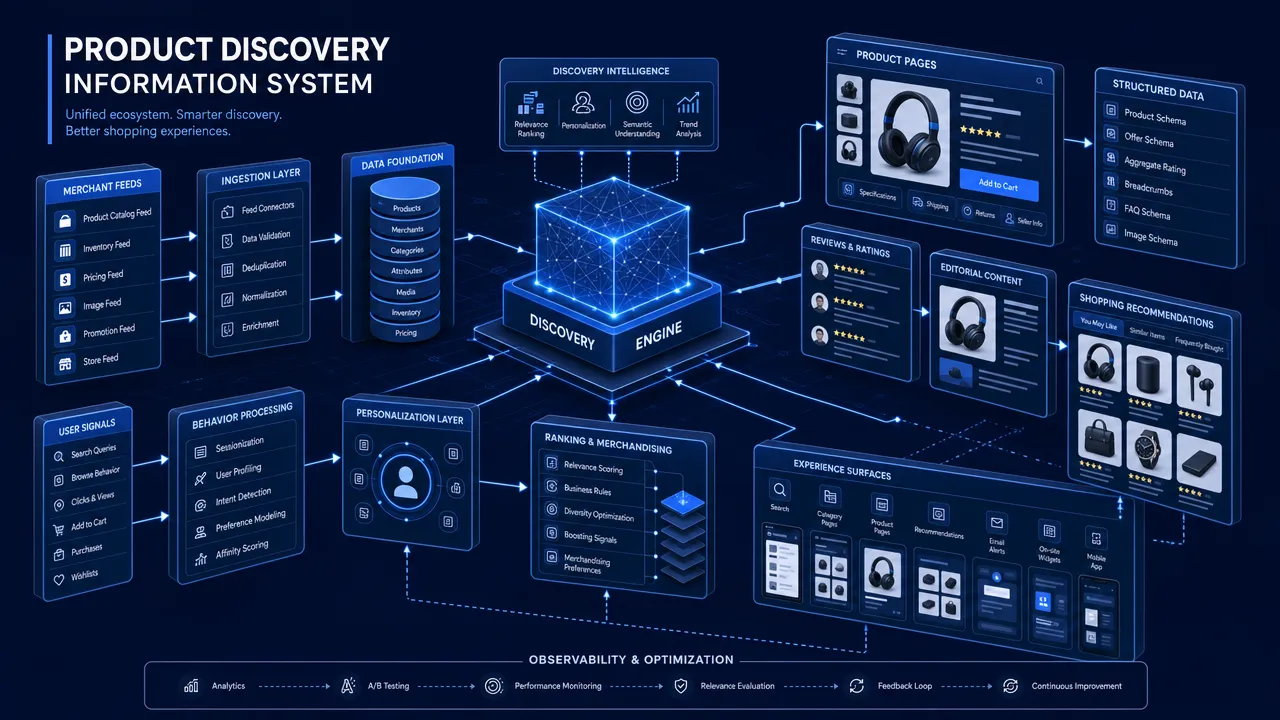
AI "best of" product roundups are not a single channel that brands can "rank for" with one tactic. They can appear as publisher-written lists, shopping cards in search, conversational product comparisons, retailer recommendations, or personalized product suggestions. For DTC brands, the practical goal is simpler: make each priority product easy to identify, compare, validate, and buy wherever a shopper starts researching.
This tutorial explains how to get featured in AI roundups without relying on speculative shortcuts. You will learn which product facts need to be consistent, how crawlability and feeds affect product discovery, where category content fits, how earned media for ecommerce brands can add useful proof, and which activities to postpone until the basics work.
What Shows Up in an AI "Best of" Product Roundup
A "best" result can look very different depending on where a customer searches. A publisher might produce a tested list of travel bags. A search experience might display product cards with price and stock information. A conversational shopping interface might compare options based on a stated need, such as a carry-on bag for short trips or a fragrance-free moisturizer for sensitive skin.
That distinction matters because each surface has different inputs.
| Surface | Typical output | Information a brand needs to provide | What it does not guarantee |
|---|---|---|---|
| Editorial roundup | Tested list, comparison, or review | Clear product story, samples, specifications, credible proof | Publisher coverage or placement |
| Search shopping results | Product cards, seller offers, ratings | Accurate feed data, price, availability, images, identifiers | Prominent placement |
| AI shopping recommendations | Conversational suggestions and comparisons | Crawlable product pages, merchant data, useful supporting content | Inclusion for every query or shopper |
| Retailer listing | Catalog page with offer and fulfillment details | Consistent product facts, variants, images, delivery terms | Recommendation outside that retailer |
| Personalized recommendations | Related items or "recommended for you" modules | Catalog accuracy, inventory, and customer behavior data | Broad category discovery |
Google states that its Shopping Graph receives product information from brands, retailers, and other providers, including through Merchant Center and Manufacturer Center. Google also says that this product information can support Search, Ads, YouTube, and generative AI features. Google's explanation of shopping information sources is useful because it confirms the wider product-data ecosystem without claiming a universal recommendation formula.
OpenAI similarly documents that ChatGPT can show product options for shopping-oriented queries and that merchants can provide structured product feeds for discovery, price, availability, and seller context. Read the official overview of shopping with ChatGPT Search and the product feed specification for ChatGPT commerce as platform-specific references, not as a promise of placement.
The practical implication for DTC brands AI product roundups is straightforward. A brand cannot assume that improving one organic landing page will influence every shopping surface. Product information must hold up across the product page, structured data, merchant feed, checkout, policy pages, and any legitimate external coverage.
How AI Systems Evaluate Products for These Roundups
Platforms do not publish a complete formula for AI shopping recommendations or roundup inclusion. They do, however, publish requirements for product data, structured markup, merchant feeds, and ecommerce site accessibility. Those requirements reveal the minimum information a system needs before it can confidently understand an offer.
A useful model is to treat each product as a record with five connected layers.
| Layer | Questions a buyer or system must be able to answer | Common DTC gap |
|---|---|---|
| Product identity | What is it? Which model, size, shade, bundle, or version is this? | Campaign-style names with no category context |
| Product evidence | What does it contain, fit, support, include, or work with? | Promotional copy without usable specifications |
| Commercial facts | What does it cost? Is it in stock? Where does it ship? | Page, feed, and checkout details disagree |
| Technical access | Can crawlers access core content, links, images, and markup? | Critical facts only appear after unstable scripts load |
| Independent proof | Is there authentic customer feedback or credible external context? | The only available information is brand-authored |
Google's Product structured data documentation distinguishes purchasable merchant listings from editorial product snippets. It also documents product, offer, review, shipping, and return-related information that can help Google interpret commercial pages. Structured data is not a direct ticket into an AI "best of" roundup. It is a machine-readable way to make product facts less ambiguous.
For example, a product page called "The Weekend Set" may work well in a campaign email. It is weak as a standalone product record if the visible page and feed do not clearly establish whether it is a travel bag, skincare bundle, bedding set, or apparel package. A stronger title provides category and differentiating context, such as "Carry-on travel duffel with removable shoe compartment." The page should then explain dimensions, materials, included items, care instructions, limitations, and variant differences.
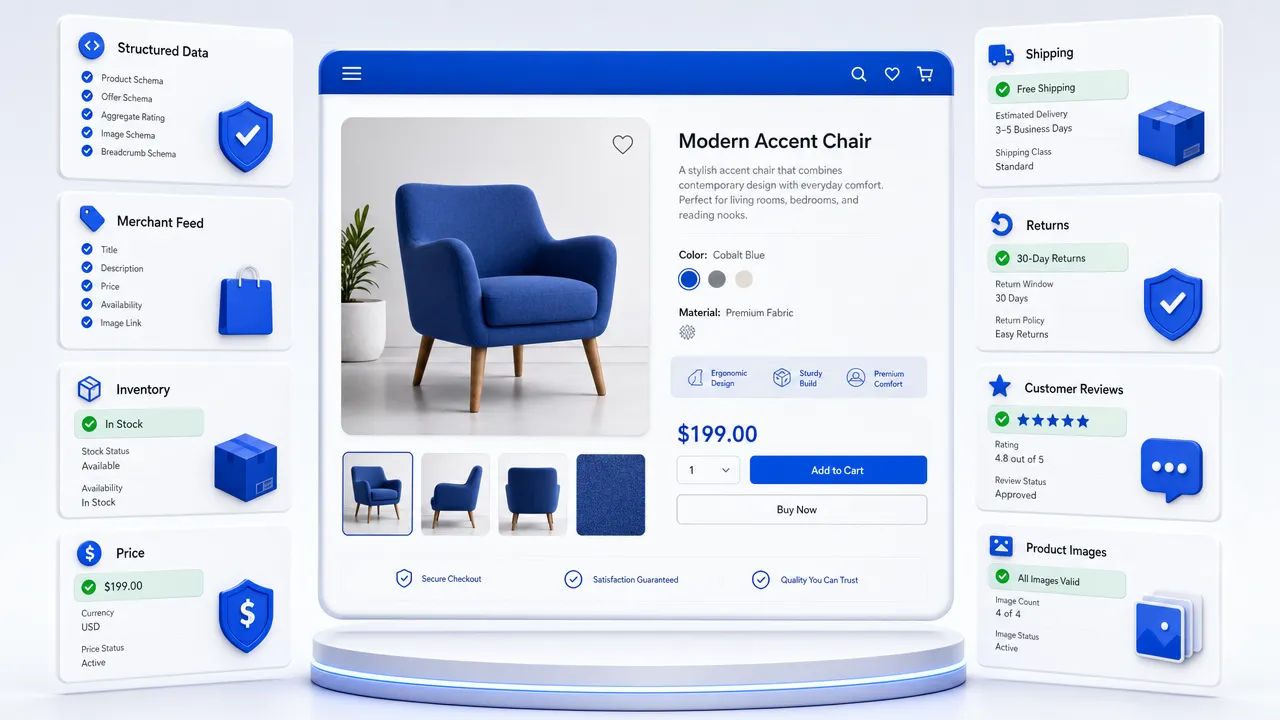
Product facts also need to agree. If a blue variant is listed as available on the product page but unavailable in the merchant feed, the customer sees uncertainty and commerce systems receive conflicting information. The same problem occurs when the product page says "free returns" but the policy page limits returns by market or product type.
Use this consistency check before expanding content production:
| Product fact | Product page | Structured data | Merchant feed | Checkout and policy pages | Retailer record, if applicable |
|---|---|---|---|---|---|
| Product name and model | Match | Match | Match | Match | Match |
| Variant identifier | Visible | Correctly modeled | Correctly mapped | Selectable | Match |
| Price and currency | Current | Current | Current | Current | Current |
| Availability | Current | Current | Current | Current | Current |
| Main image | Exact item or variant | Referenced accurately | Correct image URL | Exact item or variant | Match |
| Shipping and returns | Clear by market | Marked up where supported | Complete settings | Operationally accurate | Match where possible |
For technical implementation, the Google ecommerce SEO guidance should be the baseline. It covers ecommerce discovery, URL structure, navigation, product data, reviews, and more. A brand should also validate JavaScript-heavy templates against Google's JavaScript SEO basics, especially where price, availability, selected variants, and internal links are loaded dynamically.
Why Good DTC Products Still Get Missed
Many brands assume the missing ingredient is more mentions or more content. Sometimes it is. More often, the issue is that the product is difficult to interpret at category level.
A brand can rank for its own name and still fail to appear for research queries such as "best lightweight carry-on backpack," "best non-stick cookware for small kitchens," or "best moisturizer for dry winter skin." Those searches happen before the buyer knows which brand to consider. If the site only contains branded product pages and a generic blog, it has little material that connects its catalog to the language of comparison.
The most common failures are practical, not mysterious.
-
Product pages are thin or vague.
A lifestyle paragraph does not replace specifications. Buyers and recommendation systems need differentiators: dimensions, ingredients, compatibility, fabric weight, care needs, battery life, what is included, and meaningful use cases. -
Product details are trapped behind JavaScript.
Google can render JavaScript, but rendering adds dependencies. A variant selector that fails to expose price, stock, canonical tags, or product links reliably makes product discovery for DTC brands fragile. Test source HTML, rendered HTML, and live page output rather than assuming the storefront framework handles everything correctly. -
Merchant data does not match the landing page.
Merchant systems expect accurate price, availability, shipping, identifiers, and destination details. Review Google Merchant Center's product data specification regularly because feed requirements and country-specific attributes can change. -
Category pages are only filter grids.
A collection page with 48 product tiles may be useful for existing customers, but it does not necessarily explain who the category is for, what differentiates products, or how to choose. Add concise category context, selection criteria, FAQs, and links to relevant decision-support content. -
Products are orphaned or buried.
A high-margin product five clicks away from navigation, without contextual internal links, receives less help from the site's own architecture. A useful next step is reviewing internal linking best practices for SEO to connect buying guides, collections, and product pages with descriptive anchors. -
There is too little independent validation.
No official documentation says that one editorial mention directly causes AI shopping recommendations. Still, credible reviews, expert testing, and accurate retailer listings can create public information beyond the brand's own claims. That helps a product become easier to compare and discuss. -
International offers are inconsistent.
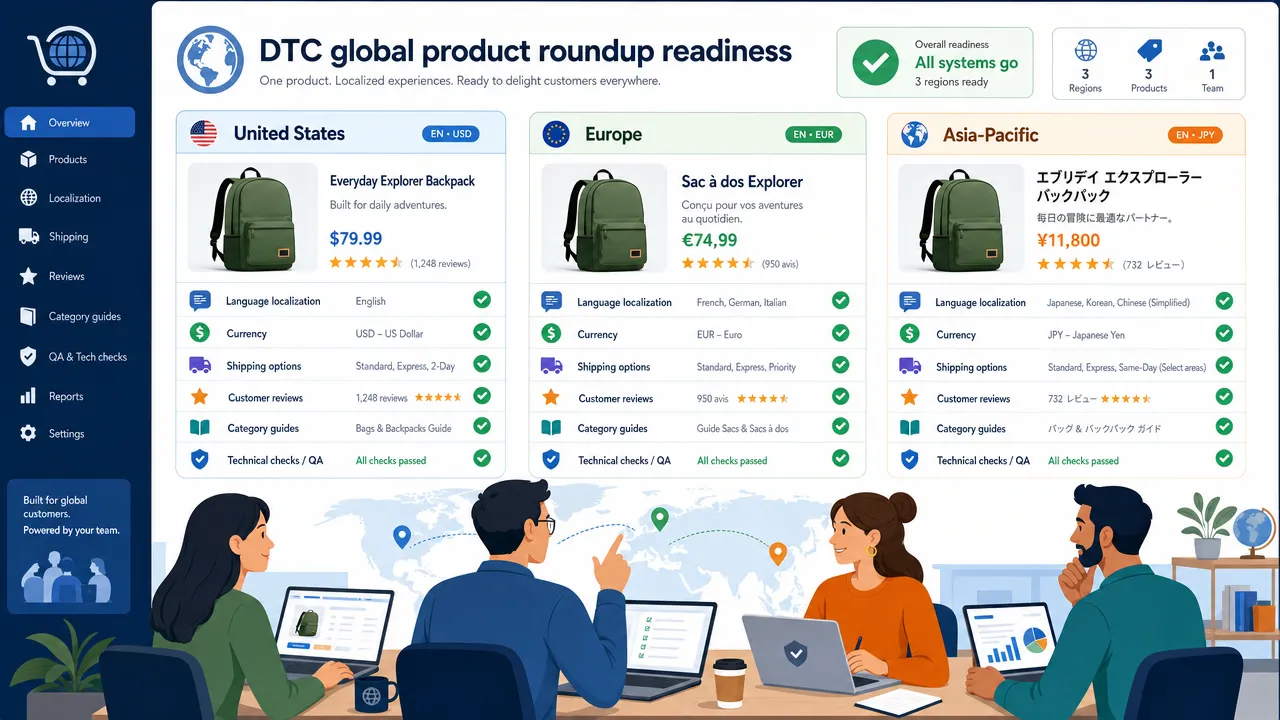
A product that is available in the United States may have different price, sizing, shipping, labeling, warranty, or return conditions in Europe or Asia-Pacific. Translating a page without localizing the commercial facts creates a mismatch. Google's international and multilingual site guidance explains why crawlable local URLs and valid hreflang relationships matter.
The key distinction is this: technical access is a prerequisite, while content and proof improve the quality of the available information. A technically clean page with generic copy is still hard to recommend. Excellent content on a blocked or inconsistent product page is equally limited.
How to Improve Your Readiness for AI Product Roundups
The following sequence is designed for teams deciding how to get featured in AI roundups without wasting effort on superficial changes. Start with the constraints that can prevent a product from being found or interpreted at all.
1. Create one governed source of product truth
Assign clear ownership for product names, SKUs, identifiers, variants, prices, availability, images, dimensions, materials or ingredients, warranties, shipping regions, and return rules. This can be a product information management system, a controlled merchandising workflow, or a well-maintained governance sheet.
The important part is not the software. It is preventing one team from changing a product name in the store while another keeps an old identifier in the feed and a third uses outdated images in retailer listings.
2. Audit high-value product and category templates
Do not begin with every SKU. Start with flagship products, high-margin collections, seasonal priorities, and pages already attracting non-branded impressions.
Review:
- Indexability and canonical URLs.
- Internal links using real crawlable URLs.
- Rendered product title, description, price, stock, and selected-variant details.
- Product and Offer markup that matches visible content.
- Image accuracy for each variant.
- Sitemap inclusion for canonical product and collection URLs.
- Mobile usability and checkout-adjacent friction.
For a structured audit process, this ecommerce-focused technical SEO audit article provides a practical reference point. The purpose is not to fix every low-priority issue. It is to identify the defects that materially limit discovery, trust, or conversion.
3. Upgrade product pages with decision-grade information
A shopper comparing products does not need more adjectives. They need answers.
For apparel, include fabric composition, fit guidance, model information, care, stretch, lining, seasonality, and size differences. For beauty, include ingredients, routine placement, skin-type suitability, fragrance details, usage frequency, and realistic limitations. For home goods, include dimensions, materials, capacity, assembly, care, and compatibility.
Visual evidence matters as much as text. Use a primary image that clearly shows the exact item, then add close-ups, scale references, in-use images, and variant-specific media. For more detail, see SeekLab.io's guidance on product page content and visuals for higher conversions.
4. Build category pages and commercial buyer guides
Category content should answer the questions people ask before they are ready to buy a specific SKU. This is where product discovery for DTC brands becomes broader than product-page optimization.
Useful formats include:
- How to choose a product by material, fit, capacity, or use case.
- Comparisons between product types, not exaggerated brand-versus-brand claims.
- Size, shade, compatibility, or routine guides.
- Bundling guides for first-time buyers.
- Care and maintenance content that reduces post-purchase uncertainty.
- Seasonal or travel-specific selection pages.
A guide about choosing carry-on luggage should link naturally to the relevant collection and a small number of suitable products. It should not become a large block of random product links. Use search behavior and customer-service questions to decide which guides matter. SeekLab.io's resource on search intent and lead generation can help teams separate useful commercial investigation topics from low-value informational traffic.
5. Add authentic reviews and credible third-party proof
Customer reviews can improve buyer confidence, but only if they are product-specific, visible, and authentic. Do not add review markup to content users cannot see. Do not treat review volume as a substitute for useful detail. A review explaining fit, delivery experience, texture, durability, or compatibility is more helpful than a star rating alone.
Earned media for ecommerce brands should be approached as evidence-building, not placement buying. Prepare a reviewer kit with:
- An accurate product fact sheet.
- High-resolution images and variant details.
- Approved, evidence-backed claims.
- Sample availability and testing guidance.
- Return, warranty, and shipping facts.
- Disclosure expectations.
- A process for correcting inaccurate published details.
Good editorial coverage may create independent, crawlable product context. It cannot be bought as a guaranteed route into an AI "best of" roundup. Avoid low-quality affiliate pages that copy brand descriptions, make unsupported claims, or obscure commercial relationships.
6. Localize the actual offer, not only the copy
For international ecommerce, language is only one layer. Local pages need correct currency, size conventions, inventory, shipping timelines, return terms, product compliance information, and region-specific customer support details.
A U.S. product page that automatically changes content based on a visitor's location is not a complete localization strategy. Search engines need accessible, indexable local URLs to discover and evaluate market-specific content reliably. Review hreflang implementation and confirm that every linked regional page is canonical and indexable.
How to Measure Progress Toward AI Roundup Visibility
AI shopping results are volatile. They may differ by query wording, account status, country, inventory, price, language, personalization, and platform experiments. A single answer from one interface is not a durable visibility report.
Measure the controllable inputs first.
| Measurement area | Useful indicator | Why it matters |
|---|---|---|
| Crawlability | Share of priority pages returning indexable 200-status responses | Confirms key products can be discovered |
| Structured data | Share of priority PDPs with valid Product and Offer markup | Reveals machine-readable product gaps |
| Feed health | Approval rate, errors, warnings, and mismatches | Detects commerce data conflicts |
| Content coverage | Category and buyer-guide coverage for priority non-branded queries | Shows whether the brand can be found before branded demand exists |
| Internal architecture | Links into priority products and collections | Identifies orphaned or weakly connected commercial pages |
| Product proof | Authentic review coverage and credible third-party references | Indicates the depth of public product evidence |
| International readiness | Valid hreflang and local offer completeness | Prevents the wrong product or policy appearing by market |
| Business outcomes | Product-page conversion, add-to-cart rate, revenue, and qualified inquiries | Keeps the work tied to commercial value |
You can also maintain a directional AI query sample. Use a fixed set of category and use-case prompts, then record the date, market, language, device, account state, products shown, sources referenced, product availability, and major claims. This will not produce a universal share-of-voice number, but it can reveal recurring information gaps.
Avoid over-attribution. If a product appears in a recommendation after a feed fix, a new review campaign, and a category-guide launch, you cannot honestly claim that one change caused the result. Use a monthly change log to connect releases, feed updates, inventory shifts, content launches, reviews, and earned coverage with later visibility and conversion trends.
For many DTC teams, the best next step is not publishing another generic article. It is finding the few technical, product-data, content, and international issues that are actually suppressing growth. SeekLab.io helps brands build search visibility and AI-era discoverability through structured content, technical optimization, clearer site architecture, internal linking, and decision-grade product information.
FAQ: getting into AI product roundups
Is there a single tactic that gets a product into AI shopping recommendations?
No. Coverage depends on multiple layers agreeing at once, product page content, structured data, merchant feed, checkout facts, and independent proof. A brand that only fixes one layer while leaving the others inconsistent will still struggle to appear.
Does adding Product schema guarantee inclusion in AI roundups?
No. Structured data makes facts less ambiguous for machines to interpret, it doesn't invent facts that aren't already true on the page, and no platform documents a formula that guarantees placement in exchange for valid markup.
What's the most common reason a good DTC product gets missed?
The product page is technically fine but too vague at the category level, thin specifications, no differentiators, and no independent proof beyond the brand's own claims. A system evaluating "best lightweight carry-on backpack" needs comparable, verifiable facts, not lifestyle copy.
Should a brand pay for editorial placements to appear in more roundups?
No. Earned coverage should be pursued as evidence-building (accurate fact sheets, real samples, disclosed relationships), not as guaranteed placement buying. Low-quality affiliate content that copies brand descriptions or obscures commercial relationships tends to hurt credibility rather than help it.
How should a DTC brand measure progress if there's no reliable roundup-tracking tool?
Track the controllable inputs instead: crawlability of priority pages, structured data validity, feed health, category and buyer-guide coverage, internal linking, and review authenticity. A directional AI query sample can reveal gaps, but avoid attributing any single visibility change to one isolated fix.
If you are unsure whether your feeds, product pages, rendering, structured data, or category architecture are creating gaps, get a free audit report. SeekLab.io focuses on the fixes most likely to affect visibility, credibility, and conversion potential, rather than treating every audit finding as equally urgent.