AEO & AI Citation Optimization Core Strategies
Expert reviewed


AI search is changing what it means to be visible online. Ranking well in traditional SEO still matters, but it no longer guarantees that your site will be quoted, referenced, or surfaced inside AI-generated answers. That is why AI Citation Optimization has become a core strategy for brands that want visibility across both search engines and answer-driven experiences.
For marketing and operations managers, especially those running independent websites, B2B sites, exporter websites, and multilingual company sites, the shift is practical rather than theoretical. AI systems increasingly prefer pages that are easy to crawl, easy to parse, and easy to quote. In other words, they reward structured content, clear entity signals, strong schema markup, and visible expertise.
This is also where Answer Engine Optimization (AEO) overlaps with technical SEO and content strategy. The goal is not to optimize everything blindly. The goal is to identify what actually influences discoverability, citations, and eventually leads. That is the same principle behind SeekLab.io's approach: diagnose what impacts growth, deprioritize what does not, and turn findings into clear next steps.
1. Why AI Citation Optimization matters more than rankings alone
AI Citation Optimization matters because AI systems do not simply copy the top 10 results from a search engine and display them in order. They retrieve passages, compare sources, and select a limited number of citations that appear trustworthy, relevant, and easy to extract.
Recent industry reporting shows a few consistent patterns:
- AI-generated answers often cite a narrower set of sources than traditional SERPs.
- Strong rankings do not automatically lead to AI citations.
- Long-tail and conversational keywords are more likely to trigger answer-style experiences.
- Mobile-friendly, scannable layouts can improve click-through behavior by an estimated 15 to 25 percent in relevant scenarios.
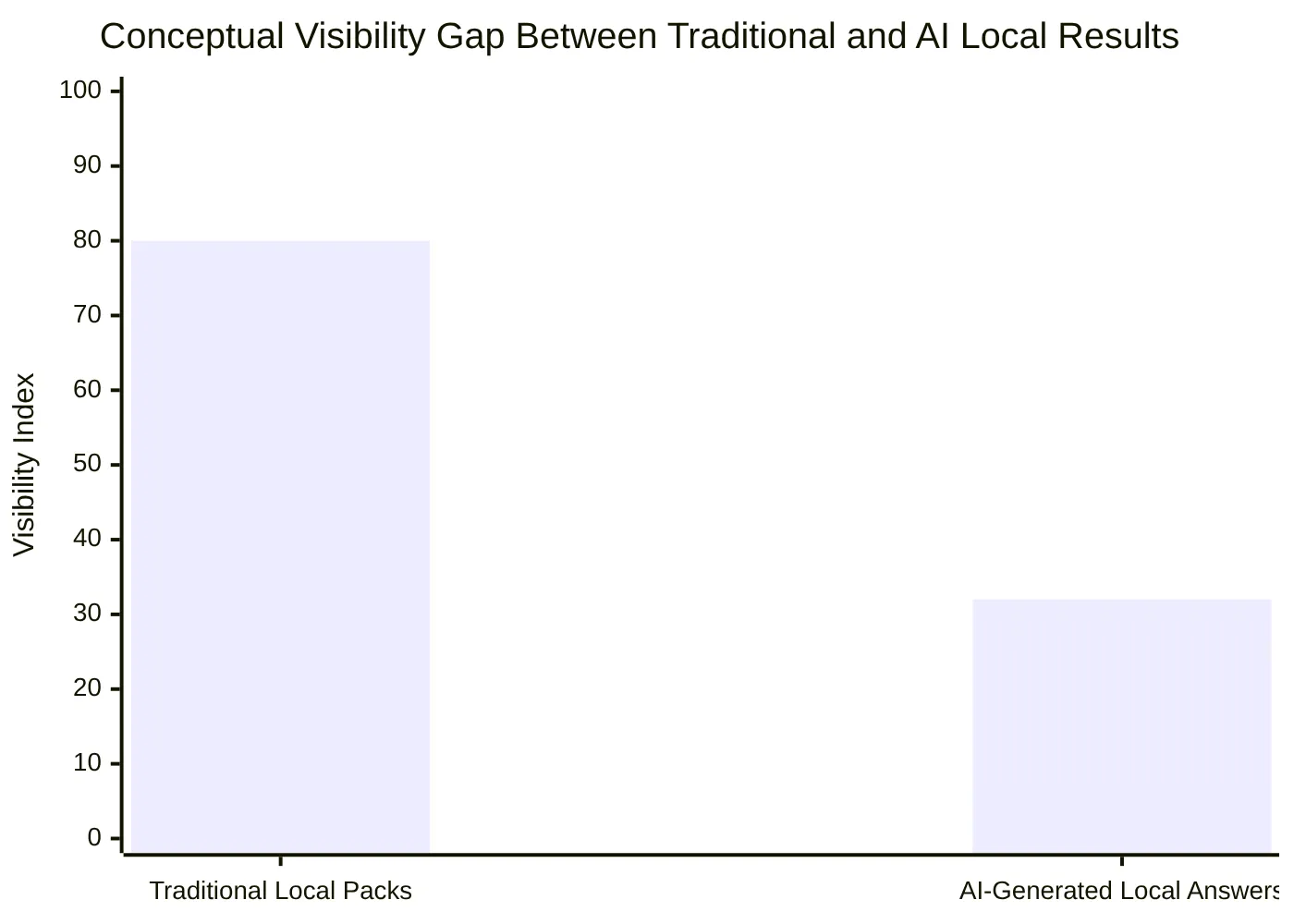
- Local brands may lose visibility in AI results if their content and entity signals are weak.
This is why Answer Engine Optimization (AEO) should be treated as an extension of modern SEO, not a separate buzzword. The difference is that AI Citation Optimization focuses more heavily on citable passage quality than on page-level ranking alone.
A simple way to think about it is this:
| Traditional SEO focus | AI Citation Optimization focus |
|---|---|
| Rank the page | Make the passage citable |
| Target keywords | Target direct answers and conversational keywords |
| Build authority through links | Build extractable trust through structure, schema markup, and EEAT optimization |
| Measure rankings and clicks | Measure citations, answer visibility, and downstream lead quality |
For brands that rely on official websites instead of marketplaces or directories, this shift is especially important. If AI systems summarize your category without citing your site, your visibility can shrink even if your rankings look stable.
If you want a related perspective on how content needs to adapt for AI-era discovery, SeekLab.io has already explored this in "From SEO To GEO: Adapting Content For AI Search".
2. How AI Citation Optimization depends on structured content and schema markup
The core principle behind AI Citation Optimization is simple: if your content is hard for machines to understand, it is harder to cite.
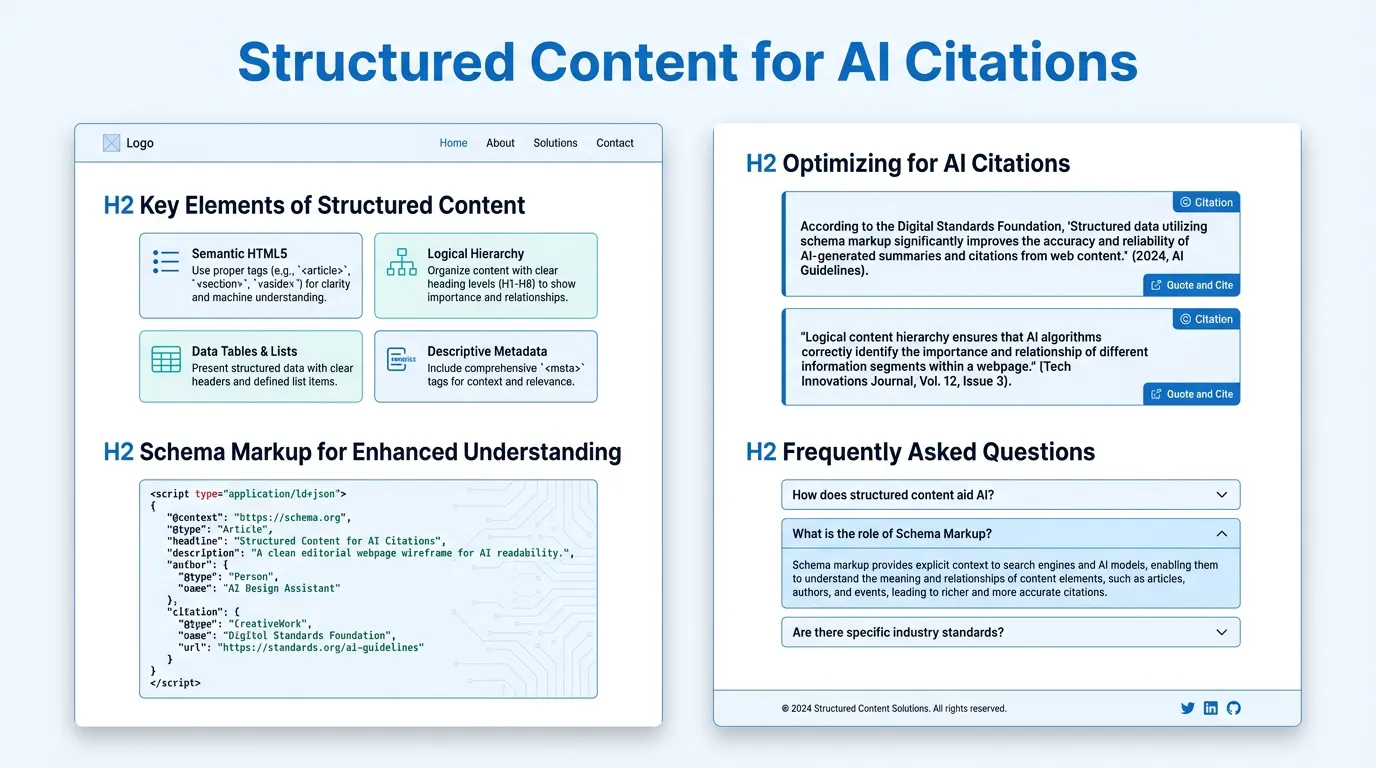
AI systems tend to favor pages with structured content patterns such as:
- clear H2 and H3 headings
- short paragraphs
- bullet points
- concise definitions
- FAQs
- step-by-step sections
- tables with comparable information
- visible update dates
These elements help machines break a page into chunks that can stand on their own as answers.
At the same time, schema markup gives those pages an extra layer of meaning. Instead of forcing a crawler to infer everything from layout alone, schema markup explicitly states what the page represents and how its entities relate to one another.
The most useful schema markup types for AI Citation Optimization commonly include:
| Page intent | Recommended schema markup |
|---|---|
| Educational blog post | Article or BlogPosting |
| FAQ section | FAQPage |
| Step-by-step tutorial | HowTo |
| Product or service detail | Product, Offer, Review |
| Company identity | Organization |
| Regional office or service area | LocalBusiness |
| Site hierarchy | BreadcrumbList |
For B2B companies, exporters, and multilingual brands, schema markup also improves entity consistency. That matters because answer engines need to understand who is speaking, what the company does, and whether the same brand exists across multiple regions or languages.
A practical content layout for AI Citation Optimization usually looks like this:
- A short answer near the top of the section.
- A table, list, or summary block that can be extracted easily.
- Deeper explanation below.
- FAQ content that mirrors conversational keywords.
- Matching schema markup behind the visible page.
This is one reason SeekLab.io emphasizes high-quality content production together with technical structure, schema data enhancement, and semantic analysis. Content alone is not enough if the structure underneath is weak.
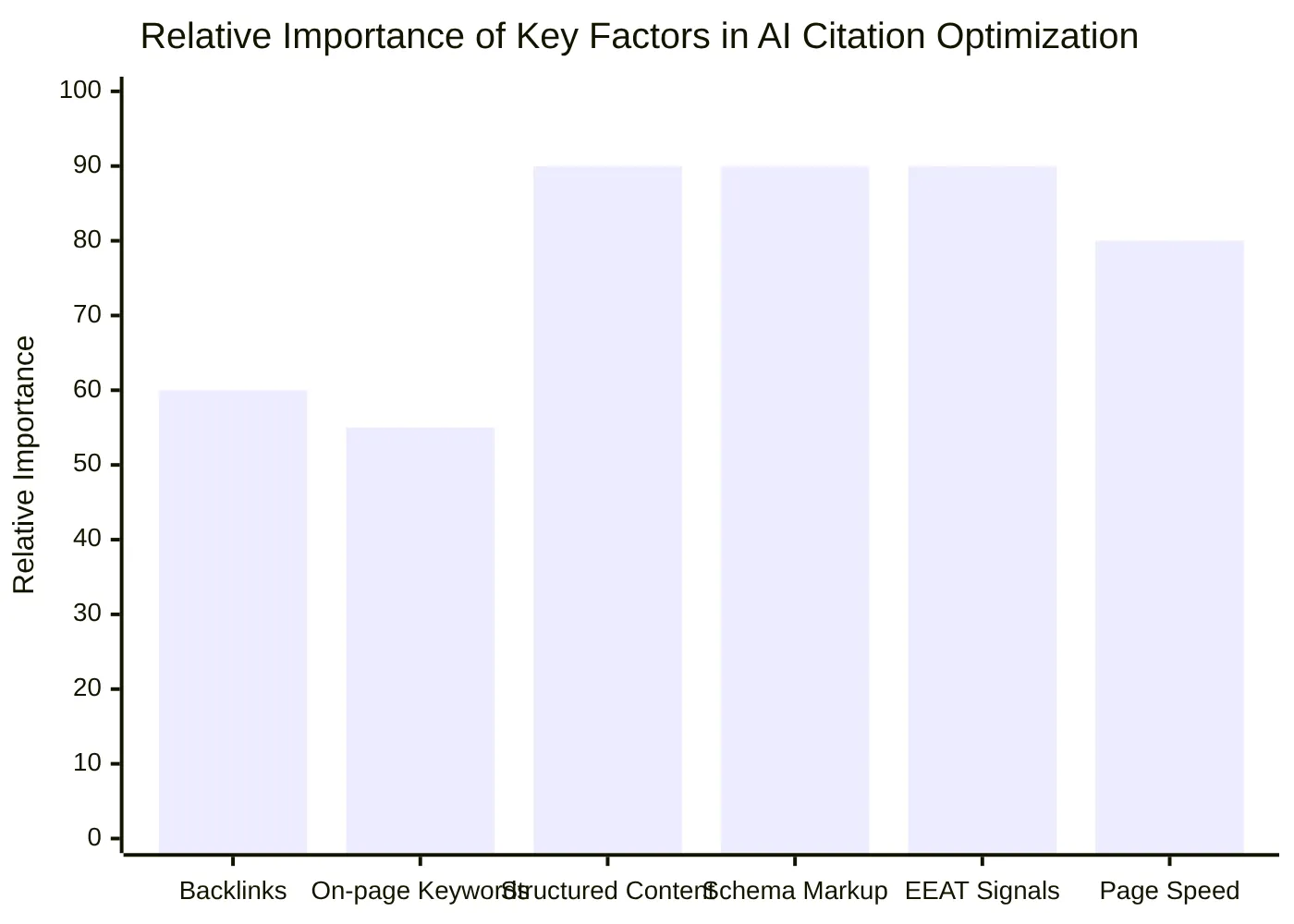
3. The best AI Citation Optimization tactics now include EEAT optimization and conversational keywords
If structure helps AI systems extract content, EEAT optimization helps them trust it.
In practice, EEAT optimization means making expertise and trust visible, not implied. Pages that are more likely to earn citations often include:
- clear author attribution
- accurate and updated claims
- organization details that match the site and schema markup
- practical examples instead of vague marketing copy
- product, service, or regional context that reflects real business use cases
This matters for independent company sites because generic articles often fail twice: they do not convert well for real users, and they are not strong enough for AI systems to cite confidently.
The second major tactic is targeting conversational keywords. AI users search differently from traditional keyword patterns. Instead of entering "technical SEO audit", they may ask:
- How do I run a technical SEO audit for a JavaScript-heavy website?
- What schema markup should a B2B company use for AI citations?
- How should an exporter structure a multilingual site for the US and Europe?
These are exactly the kinds of prompts that Answer Engine Optimization (AEO) is built for. They combine intent, context, and desired outcome. That makes them ideal for pages structured around direct answers, lists, and FAQs.
Here are six practical ways to apply AI Citation Optimization with conversational keywords:
-
Write question-led subheadings
Use subheadings that reflect natural prompts, not only short-head keyword phrases. -
Front-load the answer
Give the short answer immediately after the heading, then expand. -
Build FAQ blocks into the page
Do not isolate all questions in one giant help center if they belong naturally in a commercial or educational page. -
Add proof and operational detail
Real constraints, real scenarios, and concrete examples strengthen EEAT optimization. -
Match language to user intent
A buyer-stage query needs a different answer structure than an early research query. -
Keep pages easy to scan on mobile
AI-generated answers often intersect with mobile behavior, where clarity matters even more.
SeekLab.io applies this logic by selecting content topics based on user intent and contextual scenarios, not just search volume. That helps clients avoid going in the wrong direction before content production even begins.
If multilingual growth is part of your roadmap, this also connects closely to "The Ultimate Guide To Multilingual SEO Strategy In 2026", especially when conversational keywords differ across markets.
4. Why technical AI Citation Optimization is now a site architecture problem
Many teams discuss AI Citation Optimization as a content issue. In reality, it is also a technical SEO and site architecture issue.
AI systems can only cite what they can access, render, and interpret correctly. That means the following technical factors are now directly tied to citation potential:
- crawlability
- indexation quality
- canonical consistency
- internal linking strategy
- rendering reliability
- Core Web Vitals
- hreflang implementation
- schema markup validation
If a page depends too heavily on JavaScript to load core content, some systems may not capture the full content block. If internal links are weak, answer engines may struggle to understand which page is your authoritative resource for a topic. If hreflang is inconsistent, a multilingual brand may fragment its authority across regions.
This is especially relevant for businesses serving Asia-Pacific, the US, and Europe. A brand with teams in Singapore and Shanghai and business development support in Dubai cannot afford structural ambiguity across language versions, regional pages, and service descriptions.
Here is a practical prioritization table for technical AI Citation Optimization:
| Technical area | Why it matters for AI citations | What to prioritize first |
|---|---|---|
| Rendering | AI systems may miss content hidden behind client-side scripts | Ensure core content exists in accessible HTML |
| Internal linking | Helps define topic authority and page relationships | Link pillar pages and supporting articles clearly |
| Schema markup | Adds machine-readable meaning | Validate Article, FAQPage, Organization, LocalBusiness, Product |
| Core Web Vitals | Supports crawl efficiency and user experience | Improve page speed on key templates |
| hreflang | Helps engines select the correct locale version | Audit language and regional targeting |
| Canonicals and sitemaps | Prevent duplicate or outdated pages from competing | Include only preferred URLs |
This is where a focused SEO Audit becomes commercially useful. A good audit should not overwhelm teams with every possible issue. It should identify which technical blockers affect discoverability and which items can wait.
SeekLab.io's approach fits this model closely. The company provides full-site crawling, structured analysis, indexing and rendering checks, internal link analysis, schema data compliance review, and technical guidance that helps teams act on the right priorities first.
For JavaScript-heavy websites, the concerns become even more direct. SeekLab.io's article on "Technical JavaScript SEO & Indexing Solutions" explains why source HTML, rendered HTML, and crawlable linking still matter for discoverability.

5. How to measure AI Citation Optimization without chasing vanity metrics
Measurement is still immature, but that does not mean it should be ignored.
Several sources in the research report point to emerging tools such as Bing's AI Citation Dashboard, AIclicks.io, and Semrush AI-related features. These tools can help teams understand:
- which pages get cited
- which query clusters trigger citations
- how citation patterns change by geography or device
- whether answer visibility is moving toward pages that support conversions
But tools alone do not solve the bigger issue. Many teams already worry about paying for SEO work that improves charts without improving business results. The same risk exists with AI Citation Optimization.
A practical measurement framework should include both visibility and business outcomes:
| Measurement layer | What to track |
|---|---|
| Citation visibility | cited URLs, citation frequency, query clusters, device or region trends |
| Traditional SEO health | impressions, indexed pages, rankings, organic sessions |
| Content quality signals | CTR, engagement, assisted conversions, lead-path behavior |
| Commercial outcomes | inquiries, demo requests, qualified leads, RFQs |
The best way to use these insights is not to optimize every page equally. Instead:
- identify high-value pages
- review which ones already match conversational intent
- check whether they contain structured content and valid schema markup
- map citation visibility back to lead quality, not just traffic
That prioritization mindset is important. SeekLab.io does not aim to fix everything. It focuses on what truly impacts growth, what can be deprioritized, and what actions are clear enough for teams to implement.
For businesses that want a starting point before investing more heavily, a natural next step is to review a focused diagnosis through SeekLab.io's "Get Your Free SEO Site Check Now". That aligns with the broader principle behind AI Citation Optimization: make the right strategic decision first, then execute.
In the end, sustainable AI Citation Optimization is not about chasing a new acronym. It is about building pages that machines can trust, users can understand, and businesses can benefit from. That means combining Answer Engine Optimization (AEO), structured content, schema markup, EEAT optimization, conversational keywords, and technical clarity into one system.
For brands that want stronger search visibility and AI-era discoverability, the opportunity is real. The winners are likely to be the sites that are not just present online, but easy to interpret, easy to cite, and worth trusting.