Why are investors racing into metaverse land?
April 10, 2026 ·
12 Min Read
Expert reviewed

If you search for the metaverse land rush, the short answer is this: investors raced in because virtual land looked like a new form of scarce property, a branding shortcut, and a speculative bet all at once. This article breaks down what the metaverse land rush actually was, why virtual real estate attracted serious money, how digital scarcity was engineered, where the economic simulation breaks down, and why the deeper issue is really one of ownership ontology rather than simple investment hype.
You will also get a practical lens for brand and website decision-making. Instead of treating the topic like a crypto curiosity, this piece looks at what the metaverse land rush reveals about digital ownership, AI-controlled assets, and how businesses should structure content and technical SEO around emerging search behavior. For teams deciding what deserves attention and what can be deprioritized, that distinction matters more than another recycled "future of the metaverse" opinion piece.
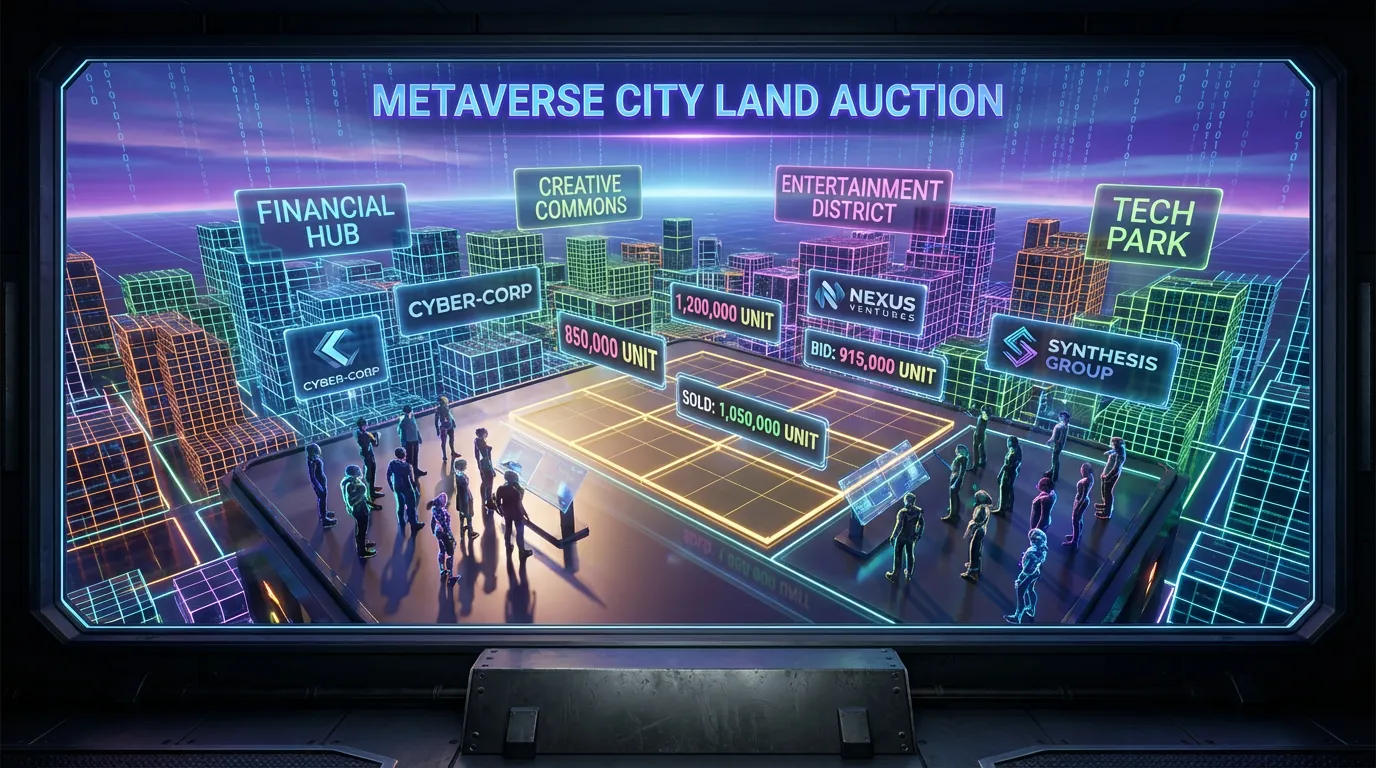 That is why the metaverse land rush deserves to be read as more than a trend recap. It shows how quickly markets import physical-world assumptions into digital environments. Terms like downtown, district, frontage, adjacency, and premium location were used as if code-generated parcels had the same underlying constraints as land in Manhattan or Singapore. They do not. Their value depends on software, governance, attention, and platform continuity.
A quick comparison helps clarify what buyers were really purchasing:
That is why the metaverse land rush deserves to be read as more than a trend recap. It shows how quickly markets import physical-world assumptions into digital environments. Terms like downtown, district, frontage, adjacency, and premium location were used as if code-generated parcels had the same underlying constraints as land in Manhattan or Singapore. They do not. Their value depends on software, governance, attention, and platform continuity.
A quick comparison helps clarify what buyers were really purchasing:
These examples mattered because they gave institutional cover to the metaverse land rush. Once known brands and specialized investment firms entered, smaller buyers started interpreting participation itself as validation. In many speculative markets, that is the tipping point: people stop asking whether demand is durable and start asking whether they are early enough.
 The more interesting point is that the asset was rarely just the parcel. For many brands, the land was a wrapper around a campaign. The actual value came from press attention, experimental commerce, or community signaling. In other words, some buyers were not really investing in land at all. They were buying visibility in a new narrative environment. That distinction matters for operators because marketing budgets and speculative asset budgets should not be judged by the same standard.
 Where this economic simulation becomes fragile is equally important:
This is where ownership ontology becomes more than theory. In practical terms, many buyers owned a tokenized claim recognized by software, but not the kind of property right most people imagine when they hear the word land. That distinction was often blurred in marketing copy because "parcel NFT subject to ecosystem rules" is much harder to sell than "buy land in the next digital city."
 The ownership ontology problem becomes even sharper when projects fail. If a world becomes inactive or shuts down, the token may still exist while the meaningful utility disappears. That is very different from physical property, where utility may decline but does not vanish because a game studio lost interest. For decision-makers, that is the key warning: a transferable token is not the same thing as durable digital territory.
From there, internal linking should connect the topic cluster to relevant service pages and related strategic content. For readers assessing how to structure this kind of coverage, SeekLab.io's solutions overview gives a clear picture of how technical SEO, topic strategy, and content execution work together. If the challenge is broader than one article, the main site outlines how SeekLab.io approaches search visibility, technical readiness, and long-term growth. And if your team is thinking about how emerging search systems interpret structured content, the article on adapting content for AI search is a natural next read.
Another practical point: this topic is attractive precisely because many competing pages are either too promotional or too vague. That creates an opening for a business-minded, evidence-based article with proper tables, visuals, clear entity relationships, and strong internal architecture. SeekLab.io focuses on making websites easier for search engines, AI systems, and real users to understand by improving content structure, information clarity, page architecture, and internal linking. On a topic as messy as the metaverse land rush, that clarity is an advantage.
If your team is deciding whether this topic deserves coverage, the question is simple: can you publish something more useful than hype, and can your site support it technically? If not, the safer move is to fix structure first. If yes, there is real opportunity to own a thoughtful angle before the next wave of AI-and-digital-property discussion becomes crowded.
A final takeaway list makes the decision framework clearer:
What the metaverse land rush actually tells us
The metaverse land rush peaked when investors, funds, and brands bought blockchain-based parcels in worlds such as Decentraland and The Sandbox, often using real-estate language to justify digital prices. Research cited in major coverage put sales across four major platforms at roughly $501M in 2021, which explains why the category drew both speculation and mainstream attention. That number is often repeated loosely, and that is part of the problem: hype markets turn aggregate figures into myths very quickly. A useful correction comes early. The rumored February 2026 story about Decentraland selling a virtual replica of New York City for $500M does not appear substantiated in the research provided. What is supported is the broader market total from the earlier boom period, not a single verified sale of a virtual NYC clone. That gap between rumor and evidence is not a side note; it is one of the clearest signals that buyers were often trading narrative as much as property.
That is why the metaverse land rush deserves to be read as more than a trend recap. It shows how quickly markets import physical-world assumptions into digital environments. Terms like downtown, district, frontage, adjacency, and premium location were used as if code-generated parcels had the same underlying constraints as land in Manhattan or Singapore. They do not. Their value depends on software, governance, attention, and platform continuity.
A quick comparison helps clarify what buyers were really purchasing:
| Factor | Physical property | Metaverse land |
|---|---|---|
| Scarcity source | Geography, law, infrastructure | Code, governance, platform design |
| Ownership basis | Legal title | NFT control plus platform rules |
| Residual utility | Land remains even if tenant leaves | Value can collapse if users leave |
| Liquidity | Slow, regulated, costly | Fast in theory, thin in practice |
| Risk of platform failure | Low in basic property terms | High if world loses users or shuts down |
How the metaverse land rush turned virtual real estate into an asset class
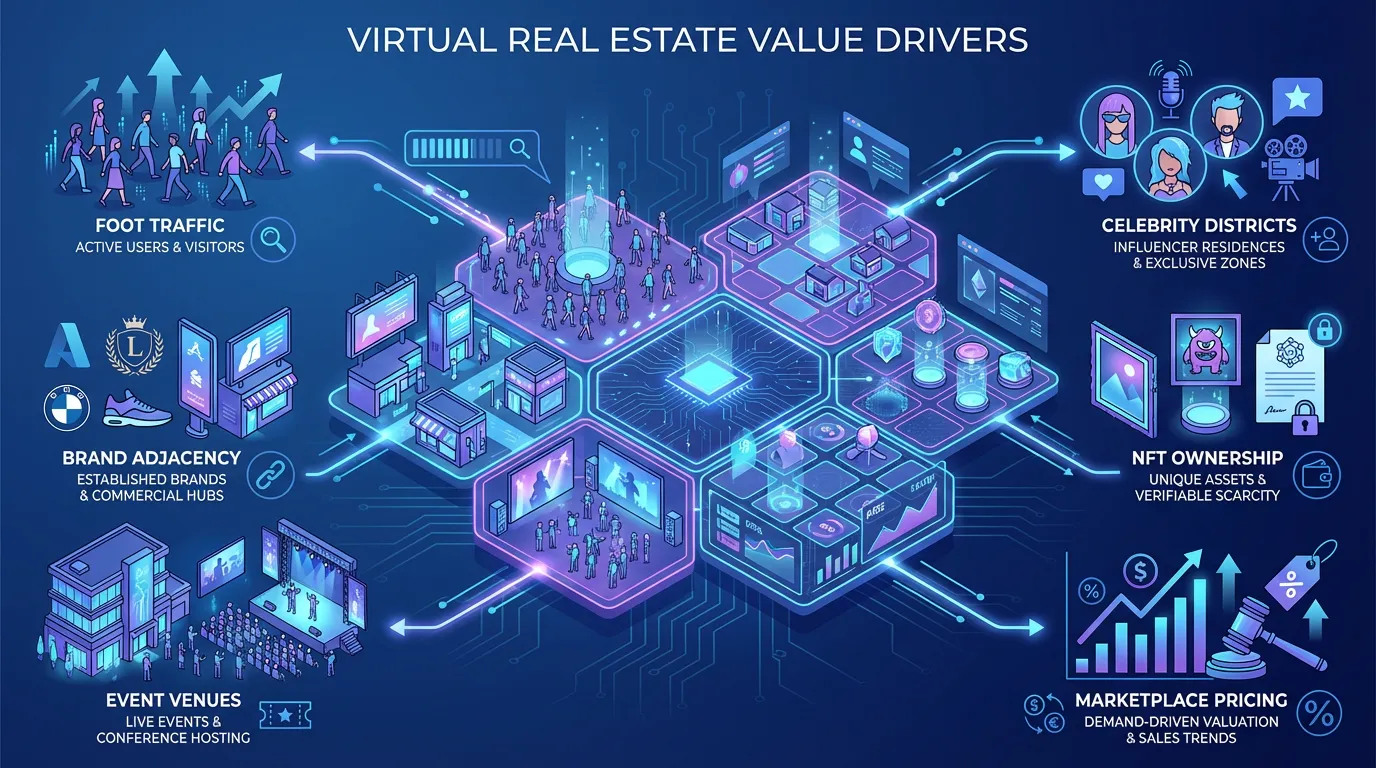
The mechanics behind virtual real estate were simple enough to market. A platform divides a world into parcels, fixes a supply number, mints those parcels as NFTs, and encourages buyers to believe location will matter. Decentraland and The Sandbox became central examples because they offered a recognizable map logic, visible brand participation, and active secondary trading. In that setup, virtual real estate borrowed heavily from familiar investor instincts. Buyers were told that being near a celebrity zone, a branded district, or a popular event space would increase value. That logic was not entirely irrational. A parcel near a high-traffic in-world destination could gain attention, especially if owners developed it into a storefront, gallery, or event venue. But the leap from "could attract attention" to "should be priced like premium property" was where speculation accelerated. Some of the large purchases in the research report show why the story spread so fast:| Example | Platform | Reported rationale |
|---|---|---|
| Republic Realm purchase | The Sandbox | Development play, themed experience buildout |
| Tokens.com / Metaverse Group fashion district buy | Decentraland | Brand leasing, fashion positioning, event exposure |
| Adidas, Gucci, HSBC activations | The Sandbox | Visibility, experimentation, PR, community reach |
The more interesting point is that the asset was rarely just the parcel. For many brands, the land was a wrapper around a campaign. The actual value came from press attention, experimental commerce, or community signaling. In other words, some buyers were not really investing in land at all. They were buying visibility in a new narrative environment. That distinction matters for operators because marketing budgets and speculative asset budgets should not be judged by the same standard.
Why the metaverse land rush depended on digital scarcity and economic simulation
The metaverse land rush only made sense because platforms created credible-looking digital scarcity. Fixed parcel counts, districts, map coordinates, road access, and central hubs made these worlds feel constrained. That design choice was powerful because it converted software abundance into something that resembled urban shortage. But digital scarcity is not physical scarcity. A real city cannot spin up a parallel downtown next week because user growth looks weak. A virtual world can add regions, launch adjacent experiences, introduce vertical layers, or lose relevance to a newer platform with better usability. Scarcity in digital systems is not fake, but it is conditional. It depends on users continuing to believe the rules will hold and the world will matter. That brings us to economic simulation. Metaverse platforms functioned like live experiments in mini urban economies: primary sales, secondary trading, rents, events, token incentives, and governance votes. Buyers were not just trading JPEG logic. They were participating in a software-mediated economic simulation where attention, speculation, and community behavior combined to produce land values.
Where this economic simulation becomes fragile is equally important:
- Low active user numbers can make "prime location" meaningless.
- Secondary market volume can be distorted by thin liquidity or manipulated trades.
- Competing worlds can dilute attention faster than any physical real-estate market could.
- If a platform loses cultural momentum, land values can fall toward irrelevance with no physical floor underneath.
Why the metaverse land rush raises an ownership ontology problem
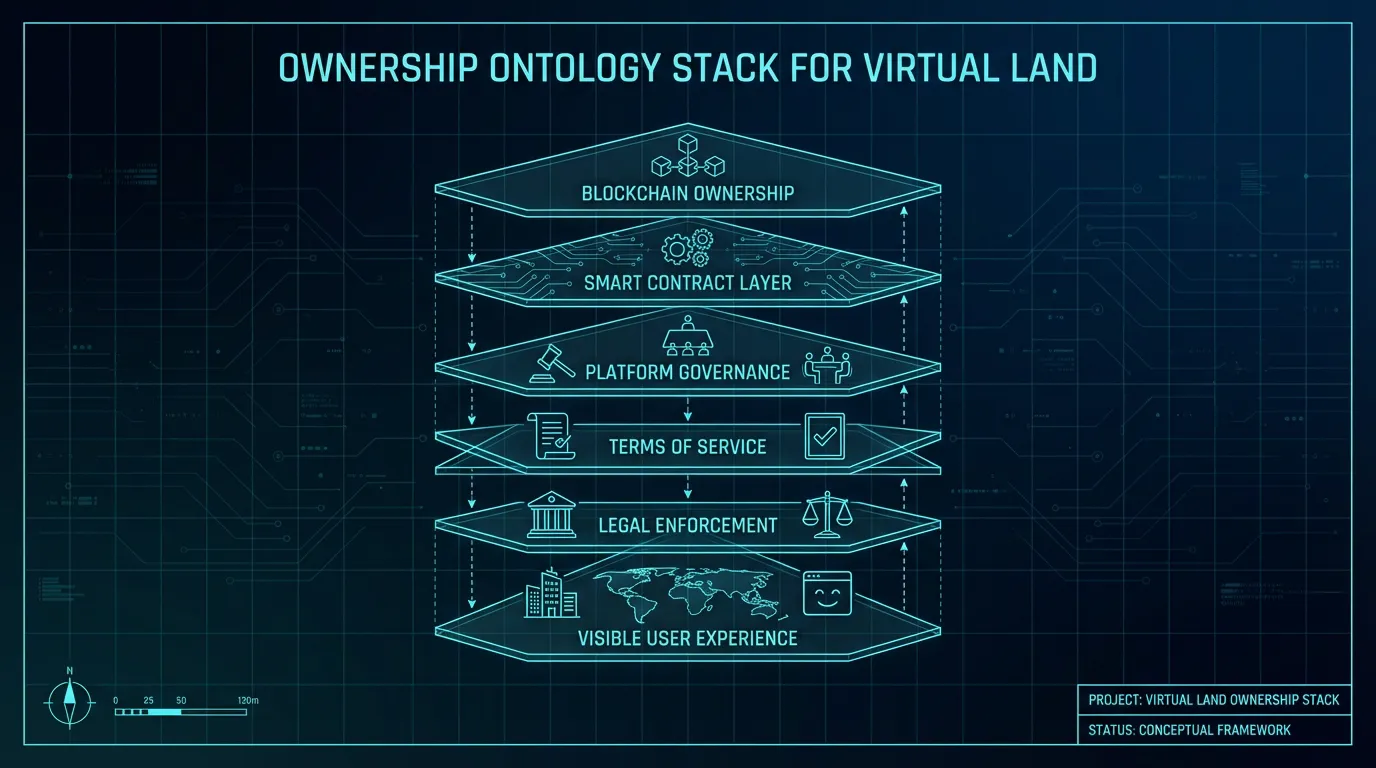
The deepest issue in the metaverse land rush is not pricing. It is ownership ontology: what exactly does it mean to own digital land? That question sounds abstract until a platform changes terms, removes content, loses users, or shuts down infrastructure. Then it becomes operational very quickly. A buyer may control an NFT in a wallet. That is technical ownership. But the visible experience of the parcel still depends on platform software, hosting, moderation, governance, and terms of service. So the actual ownership stack has layers, and each layer has different risks.| Ownership layer | What the buyer controls | What the buyer does not fully control |
|---|---|---|
| Blockchain layer | Wallet access, token transfer | Platform experience, legal recognition |
| Platform layer | In-world build rights, subject to rules | Moderation, server continuity, visibility |
| Legal layer | Contract claims, limited enforceability | Full property equivalence to physical land |
The ownership ontology problem becomes even sharper when projects fail. If a world becomes inactive or shuts down, the token may still exist while the meaningful utility disappears. That is very different from physical property, where utility may decline but does not vanish because a game studio lost interest. For decision-makers, that is the key warning: a transferable token is not the same thing as durable digital territory.
Why the metaverse land rush matters once AI starts controlling digital assets
The next phase of the metaverse land rush may have less to do with human collectors and more to do with systems acting on behalf of brands, funds, or DAOs. Research in the report points to early patterns where AI agents and automated systems already interact with on-chain assets, propose transactions, or execute strategies with limited human intervention. This is where ownership ontology and AI agency intersect. An AI agent may not hold legal personhood, but it can still control actions tied to digital property. If a brand deploys software that monitors traffic, evaluates parcel performance, and buys or rents space automatically, the practical control sits with the system even if legal title remains with the company. That changes how businesses should think about competition. In a world of agentic buying, digital spaces become machine-readable marketplaces. Attention is allocated not only by human taste but also by models optimizing for reach, conversion, or strategic positioning. The same logic already appears in ad auctions and algorithmic bidding; virtual environments simply make it more visible. A realistic scenario is not "AI becomes a landowner in court." It is this: businesses use autonomous or semi-autonomous systems to manage digital assets, allocate budget, negotiate exposure, and react faster than human teams can. Once that happens, the market is no longer just speculative. It becomes infrastructural. And the companies that win are usually the ones with clearer information structures, better data signals, and fewer technical blind spots.What the metaverse land rush means for SEO strategy and brand websites
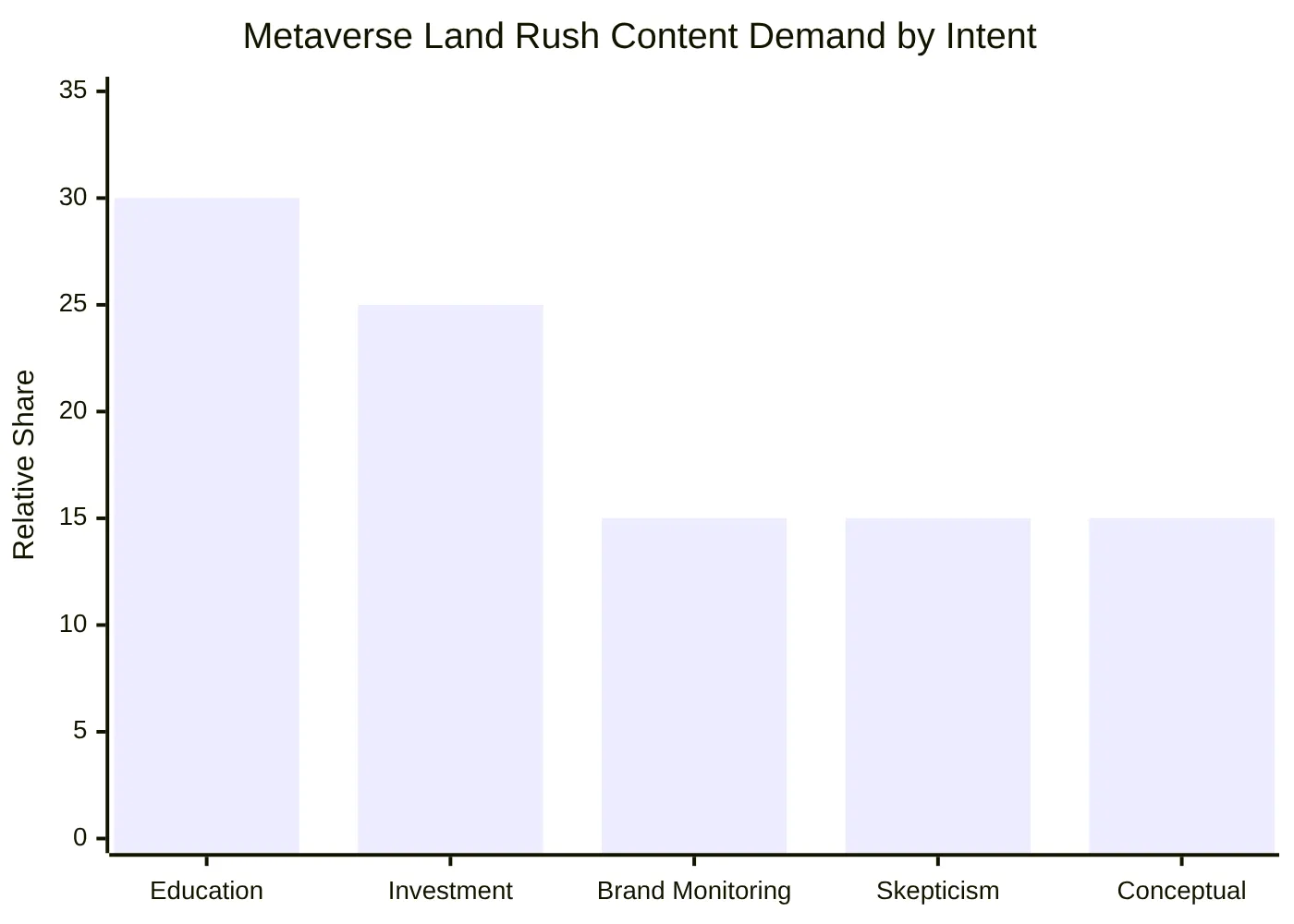
For most companies, the right response to the metaverse land rush is not to buy land. It is to build a stronger interpretation layer around the topic. Search behavior around this subject is shifting from excitement to evaluation: people now want risk analysis, legal clarification, platform comparison, and AI-era implications. That is a much better fit for durable SEO content than "how to flip a parcel." This is exactly where SeekLab.io is relevant. SeekLab.io helps brands build search visibility and AI-era discoverability through high-quality content production and technical optimization. The practical value is not in chasing every trend. It is in identifying what will actually affect growth, what can be deprioritized, and how to avoid putting effort into the wrong direction before technical fixes or content production begin. If your site wants to earn trust around topics like virtual real estate, digital scarcity, economic simulation, or ownership ontology, the content structure matters as much as the topic choice. A scattered set of opinion posts rarely performs well. A connected content hub does. Here is a sensible structure for a brand site or independent website:| Page type | Purpose | Why it matters |
|---|---|---|
| Core explainer on the metaverse land rush | Capture broad search intent | Brings in educational and evaluative traffic |
| Virtual real estate risk analysis | Support commercial decision-makers | Converts curiosity into informed action |
| Digital scarcity and platform mechanics piece | Build technical depth | Improves topical authority |
| Ownership ontology and legal realities article | Differentiate from shallow coverage | Attracts citations and higher-trust readers |
| AI agents and digital assets commentary | Future-facing angle | Expands relevance into emerging search demand |
- The metaverse land rush was driven by speculation, branding, and experimentation, not just belief in digital property.
- Virtual real estate gained value through attention and narrative, not only through platform mechanics.
- Digital scarcity can be persuasive, but it is more fragile than physical scarcity.
- The real debate is one of ownership ontology: token control is not the same as absolute property rights.
- As AI systems gain more operational control, digital ownership questions will become less theoretical and more commercial.
- For most brands, the better investment is often not land itself, but stronger content, clearer site architecture, and better SEO decision-making.