High-Quality Programmatic SEO Strategy in 2026
Expert reviewed

Programmatic SEO is still one of the strongest growth levers in 2026, but only when it is treated as a quality system rather than a page-count tactic. For independent websites, official company sites, and cross-border brands, the difference between sustainable growth and domain-wide quality risk often comes down to three things: data quality, template design, and technical SEO execution.
If your team is considering pseo, the real question is no longer "Can we publish at scale?" It is "Can we scale pages that are useful, indexable, trustworthy, and commercially relevant?" That is where high-quality template pages and scalable content outperform low-value automation.

1. Programmatic SEO in 2026: why programmatic SEO still works
Programmatic SEO has become mainstream because it solves a real business problem: how to cover large sets of long-tail searches without building every page manually. In practice, programmatic SEO combines structured data, reusable templates, and automation or semi-automation to create pages at scale.
That does not mean pseo is simply mass publishing. In 2026, search engines are much better at recognizing the difference between:
- Useful template pages built around real search intent
- Thin pages created mainly to capture rankings
- Scalable content supported by data, visuals, and internal linking
- Near-duplicate pages with only one variable changed
Google's guidance on ranking systems and site-level quality signals makes the risk clearer than before. When scaled content lacks substance, the problem may not stay isolated to one directory. It can affect trust across the site. For that reason, a modern programmatic SEO strategy should aim to create durable content assets, not inflated URL counts.
A simple way to think about it is this:
| Approach | Speed | Quality control | SEO risk | Best use case |
|---|---|---|---|---|
| Traditional manual SEO | Low | High | Low | High-depth pages, pillar content |
| High-quality programmatic SEO | Medium to high | Medium to high | Moderate, if governed well | Long-tail coverage with business relevance |
| Low-quality automation | Very high | Low | Very high | Not recommended |
For brands serving multiple industries, markets, or product configurations, programmatic SEO still works because long-tail demand still exists. Search behavior has not become simpler. Buyers still search by location, use case, specifications, compliance needs, and industry context. What has changed is the quality threshold.
If you are building for global growth, this is also where technical readiness matters. A strong technical SEO audit for programmatic success can reveal whether your planned page patterns will scale efficiently or create crawl and indexing problems before they create revenue.
2. Programmatic SEO template pages: what high-quality scalable content looks like
High-quality programmatic SEO starts with systems, not prompts. The strongest pseo implementations are built on three layers:
- Structured data
- Content templates
- Editorial and technical quality assurance
A template page should not be a blank shell with interchangeable keywords. It should be a page model that reflects a specific search pattern and a specific buyer need. That means each page needs meaningful content blocks such as:
- An intent-matched introduction
- Market or use-case context
- Product or service details
- Comparisons or tables
- Visuals
- FAQ content
- Internal links to related hubs and supporting pages
- Conversion paths that fit the page intent
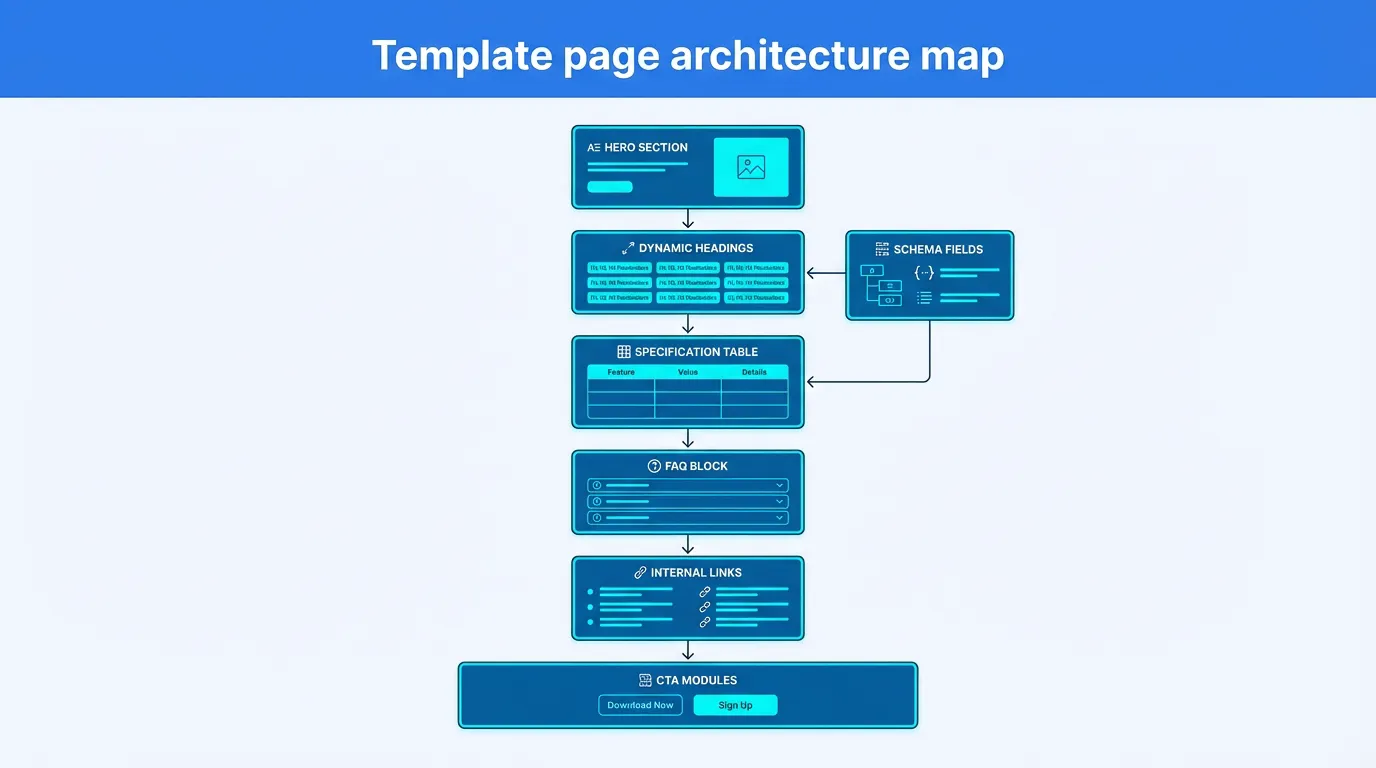
The best template pages also pass a simple test: if you remove the keyword modifier, does the page still have distinct value? For example, changing only a city name is not enough. Changing the local compliance expectations, buyer concerns, shipping details, examples, FAQs, or market notes can be enough.
Here is what separates strong scalable content from weak scalable content:
| Element | Strong scalable content | Weak scalable content |
|---|---|---|
| Data source | Clean, structured, updated | Incomplete or generic |
| Uniqueness | Varies by market, use case, or specs | Mostly repeated text |
| Search intent | Built around real demand | Built around keyword combinations only |
| Visuals | Uses images, tables, diagrams | Text-only pages |
| Conversion value | Supports inquiries and trust | Drives traffic with low lead quality |
| Governance | Reviewed and updated | Published and forgotten |
This matters especially for exporter websites, multilingual sites, and official company websites. A programmatic SEO page about a product in one region may require different shipping assumptions, certifications, terminology, or purchasing expectations than the same page for another region.
SeekLab.io approaches this from both content and technical angles. Instead of treating scalable content as a writing shortcut, the focus is on making pages easier for search engines, AI systems, and real users to understand through structure, internal linking, page architecture, and content clarity. That is also why related work in The Ultimate Guide to Multilingual SEO Strategy in 2026 is highly relevant when template pages need to expand across regions and languages.
3. Programmatic SEO and technical SEO: the foundation behind pseo performance
A programmatic SEO strategy can fail even when the content idea is good. The reason is simple: scaling magnifies technical weaknesses. One rendering issue, one internal linking flaw, or one canonical mistake can affect hundreds or thousands of pages at once.
The most important technical priorities for programmatic SEO are usually the following:
- Site architecture
- Crawlability
- Indexing control
- JavaScript rendering
- Core Web Vitals
- Schema markup
- Internal linking strategy
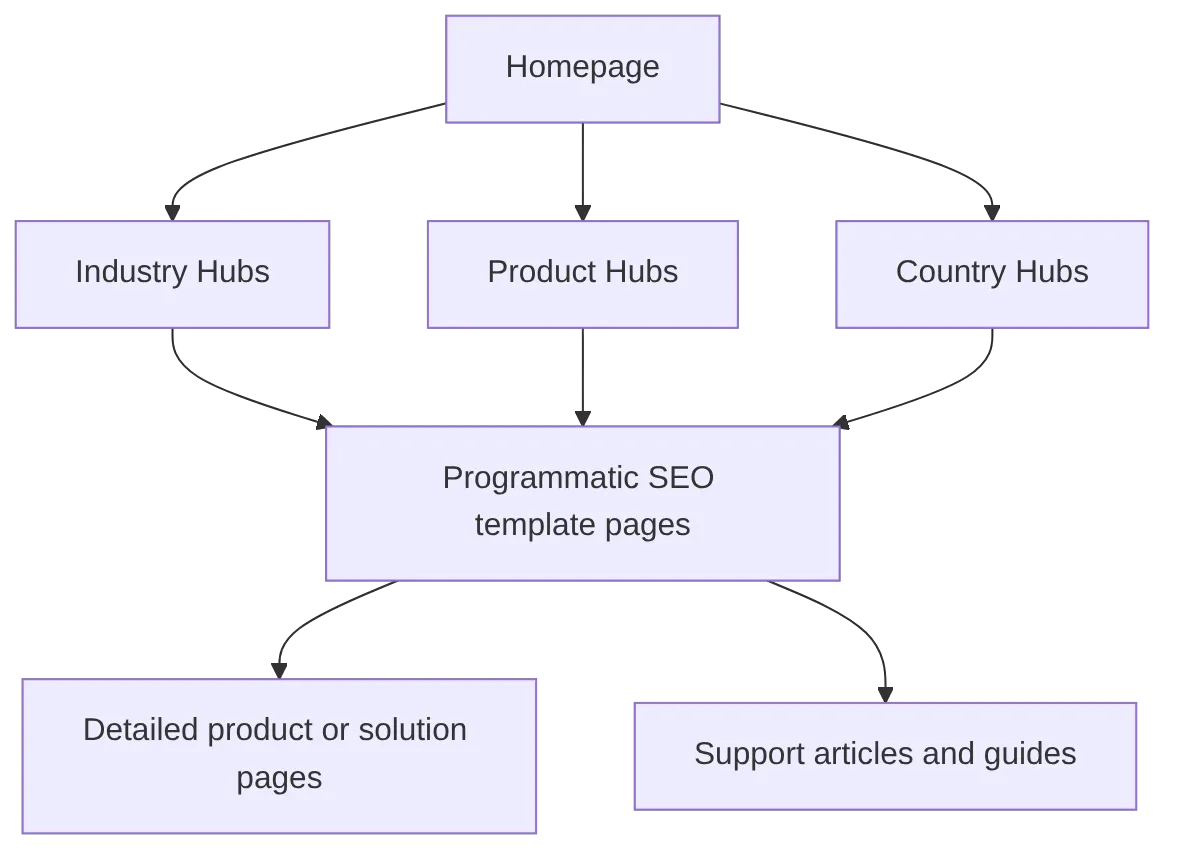
The architecture should make page relationships obvious. Hub pages should connect to spoke pages, and spoke pages should reinforce the hub. Important programmatic SEO pages should remain within a shallow click depth, ideally within three clicks from the homepage.
For teams using modern frontends, JavaScript SEO is a major consideration. If key content, internal links, canonicals, or schema only appear after client-side rendering, indexing can become inconsistent at scale. This is one reason many sites need a deeper review of technical JavaScript SEO and indexing solutions before they expand pseo routes.
Template-level performance matters too. A heavy page design multiplied across hundreds of URLs can drag down Core Web Vitals sitewide. Instead of checking only a few sample URLs, the smarter approach is to audit performance by template family.
The chart below shows a practical prioritization view for programmatic SEO implementation:
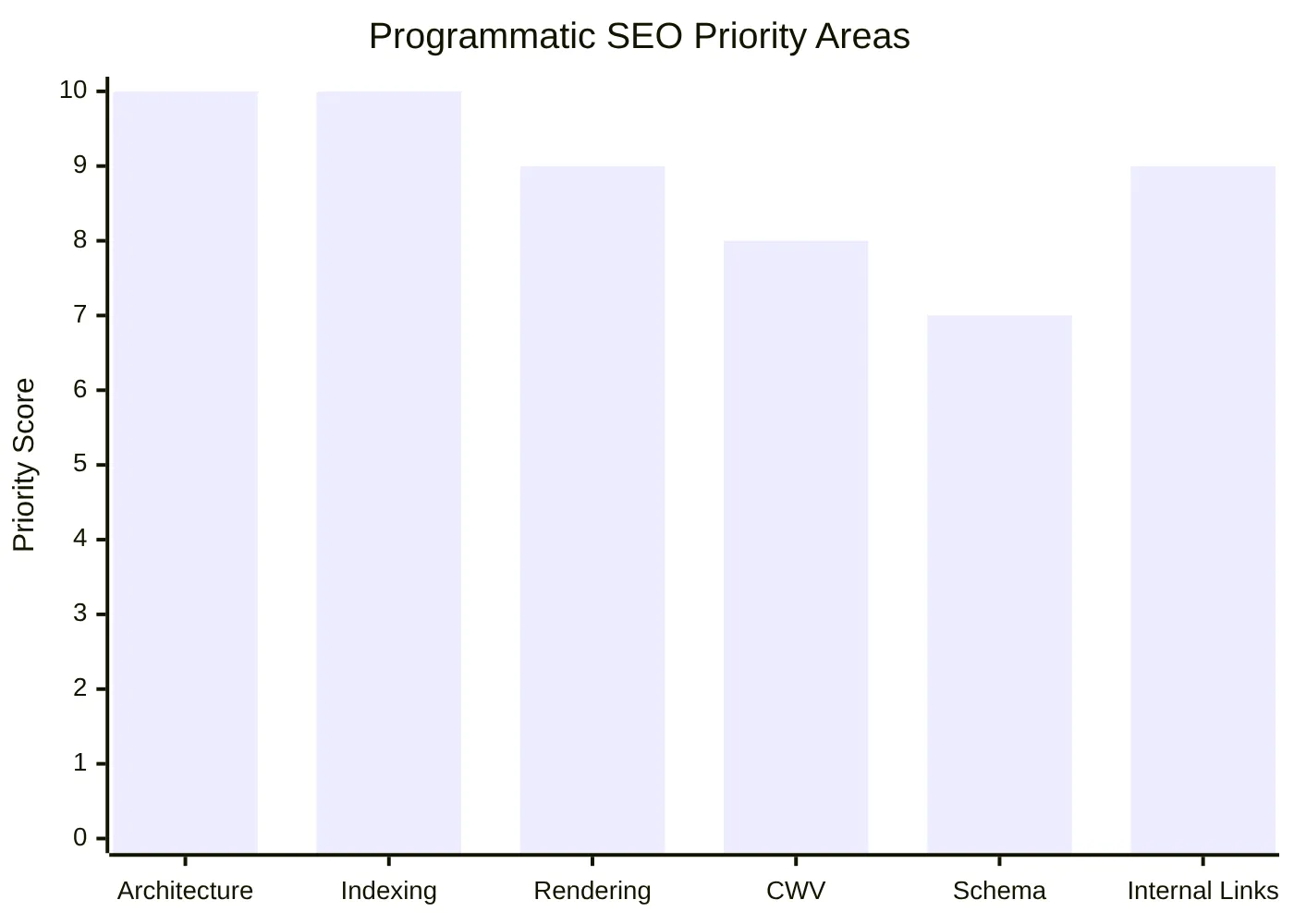
For independent websites, one of the biggest mistakes is trying to fix everything equally. SeekLab.io's approach is more strategic: identify what truly affects growth, what blocks search visibility, and what can be deprioritized for now. That is especially important when budgets are finite and stakeholders want real lead impact, not a long list of cosmetic fixes.
4. Programmatic SEO opportunities: which template pages to scale and which to avoid
Not every pattern deserves a URL. This is one of the most important strategic decisions in programmatic SEO.
The best opportunities usually share four characteristics:
- Repeatable structure
- Search demand
- Business relevance
- Enough available data to create distinct value
Common high-potential programmatic SEO patterns include:
| Pattern type | Example | Why it works |
|---|---|---|
| Product x industry | "industrial sensor for cold chain logistics" | High commercial intent |
| Product x location | "industrial sensor supplier in Singapore" | Useful for regional demand |
| Solution x problem | "reduce vibration in conveyor systems" | Captures practical buyer queries |
| Compliance x product | "CE compliant equipment for EU buyers" | Strong trust and decision support |
| Market x category | "medical device exporter for UAE clinics" | Combines geography with buying context |
Low-potential patterns tend to create index bloat instead of value. These often include:
- Filter combinations with no clear search demand
- Pages where only one token changes
- Programmatic pages with no local or commercial specificity
- Automatically translated pages with no market adaptation
- Large sets of low-intent variations that do not support leads
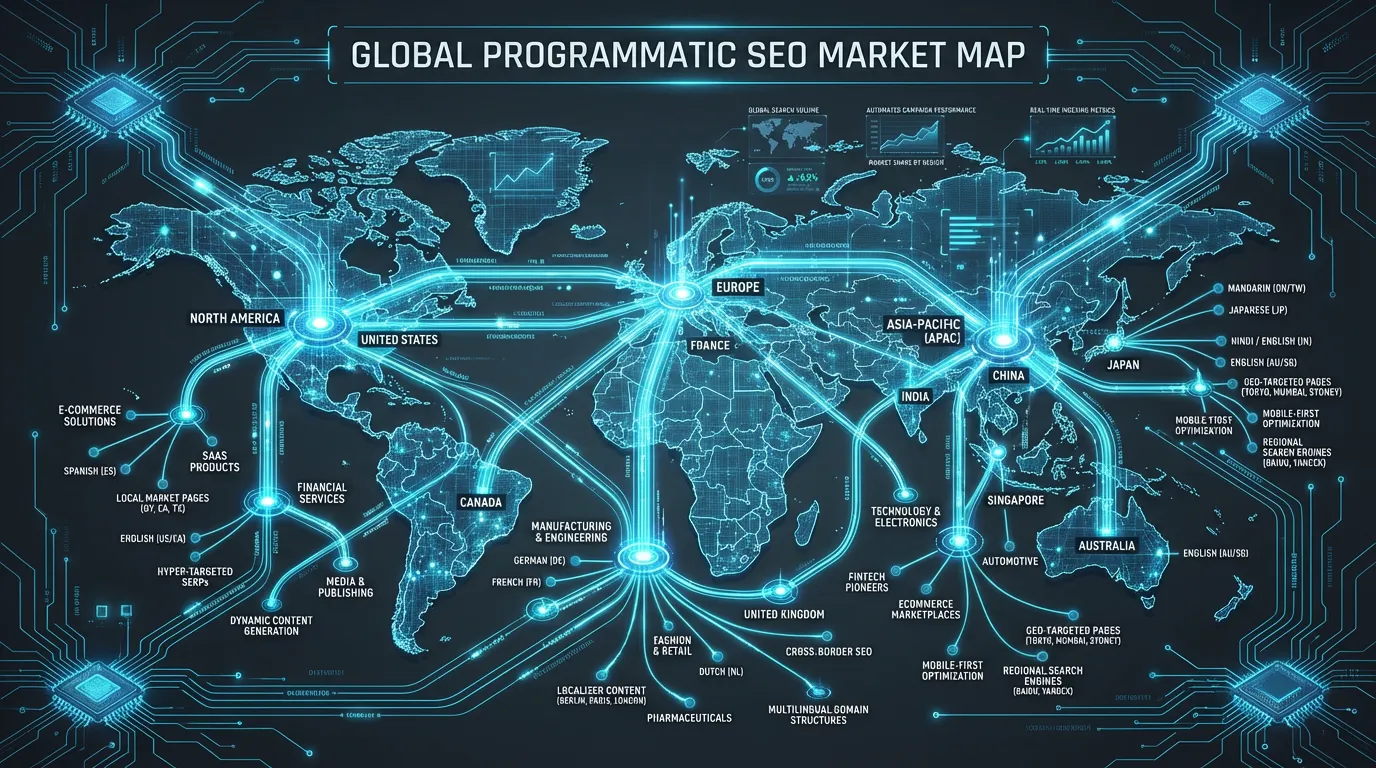
A useful prioritization model is to evaluate every pattern across two axes: business value and search potential.
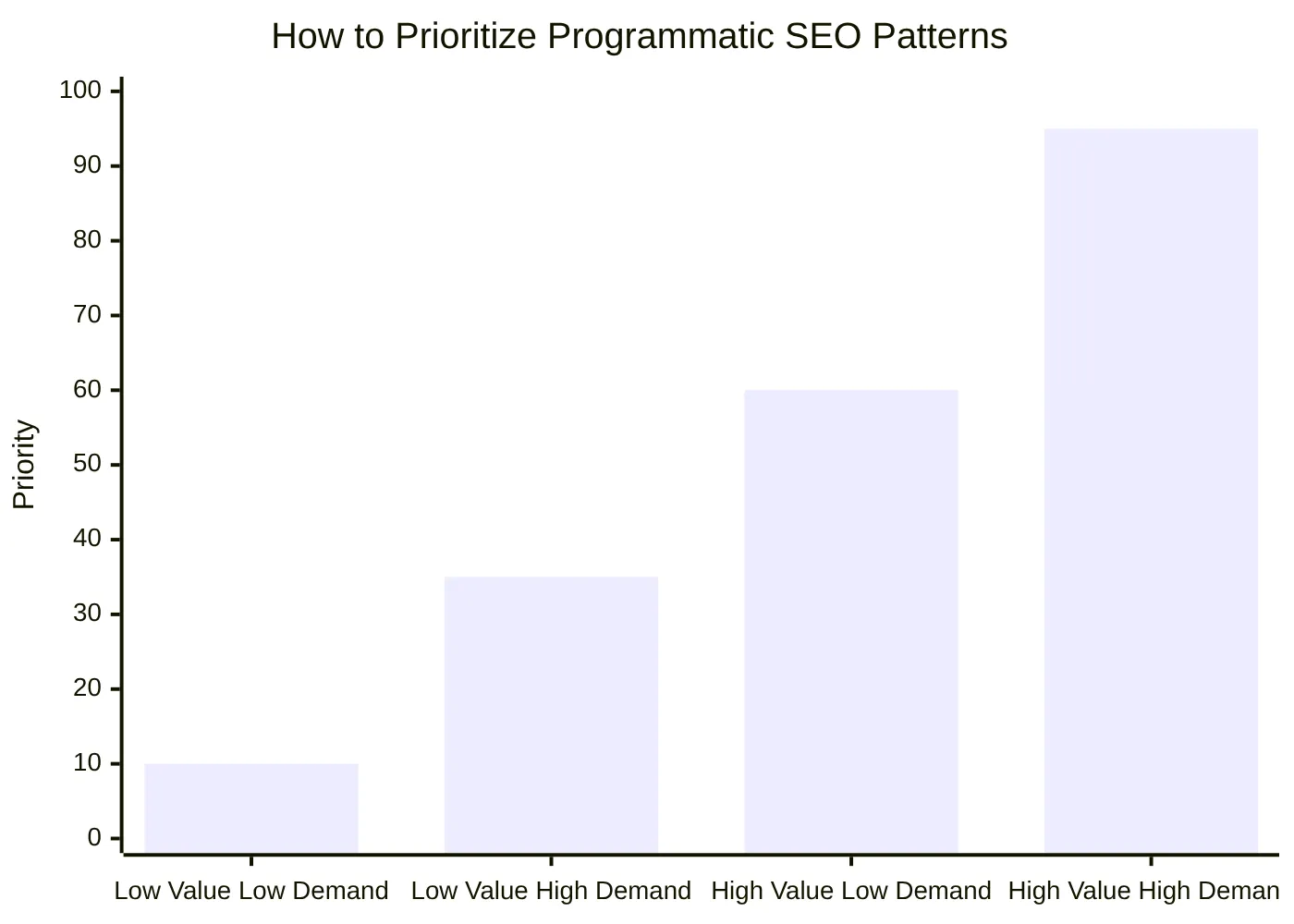
For many B2B and exporter websites, the winning move is not maximum scale. It is selective scale. That means launching a pilot batch of high-value template pages first, then validating indexing, rankings, and inquiry quality before expanding.
This is also where competitor gaps create opportunities. Based on the research report, Nubway uses basic templates and product groupings but appears to have limited depth in localization, advanced internal linking, schema use, and richer use-case page structures. That leaves room for better programmatic SEO execution on independent sites that build clearer market pages, stronger technical foundations, and more conversion-aware content.
5. Programmatic SEO with SeekLab.io: a practical 2026 framework for scalable content
A strong programmatic SEO strategy should begin before production. It should start with strategic choices about architecture, data, and priorities. That is where SeekLab.io is especially relevant.
SeekLab.io helps brands build search visibility and AI-era discoverability through high-quality content production and technical optimization. The company focuses on making websites easier for search engines, AI systems, and real users to understand by improving content structure, information clarity, page architecture, internal linking, and overall site readiness.
For programmatic SEO, that support typically maps to four stages:
| Stage | What matters | How SeekLab.io helps |
|---|---|---|
| Audit | Find structural blockers | Full-site crawling, rendering checks, indexing analysis, internal linking review |
| Strategy | Choose the right page patterns | Topic selection, keyword research, taxonomy guidance, market prioritization |
| Build | Create high-quality template pages | Expert-level copy, visuals, tables, heading logic, schema alignment |
| Iterate | Improve what performs | Monthly data review, reporting, refinement by template and market |
This matters because many managers are not only worried about rankings. They are worried about paying for SEO and still not getting the expected results. They are worried that content will feel too AI-generated, that images will be weak, and that traffic will not convert into inquiries. A high-quality programmatic SEO workflow needs to address all of those concerns together.
SeekLab.io's value in this space is not limited to technical issue detection. The team also helps prevent the wrong strategic direction from being scaled in the first place. Before you create hundreds of template pages, you need to know:
- Which patterns are worth building
- Which technical weaknesses may suppress results
- Which multilingual structures are sustainable
- Which content elements support both rankings and conversions
That is why related resources such as Technical SEO For Exporters: 2026 Insights are especially relevant for cross-border businesses building scalable content across markets.
If you are evaluating whether programmatic SEO is right for your site, a practical next step is to get a structured diagnosis first. You can contact SeekLab.io or request a free audit report to identify what truly impacts growth, what can wait, and which programmatic SEO patterns deserve investment.
In 2026, the best programmatic SEO strategies are not the largest. They are the most disciplined. They combine template pages, scalable content, technical SEO, and business logic in a way that search engines can trust and buyers can act on. That is what turns pseo from a publishing tactic into a durable growth asset.