How Long Does SEO Actually Take?
Expert reviewed

SEO usually takes 3 to 6 months to show early measurable results, and 6 to 12 months or longer for meaningful organic traffic, leads, and revenue. Technical and indexing signals can appear within days or weeks, but rankings and business impact mature over months, not days.
A practical SEO timeline separates fast implementation from slower search and business outcomes. Fixing a sitemap, removing an accidental noindex tag, or improving Core Web Vitals can be done quickly, but Google still needs to crawl, index, evaluate, and serve pages before rankings and clicks mature. Google also sets realistic expectations in its official guidance: in many cases, SEO work needs 4 months to a year for improvements to be implemented and show potential benefit, as explained in Google's How to hire an SEO guidance.
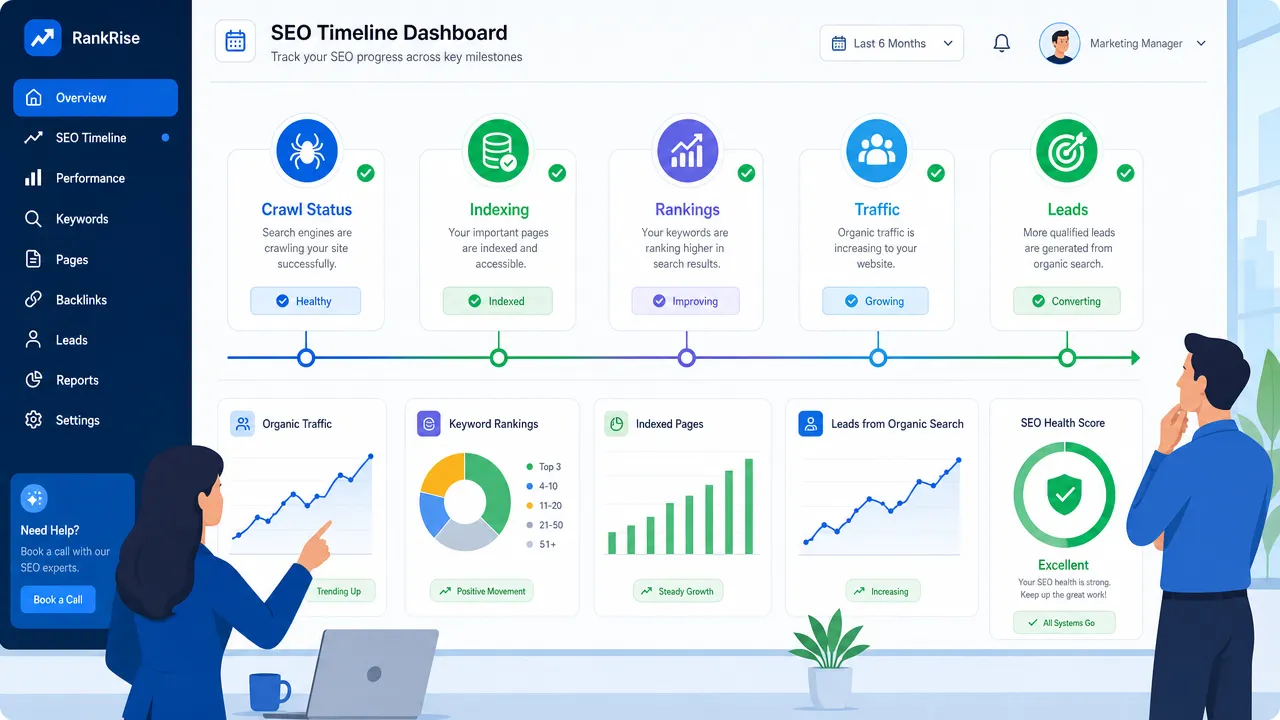
For independent websites, official company websites, exporter sites, and multilingual brand sites, the better question is not only "how long does SEO take?" It is "what should be happening at each stage, and are we working on the right blockers first?" A healthy SEO results timeframe moves from technical access to indexing, impressions, ranking movement, organic clicks, qualified inquiries, and finally revenue contribution. If those stages are measured in the wrong order, SEO can look slow even when progress is happening.
| SEO result type | Typical timeframe | What it really means |
|---|---|---|
| Technical fixes | Days to weeks | Work has been implemented, but search engines may not have processed it yet. |
| Indexing changes | Hours to weeks | Pages may be discovered and indexed, but not every crawled page is indexed. |
| Impressions | Weeks to months | Pages are appearing in search results, often before they earn clicks. |
| Ranking movement | 1-6 months | Pages may move from invisible positions to mid-range rankings before traffic grows. |
| Organic traffic growth | 3-12 months | Enough pages begin ranking in visible positions for queries with real demand. |
| Leads and revenue | 6-12+ months | Traffic quality, conversion paths, inquiry behavior, and sales cycles begin to show business impact. |
SEO timeline answer: how long does SEO take in practice?
A realistic SEO timeline usually begins with visible technical or indexing signals before it produces traffic or leads. Google describes Search as a process of crawling, indexing, and serving results in its How Search Works documentation. That distinction matters because a page can be crawled before it is indexed, indexed before it ranks, and ranked before it receives qualified clicks.
For many websites, 3 months is enough to see whether the foundation is improving. Search Console may show more indexed priority pages, fewer crawl issues, rising impressions, or new long-tail queries. For a mature site with accidental noindex tags, broken canonicals, or blocked directories, recovery signals can appear faster after the technical cause is fixed.
For a new independent website or B2B export website, the same 3 months may only prove that the site is becoming discoverable. It may still lack authority, internal link depth, topical coverage, and enough commercial pages to convert visitors. That does not mean SEO is failing. It means the SEO ranking timeline is still in the early testing stage.
The 6-12 month range is more realistic for meaningful organic traffic growth timeline planning. By this point, a site has usually had enough time to publish and refine content, strengthen internal links, improve page templates, build search visibility across more queries, and test whether organic visitors are moving toward inquiry or contact actions.
The dangerous expectation is a fixed guarantee such as "page one in 30 days" for competitive commercial keywords. A responsible SEO timeline cannot ignore competition, crawl frequency, content quality, website authority, technical condition, or conversion path quality. The calendar matters, but the starting condition matters more.
SEO timeline signals: what counts as SEO results timeframe?
An SEO results timeframe becomes clearer when the team defines "results" by stage. Too many reporting discussions jump from "we published articles" to "where are the leads?" without checking whether search engines can crawl the pages, whether priority URLs are indexed, or whether impressions are expanding.
Technical implementation is the first stage. This includes fixes such as sitemap cleanup, robots.txt validation, canonical correction, Core Web Vitals improvements, structured data deployment, internal link updates, and JavaScript rendering adjustments. Implementation is work completed, not proof that the market has responded.
Crawling and indexing are the next layer. Google's SEO Starter Guide notes that indexing can take time, and not every page is indexed. A site may look technically complete to the development team while Search Console still shows important URLs as discovered but not indexed.
Impressions are often the first market signal. A page appearing for more non-branded queries means search engines are testing its relevance. For example, a product specification guide may begin showing for long-tail searches before it earns clicks. That is progress, but it is not yet commercial success.
Ranking movement comes next. A page moving from position 70 to position 28 may not create traffic, but it indicates that the page is becoming more competitive. Teams that only check page-one rankings may miss this early progress and abandon useful work too soon.
Organic clicks and organic traffic growth usually arrive later. Clicks depend heavily on ranking position: page-two results typically earn under 1% of clicks, while the top three positions capture roughly 55-70% of them (Backlinko and First Page Sage, 2026). This is why a page can accumulate impressions for months as it climbs before those impressions convert into clicks. Clicks also depend on title relevance, SERP layout, brand familiarity, and whether the searcher sees the result as the best answer. Traffic then needs to convert through internal links, contact prompts, product pages, RFQ paths, and forms.
Leads and revenue are the latest-stage outcomes. For B2B, export, multilingual, and official company websites, the sales cycle can add weeks or months after the first organic inquiry. A user may read a technical article, compare a service page, return through branded search, and contact the company later. If analytics only credits the last click, SEO may look weaker than it is.
SEO timeline by month: realistic SEO progress expectations
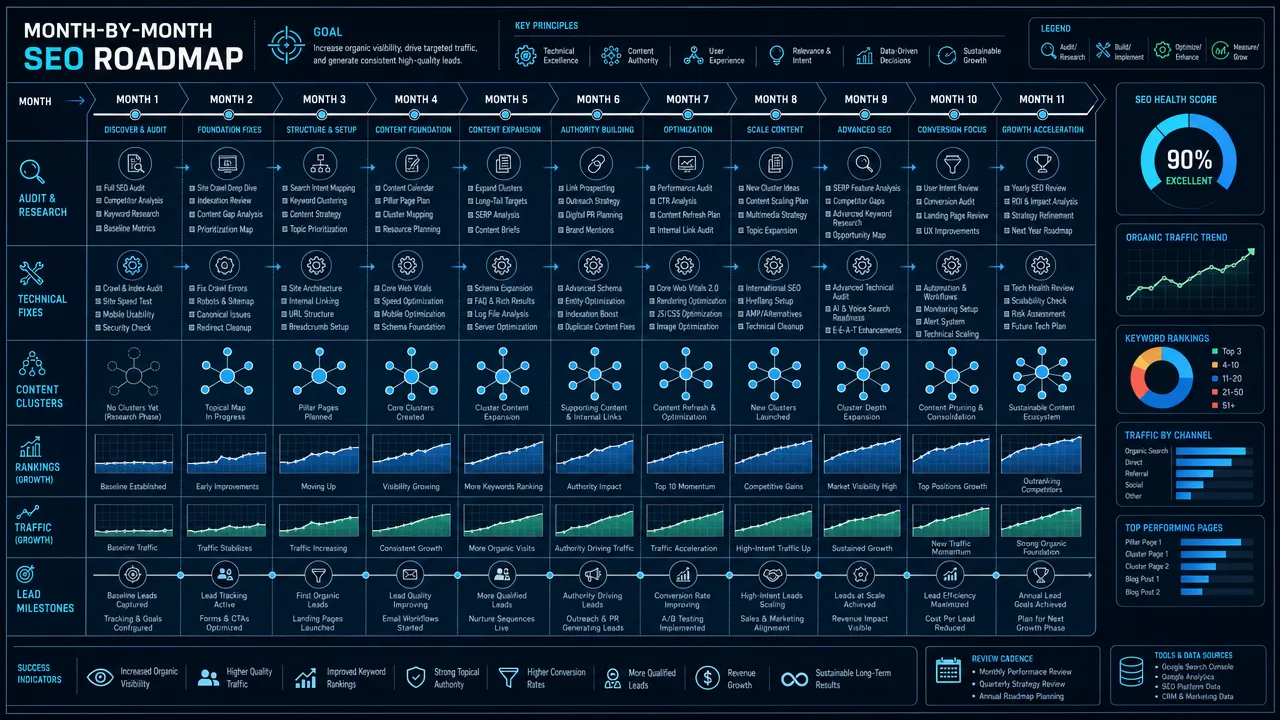
A useful SEO timeline by month should separate work, signals, unrealistic expectations, and KPIs. This is where many projects become clearer. The first month should not be judged by leads. Month two should not be judged by competitive page-one rankings. Month six should not ignore conversion quality.
| Stage | Work usually happening | Signals to expect | Unrealistic expectation | KPIs to review |
|---|---|---|---|---|
| Month 0-1 | Full-site crawl, baseline reporting, Search Console validation, sitemap and robots.txt checks, Core Web Vitals review, indexability diagnosis. | Fewer obvious technical errors, clearer index status, recrawling of fixed pages. | Strong lead growth or competitive page-one rankings. | Indexable priority pages, crawl errors, noindex issues, sitemap validity, baseline impressions and clicks. |
| Month 1-3 | Technical fixes, rendering checks, internal link updates, first priority content, schema cleanup, thin page improvements. | More indexed pages, new queries, rising impressions, some long-tail ranking movement. | High-volume traffic from new content unless the site already has authority. | Query expansion, new content indexation, average position shifts, internal links added to commercial pages. |
| Month 3-6 | Content cluster expansion, page-two optimization, title and meta testing, internal link refinement, refresh of early content. | More non-branded impressions, long-tail clicks, pages moving toward page two or page one. | Predictable revenue from every article. | Pages gaining visibility, CTR, country-level impressions, organic CTA clicks, assisted conversions. |
| Month 6-12 | Scaling proven topics, consolidating weak pages, improving conversion paths, deeper content assets, monthly performance review. | Stronger organic click growth, clearer content winners, more qualified inquiries. | Permanent rankings without updates. | Organic leads by landing page, lead quality, pipeline contribution, refresh opportunities. |
| Month 12+ | Content refreshes, authority building, international expansion, schema updates, pruning or merging low-value pages. | More stable organic contribution and better conversion from returning users. | SEO becoming a finished one-time project. | Organic share of inquiries, revenue influence, market-specific visibility, content portfolio health. |
In Month 0-1, the most useful work is diagnosis. SeekLab.io often frames this stage as finding what truly impacts growth and what can be deprioritized. A website with hidden crawl blockers needs a different roadmap from a website that mostly needs stronger content around buyer intent. The goal is not to fix everything. The goal is to avoid spending the next 6 months on low-impact tasks.
A structured audit is especially useful here. SeekLab.io's SEO audit checklist covers crawlability, indexation, Core Web Vitals, internal links, JavaScript, schema, analytics, and international SEO considerations. For an SEO timeline, the value is prioritization: which issues block growth now, which issues support future compounding, and which issues can wait.
In Month 1-3, technical corrections and first content assets should begin producing early search signals. This is where teams often misunderstand "when will SEO start working." SEO may start working before it produces leads. Search Console may show new queries, impressions, and partial ranking movement while sales reports remain flat.
In Month 3-6, content-market fit becomes visible. A page ranking in positions 11-30 is often more useful than a brand-new article with no impressions. Improving sections, adding examples, strengthening titles, and linking from related pages can move existing assets faster than endlessly publishing new posts.
In Month 6-12, the organic traffic growth timeline becomes more commercially meaningful. By now, the site should have enough data to identify which topics attract the right users, which pages fail to convert, and which countries or languages deserve more investment. This is where monthly data review becomes more valuable than a static content calendar.
SEO timeline variables: why organic traffic growth timeline differs by site
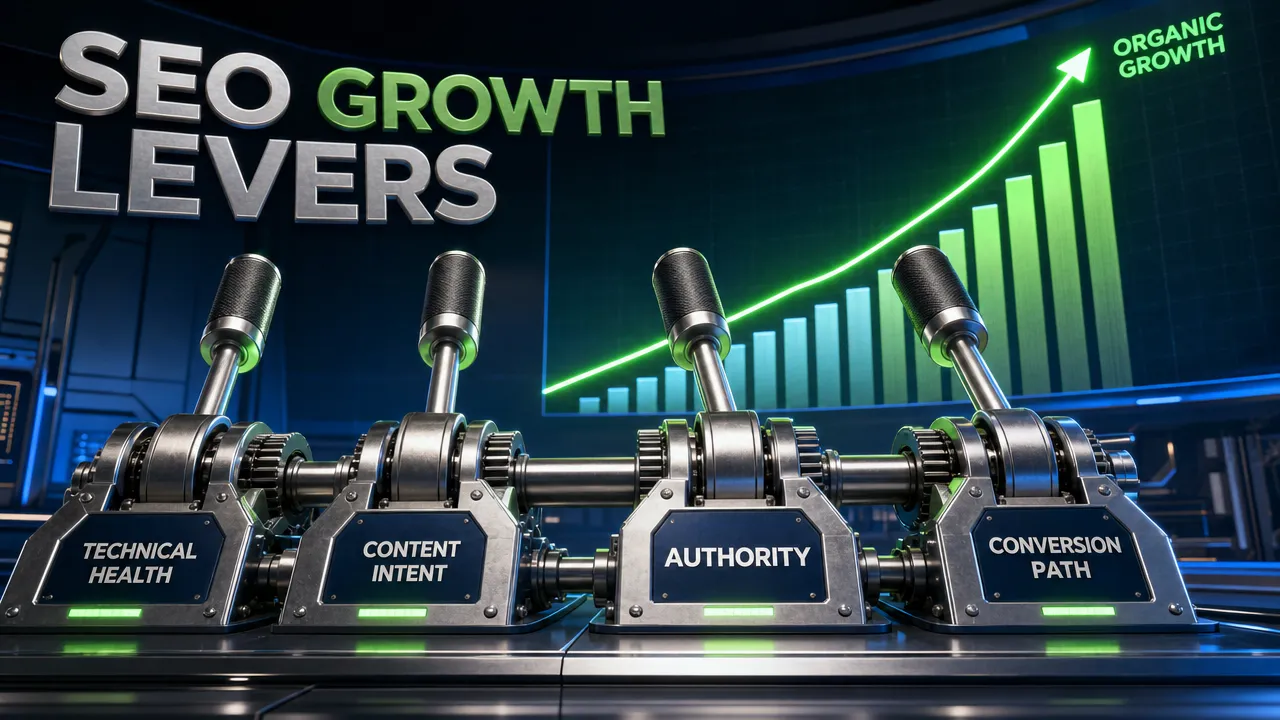
The SEO timeline differs because websites start from different levels of technical health, authority, content quality, and market difficulty. A new website with 20 pages and no backlinks does not behave like an established catalog site with indexing problems. A multilingual exporter does not behave like a single-language local service site.
Technical health can speed up or slow down everything. Accidental noindex tags, robots.txt conflicts, broken canonicals, malformed sitemaps, JavaScript rendering problems, and orphaned commercial pages can delay crawling and indexing. Google's robots.txt documentation and JavaScript SEO basics are useful references for understanding why important content must be accessible and crawlable.
JavaScript-heavy websites deserve special attention. A page can look complete in the browser but still expose weak or inconsistent content to crawlers if links, canonical tags, headings, or structured data depend on rendering. SeekLab.io's JavaScript SEO indexing solutions explain common symptoms such as discovered but unindexed pages, mismatched source and rendered HTML, and non-crawlable internal links.
Content quality and intent fit affect the middle of the timeline. A polished article can fail if it targets the wrong search intent. An informational guide may bring readers who are learning, while a commercial landing page may be needed for supplier comparison, product specification, or quote intent. For independent websites, the content plan should connect search demand to actual inquiry behavior, not just keyword volume.
SeekLab.io's approach to high-quality blog content optimization is relevant here because the issue is rarely "publish more." The issue is whether each article has a clear purpose, structured headings, internal links, useful visuals, schema where appropriate, and a path toward commercial pages.
Multilingual sites often take longer because each market has its own search behavior, competition, translation quality issues, and technical requirements. Google's localized versions documentation explains how hreflang helps Google understand language and regional alternatives. In practice, hreflang alone does not solve poor localization, weak local intent alignment, or missing internal links within each language.
Authority and brand trust also change the SEO ranking timeline. Established sites with relevant backlinks, branded search demand, and historical performance often move faster than new domains. New websites usually need longer to earn trust, expand topical coverage, and gain enough references for competitive terms.
Conversion path quality determines whether traffic becomes business value. A blog post can rank, but if it has no contextual product link, no credible next step, no contact prompt, or a form that asks too much too early, the lead report may stay flat. In that case, SEO is not the only issue. The inquiry path is leaking value.
| Website scenario | Likely SEO timeline | Main delay risk | Fastest useful action |
|---|---|---|---|
| New website | 6-12+ months for meaningful traffic | Low authority, limited content, no historical signals. | Build clean technical foundations and target long-tail, high-intent topics. |
| Existing website with weak SEO | 3-9 months | Thin pages, cannibalization, poor intent fit. | Refresh pages already gaining impressions and consolidate overlap. |
| Established site with technical issues | 1-6 months for recovery signals | Crawl blocks, canonical errors, broken templates. | Fix indexability, sitemap, internal links, and rendering first. |
| International or multilingual site | 6-12+ months, often market by market | Hreflang errors, duplicated translations, wrong regional pages ranking. | Validate language architecture and local search intent. |
| B2B or export company site | 6-12+ months for qualified lead impact | Long sales cycles and low-volume high-value queries. | Build content around buyer problems, specifications, industries, and countries. |
| Catalog-heavy site | 3-12 months | Faceted URLs, duplicate pages, index bloat. | Clean indexation rules and strengthen category pages. |
| JavaScript-heavy site | 2-9 months | Important content or links not reliably visible to crawlers. | Review rendered HTML, crawlable links, Core Web Vitals, and template setup. |
SEO timeline diagnosis: when will SEO start working and what should be fixed first?
SEO usually starts working before leads arrive. The first signs are often technical and visibility signals: priority pages become indexable, crawl errors decrease, impressions rise, more queries appear, and pages move upward from low positions. If those signals are absent after meaningful implementation, the strategy needs diagnosis. A useful way to run that diagnosis is to check five questions in order, stopping at the first one that fails.
First, crawlability and indexability. If important pages are blocked, canonicalized to the wrong URL, missing from internal links, or hidden behind rendering issues, more content will not fix the core problem. This is where an audit should identify blockers, not produce a long undifferentiated task list.
Second, whether impressions are increasing. If impressions are flat, the issue may be weak topic selection, poor internal linking, low authority, unindexed content, or content that does not match search intent. A page that answers a problem nobody searches for will not become useful just because it is well formatted.
Third, whether rankings are moving. If impressions rise but rankings do not improve, review content depth, competitive strength, backlinks, semantic structure, and whether the page deserves to rank compared with existing results. Sometimes the best next step is to improve a page already ranking in positions 11-30 rather than publish another new article.
Fourth, whether clicks are increasing. If rankings improve but clicks stay weak, title tags, meta descriptions, SERP fit, rich result eligibility, and brand recognition may be limiting performance. Search Console's performance report documentation is useful for reviewing clicks, impressions, CTR, and average position.
Fifth, whether leads are increasing. If traffic grows but inquiries do not, inspect the conversion path. For B2B and exporter websites, useful checks include product page visits after blog entry, contact button clicks, RFQ clicks, form starts, returning organic users, and assisted conversions.
The fastest SEO progress usually comes from fixing high-impact blockers first. These include accidental noindex tags, robots.txt conflicts, sitemap errors, canonical problems, broken redirects, severe template speed issues, orphaned commercial pages, missing internal links, and JavaScript rendering gaps. For multilingual sites, broken hreflang and cross-language linking issues can also delay the wrong pages in the wrong markets.
Lower-impact changes can wait. Minor button color edits, rewriting every meta description before fixing indexability, adding schema to low-value pages, or publishing broad generic articles may keep teams busy without shortening the SEO results timeframe. The practical discipline is deciding what not to do yet.
A real example: 6 months from a from-scratch build
To show what this timeline looks like in practice, here is the first six months of a website built from scratch for a client. The site launched with no domain authority, no indexed history, and no organic visibility — a genuine cold start. The Search Console data below tracks it from launch through month six.
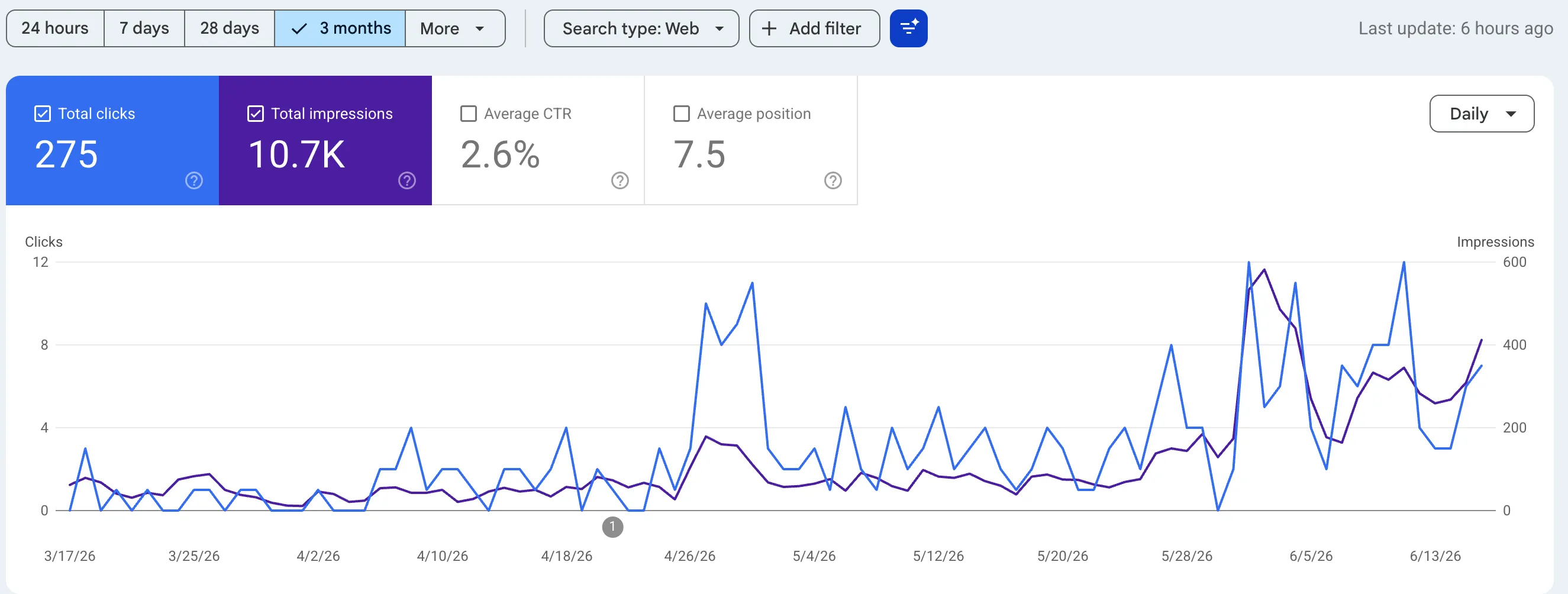
At the six-month mark, the numbers were 103,000 impressions, 329 clicks, an average position of 12.9, and a 0.3% click-through rate. Read in isolation, that low CTR can look like underperformance. In context, it is exactly what a healthy early-stage build looks like — and the curve tells the real story across four phases.
Phase 1 — the silence (weeks 0-8). Near-zero impressions and clicks. This is Google's trust-building window for a new domain. It looks like nothing is happening, and it is precisely where many teams panic and rebuild, undoing their own progress.
Phase 2 — first impressions (around month 3). The site begins appearing in results. Impressions arrive before clicks: the site is being seen before it is being chosen.
Phase 3 — acceleration (months 5-6). Impressions compound and average position climbs, with daily impressions spiking toward the top of the range as the site pushes into more competitive territory.
Phase 4 — clicks and conversions (next). These arrive as the site crosses into the top positions. At an average position of 12.9, the site sits on page two, where CTR is naturally under 1%. As pages climb into the top three, which capture roughly 55-70% of clicks, that 0.3% has room to multiply. The impression ramp is the leading indicator that the click-and-conversion phase is coming.
This is why measuring clicks in month two would have made a successful build look like a failure. Choosing the right metric for each phase is what separates a project that gets cancelled from one that compounds.
SEO timeline roadmap: how SeekLab.io reduces wasted months
SeekLab.io helps brands turn the SEO timeline into a roadmap by identifying what is blocking growth, what should be improved first, and what can be deprioritized. The work is not limited to technical issue detection. It also covers content direction, page structure, internal linking, information clarity, multilingual readiness, topic selection, and conversion potential.
The starting point is a comprehensive website SEO audit. SeekLab.io reviews full-site crawling, Core Web Vitals and page performance, indexing and rendering, JavaScript compatibility, sitemap.xml and robots.txt, internal link equity, semantic structure, schema compliance, website tech stack, and international SEO risks. The purpose is not to overwhelm the team with every possible issue. The purpose is to identify the issues that truly affect crawling, indexing, rankings, traffic, and inquiries.
Content strategy comes next. Before writing more articles, SeekLab.io helps teams avoid heading in the wrong direction by selecting topics based on user intent, contextual scenarios, industry knowledge, SERP structure, and trending search opportunities. For a brand website or exporter site, this means prioritizing content that can support product discoverability, buyer trust, and contact intent rather than filling a blog with generic informational posts.
High-quality blog creation is part of the roadmap, but it is treated as a growth asset rather than a publishing quota. Articles can include structured page layouts, search-aligned headings, metadata, JSON-LD, tables, internal links, and visually appealing images. The aim is to improve ranking potential while also giving real buyers enough clarity to continue toward product, service, or contact pages.
For international websites, SeekLab.io can support multilingual site architecture and market-specific SEO planning across regions such as Asia-Pacific, the United States, Europe, and other major markets. With the company registered in Singapore and operations in Dubai, the team stays close to cross-border business needs. The practical challenge is often not translation alone, but making each market's pages understandable to search engines, AI systems, and real users.
Monthly reporting keeps the SEO progress expectations grounded. Instead of waiting 6 months to ask whether anything worked, SeekLab.io reviews data such as index coverage, impressions, query expansion, ranking movement, organic landing pages, engagement actions, contact clicks, inquiry quality, and content performance. Some simple technical issues can be resolved for clients free of charge, and customized content can be provided based on client needs with monthly data review and performance reports.
If your team is asking "when will SEO start working?" the better first step is to check whether the website is technically ready, whether the content direction matches buyer intent, and whether the conversion path can turn organic visitors into inquiries. Get a free audit report to understand your starting point before investing more months into execution.
For teams that need a clearer SEO timeline, technical diagnosis, content roadmap, or monthly performance review, contact us to discuss how SeekLab.io can help turn SEO from a waiting game into a measurable growth plan.
Frequently asked questions
How long does SEO take to show results?
Early measurable signals — rising impressions, new queries, and ranking movement — typically appear within 3 to 6 months. Meaningful organic traffic, leads, and revenue usually take 6 to 12 months or longer, depending on the site's starting condition.
Why does SEO take months instead of days?
Technical fixes can be implemented in days, but Google still has to crawl, index, evaluate, and serve pages before rankings and clicks mature. The work is fast; the search engine's response to it is not.
When does SEO actually start working?
SEO usually starts working before leads appear. The first signs are technical and visibility signals: priority pages get indexed, crawl errors drop, impressions rise, and pages climb from low positions — often well before clicks or inquiries grow.
How long does SEO take for a brand-new website?
A new site usually needs 6 to 12 months or more for meaningful traffic, because it has no authority, limited content, and no historical signals. The first 3 months often only prove the site is becoming discoverable.
Can SEO guarantee page one in 30 days?
No. Any guarantee of fast page-one rankings for competitive commercial keywords ignores competition, content quality, authority, and technical condition. Responsible SEO sets stage-based expectations rather than fixed-date guarantees.
Why do impressions rise before clicks?
Clicks depend heavily on ranking position. Page-two results earn under 1% of clicks, while the top three positions capture the majority, so a page often gathers impressions for months as it climbs before those impressions convert into clicks.